
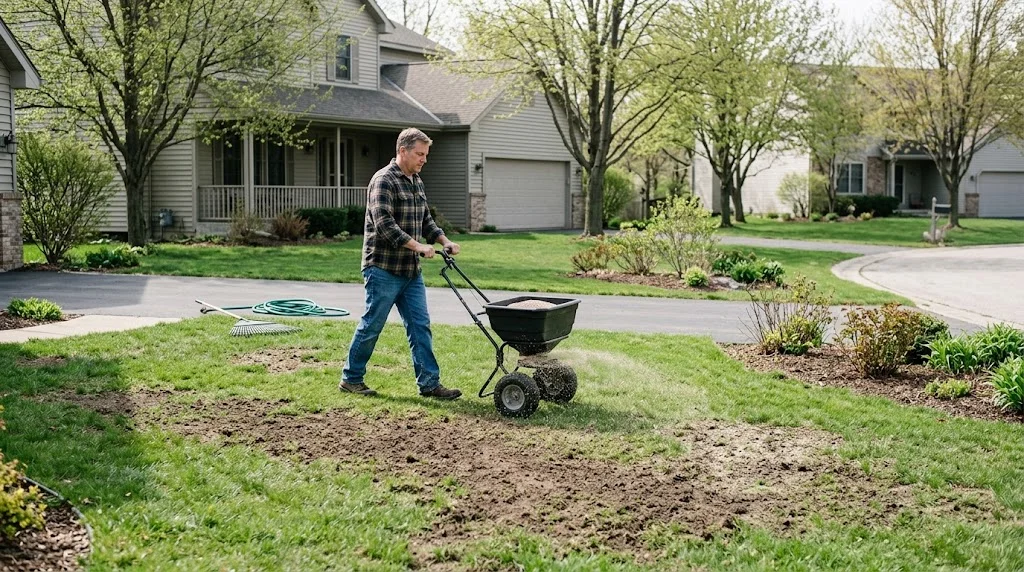
Planting grass seed in spring can fill bare spots and make your lawn thicker. But a calendar date alone won’t decide how well it works. Soil temperature, moisture, and the weather in the first few weeks matter just as much.
This guide shows you when to plant grass seed in spring, how to prepare your soil, and how to care for seedlings until they grow strong. You will also find a region-by-region timeline and answers to the most common seeding questions.
What Decides the Best Time to Seed Your Lawn

Many homeowners start spring lawn work as soon as the snow melts. That is often too early. Three things set the right window: where you live, what type of grass you grow, and the weather over the next two to three weeks.
Your Location and Climate Zone
Your region decides which grass types grow well and when they should go in the ground. Most of the South has long, hot summers and mild winters, so lawns there use warm-season grasses. The North and Midwest have freezing winters, so lawns there use cool-season grasses.
The transition zone sits between the two. Summers are hot, winters are cold, and neither grass type is a perfect fit. Lawns here often use tall fescue or Bermuda grass, and some homeowners blend both kinds. If you are not sure which zone you live in, check the USDA Plant Hardiness Zone Map or ask your local extension office.
Your Grass Type

Grass type is the biggest factor in your timing. Each type has a soil temperature it needs before seeds will sprout.
Warm-season grasses include Bermuda grass, zoysia grass, centipede grass, bahia grass, and St. Augustine grass. They sprout when the soil reaches about 65°F to 70°F and the air stays in the 80s. In areas with real winters, plant them in late spring or early summer. In areas where temperatures stay steady most of the year, you can plant them from early spring through early fall. Note that St. Augustine is usually grown from sod or plugs, not seed.
Cool-season grasses include Kentucky bluegrass, tall fescue, fine fescue, and perennial ryegrass. They sprout best when the soil is between 50°F and 65°F. These grasses grow most in fall and spring and slow down in summer heat. Early fall is the best time to seed them. Spring seeding works if you do it early and water often, but the young grass has less time to build roots before summer heat arrives.
Weather in the Seeding Window
Check the forecast before you spread any seed. Light, steady rain helps seeds sprout. A heavy storm can wash them into low spots or off your lawn. Strong wind can also push seed across the yard, so pick a calm day.
Wait until the ground is firm. Soggy soil with puddles raises the risk of fungal disease and makes it hard to work the area. A good rule: if your shoes leave deep prints, the soil is too wet.
Timing all of this can feel like a lot. If you would rather not manage it, a local lawn care company can handle seeding and fertilizing on the right schedule.
How to Prepare Your Lawn for Grass Seed

Prep work has as much effect on results as timing. Seed that lands on hard, thin, or uneven soil often fails, even in perfect weather. Spend a weekend on these steps and your seed has a much better chance.
Clear and Level the Area
Rake out rocks, sticks, and dead grass. Fill low spots with a mix of topsoil, sand, and compost. A level surface helps water spread evenly and keeps seed from washing into dips.
Test Your Soil
A basic soil test costs about $15 to $30 through most university extension offices. It tells you your soil’s pH and which nutrients are low. Most grasses grow best at a pH between 6.0 and 7.0. If your soil is too acidic, lime can raise the pH. If it is too alkaline, sulfur can lower it.
Aerate Compacted Soil
Compacted soil blocks water, air, and roots. Loosening it is one of the most useful steps you can take before seeding. Rent a core aerator from a hardware store and run it over the lawn in two directions. For a small bare patch, a garden fork or hand rake works well.
Repair Bare Spots
Foot traffic, pets, pests, shade, and poor soil all cause bare patches. Find the cause first, or the problem will come back. Then loosen the top two to three inches of soil, mix in fresh topsoil or compost, and level it before you seed.
Choose the Right Seed and Starter Fertilizer
Buy seed that matches your climate and sun level. Check the label for the germination rate, the weed seed percentage, and the date. Fresh seed with low weed content gives better results.
A starter fertilizer has more phosphorus, which supports root growth. Some states limit phosphorus use, and many soils already have enough. Your soil test will tell you what you need. Also skip crabgrass preventer when you seed, since it stops grass seed from sprouting too. If you need weed control, look for a product labeled safe for new seedlings, or wait until the new grass has been mowed three or four times.
Spread and Cover the Seed
Use a broadcast or drop spreader for even coverage. Follow the rate on the bag. As a rough guide, new lawns need about 2 to 3 pounds of Kentucky bluegrass seed or 6 to 8 pounds of tall fescue seed per 1,000 square feet. Overseeding an existing lawn takes about half that amount.
After spreading, rake lightly so the seed sits about a quarter inch deep. Roll the area or press it gently so the seed touches the soil. A thin layer of straw or peat moss helps hold in moisture. Use clean straw so you don’t add weed seed.
When to Plant Grass Seed in Spring by Region
These dates are a starting point. Spring warms up earlier in some years and later in others. Use a soil thermometer, which costs under $15, and push it two to four inches into the ground in the morning. Plant only when the reading holds steady in the right range for several days.
Northeast
Plant between mid-April and early May. Soil should stay above 50°F for cool-season grasses like Kentucky bluegrass, fescue, and ryegrass. A cold, wet spring can push this back by a week or two. Avoid seeding too early in frozen soil or too late when summer heat arrives.
Southeast
Warm-season grasses like Bermuda, centipede, and zoysia go in from late April through June, once the soil reaches 65°F to 70°F. In the upper Southeast, where tall fescue is common, early spring seeding works, but fall is better. Plan to water more often, because Southeastern summers dry out new grass fast.
Midwest
Seed cool-season grasses from mid-April to mid-May, as soon as the soil passes 50°F and you can work it. Late spring frosts are common here, so watch the forecast. A light frost rarely harms seed that has not yet sprouted, but it can hurt young seedlings.
Southwest
In most of the Southwest, warm-season grasses like Bermuda do best. Seed from late April to June when the soil is warm. In the hot desert areas, wait until May or later, and plan on frequent watering. In higher-elevation areas with cold winters, use the Mountain West timing below.
West Coast
In the Pacific Northwest, spring seeding runs from April to May, with mild, damp weather that suits cool-season grasses. In California, warm-season grasses go in from April to June, while cool-season lawns do best with fall seeding. Check local watering rules before you seed, since some areas limit outdoor use.
Mountain West
The growing season is short here, and nights stay cool. Seed from May to early June, after the last hard frost, when the soil is above 50°F. Choose grass types bred for cold and dry conditions, such as certain Kentucky bluegrass and fine fescue blends. Fall seeding, from mid-August to mid-September, often works better in this region.
How to Care for New Grass After Seeding
The first six weeks decide whether your seed turns into a thick lawn. Water and patience matter most.
Watering
Keep the top inch of soil damp, but not soaked. For the first two weeks, water lightly two to three times a day for short periods, about 5 to 10 minutes each. Once the grass sprouts, cut back to once a day with longer sessions. After four weeks, water deeply about two or three times a week. Let the weather guide you: hot, windy days need more water.
How Long Germination Takes
Seed does not sprout all at once. Perennial ryegrass can show up in 5 to 10 days. Tall fescue takes 7 to 14 days. Bermuda grass takes 7 to 14 days, and Kentucky bluegrass can take 14 to 30 days. Zoysia and centipede can take three to four weeks or longer. Don’t panic if you see nothing in the first week.
First Mowing
Mow when the new grass reaches about 3 to 4 inches tall. Use a sharp blade and set the mower high. Cut no more than one-third of the blade height at a time. Keep foot traffic, pets, and heavy play off the area for the first few weeks.
Feeding and Weed Control
Add a light round of fertilizer about six weeks after seeding, based on your soil test. Pull weeds by hand at first. Wait until the lawn has been mowed several times before using herbicides, and read the label to confirm they are safe for young grass.
Common Spring Seeding Mistakes to Avoid
- Seeding before the soil reaches the right temperature
- Skipping the soil test and guessing at fertilizer
- Using crabgrass preventer on the same area as new seed
- Letting the seedbed dry out between waterings
- Burying seed too deep, which can stop it from sprouting
- Mowing too soon or with a dull blade
- Planting the wrong grass type for your region or sun level
Final Thoughts
Timing matters when you plant grass seed in spring, but soil prep and follow-up care often make the biggest difference. Watch your soil temperature, not just the date. Loosen compacted ground, test your soil, and keep the seedbed damp until the grass is established. Do these things well and you will have a thicker, healthier lawn by summer.
FAQs About Planting Grass Seed in Spring
Is March too early to plant grass seed?
For most of the country, yes. Soil is usually too cold in March, and seed will sit unsprouted or rot. Wait until the soil reaches 50°F to 65°F for cool-season grass or 65°F to 70°F for warm-season grass. In the warmest parts of the South, late March can work for warm-season types.
Can you plant grass seed too early in spring?
Yes. Seed planted into cold soil germinates poorly, and a late frost can kill seedlings that do come up. Check the seed label and wait for steady soil temperatures. Patience here saves you from reseeding.
What month is best to put grass seed down?
It depends on your grass. For cool-season grasses, early fall (September in many areas) is best. For warm-season grasses, late spring or early summer (May to June) works best.
Can you plant grass seed in the fall to grow in spring?
Yes. This is called dormant seeding. You spread seed in late fall after the soil is cold, but before it freezes. The seed stays inactive through winter and sprouts when the soil warms in spring. Increase the seed rate by about 20 to 30 percent, since some seed will not survive the winter.
How long does grass seed take to grow in spring?
Most grass seed sprouts within one to four weeks, depending on the type and soil temperature. Cooler weather slows it down. Full, thick coverage usually takes eight to twelve weeks.
Should I water new grass seed every day?
Yes, at least at first. Keep the top inch of soil damp until the grass is about 2 inches tall. Then water less often and for longer periods to encourage deep roots.


Comments are closed.