
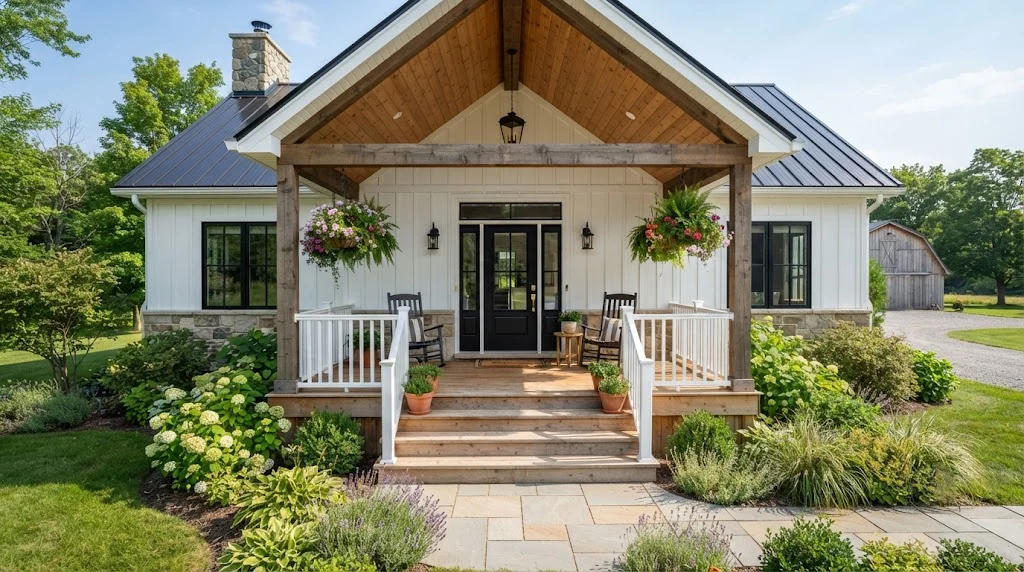
Wood front porch ideas range from classic wraparound designs with turned railings to modern flat-panel styles with clean lines. Cedar, pine, and mahogany are popular wood choices for durability and warmth. Adding a swing, stained flooring, or exposed beams gives any porch instant character and curb appeal.
A front porch says a lot about a home before anyone even knocks on the door. Wood brings warmth that other materials just can’t match. It softens hard lines, adds texture, and makes an entrance feel lived-in rather than staged.
If you’re planning a new porch or updating an old one, wood gives you more design freedom than almost any other material. You can paint it, stain it, stack it into beams, or turn it into detailed railings. This guide walks through the best wood front porch ideas so you can find a style that fits your home.
Why Choose Wood for Your Front Porch

Wood has been the go-to porch material for centuries, and it’s not hard to see why. It’s easy to shape, easy to repair, and it ages in a way that adds character instead of just wear. A wood porch also tends to feel warmer underfoot and more welcoming to guests than concrete or composite alternatives.
Cost is another factor. Wood is often more affordable upfront than stone or high-end composite decking. You can start small with a basic railing or flooring update, then add details like beams or built-in seating later as your budget allows.
There’s also the resale angle. A well-built wood porch can boost your home’s curb appeal and, in turn, its market value. Buyers notice a porch that looks cared for, and wood shows craftsmanship in a way that’s hard to fake.
Classic Wraparound Wood Porches
A wraparound porch is one of the most recognizable styles in American home design. It extends along two or more sides of the house, creating extra outdoor living space and a strong architectural presence. Wood is the traditional material for this style, especially on Victorian, colonial, and farmhouse homes.
Turned wood balusters and decorative trim give wraparound porches their signature look. Painted white or a soft gray, these details catch the eye without overwhelming the house. If your home has a larger footprint, this style gives you room for multiple seating areas, so you’re not stuck choosing between a swing and a dining nook.
Maintenance is worth planning for with a wraparound design, since more square footage means more surface to seal and repaint over time. That said, many homeowners find the extra work worth it for the space and charm it adds.
Rustic Wood Porches With Exposed Beams
Exposed wood beams turn a porch into a real architectural feature. This look works well on farmhouse, craftsman, and mountain-style homes, where a raw, natural material feels right at home. Thick cedar or douglas fir beams add visual weight and make the entrance feel sturdy and grounded.
Pair exposed beams with a stained wood ceiling for extra depth. A lot of homeowners are choosing haint blue or soft sage tones on porch ceilings this year, which contrasts nicely against natural wood tones. The mix of raw beams and a painted ceiling keeps the space from feeling too heavy or too polished.
Rustic porches also lend themselves to simple, sturdy furniture. A wood bench or a pair of painted rocking chairs fits the mood better than anything sleek or modern. Keep hardware and lighting fixtures in aged bronze or black iron to match the overall feel.
Modern Wood Porches With Clean Lines
Not every wood porch needs to look traditional. Modern homes are increasingly using wood in flat-panel railings, horizontal slat designs, and minimal trim work. This style trades ornate detailing for clean geometry, which suits contemporary and mid-century homes especially well.
Natural wood tones paired with black metal accents are a popular combination right now. <cite index=”4-1″>Think clean lines, natural wood tones, and muted color palettes for a Scandinavian-inspired feel.</cite> A single wood bench or a low-profile swing keeps the look uncluttered, and negative space around the furniture actually makes the whole entrance feel more intentional.
If you want a modern porch that still feels warm, stick to one or two wood tones instead of mixing several. A consistent color palette across the railing, decking, and furniture keeps the design cohesive and prevents it from feeling busy.
Farmhouse Style Wood Porches
Farmhouse porches lean into substantial wood furniture, shiplap details, and a slightly worn, collected look. This style has stayed popular for years because it feels approachable rather than formal. Dark metal light fixtures and wood tones that lean toward gray or weathered brown fit the aesthetic well.
<cite index=”4-1″>Shiplap ceilings, dark metal accents, and substantial wooden furniture</cite> define this look, and it pairs naturally with vintage-inspired decor. A distressed wood bench, an old cabinet repurposed for storage, or mismatched planters all add to the collected, lived-in feeling that makes farmhouse porches so inviting.
Seasonal decor also shines on farmhouse-style porches. Pumpkins and mums in the fall or simple greenery in the summer show up beautifully against wood tones, especially when the siding behind the porch is a darker color that makes the decor pop.
Choosing the Right Wood Species
Not all wood holds up the same way outdoors, so picking the right species matters as much as the design itself. <cite index=”6-1″>Popular wood species include cedar, mahogany, and painted pine that can withstand exposure to weather elements.</cite> Each one brings a different look and a different price point, so it helps to know what you’re working with before committing.
Cedar is a favorite because it naturally resists rot and insects, and it ages into a soft silver-gray if left unfinished. Mahogany costs more but offers a rich, reddish tone and excellent durability, making it a good choice for homeowners who want a higher-end finish. Pine is the most budget-friendly option, though it needs regular painting or sealing to hold up against moisture and sun.
Whichever species you choose, plan for maintenance from the start. Sealing your porch every one to two years protects the wood from water damage and keeps the color looking fresh. Skipping this step is the most common reason wood porches age poorly.
Adding a Porch Swing or Bench
A porch swing instantly makes an entrance feel more personal. There’s something about the slow back-and-forth motion that invites you to slow down, whether you’re having morning coffee or watching the evening settle in. A painted wood swing with a couple of outdoor pillows turns an empty corner into a real gathering spot.
If a swing doesn’t fit your space, a simple wood bench works just as well. Place it near the front door or off to one side, depending on your porch layout. Either option gives visitors somewhere to sit while they wait, and it gives you a reason to spend more time outside yourself.
Keep the cushions and pillows in weather-resistant fabric so you’re not swapping them out every season. A neutral base with one or two accent colors keeps the look flexible enough to update easily down the road.
Wood Porch Flooring and Ceiling Ideas
The floor and ceiling of your porch matter just as much as the railings and furniture. Stained wood flooring in a rich brown tone gives the space warmth underfoot and holds up well with proper sealing. Painted floors in gray or white work too, especially if you want a lighter, more coastal feel.
For ceilings, haint blue remains one of the most popular choices, and it’s more than just a trend. The pale blue color was originally used to ward off insects and has stuck around because it looks genuinely beautiful against natural wood tones. A stained wood ceiling is another option if you’d rather keep things simple and let the beams speak for themselves.
Small details like exposed rafters or simple wood trim around the ceiling edge add a finished look without much extra cost. These touches are easy to overlook but make a real difference once they’re in place.
Lighting and Final Touches for a Wood Porch
Good lighting extends how much you can use your porch, especially once the sun goes down. Wall sconces in black or aged bronze pair nicely with most wood tones, and a pendant light over the seating area adds a softer glow for evening hangouts. String lights are an easy, low-cost option if you want something more casual.
Planters filled with seasonal flowers or greenery round out the look without much effort. Wood and terracotta planters both work well against most porch styles, and you don’t need many to make an impact. A couple of well-placed pots often looks better than a porch crowded with plants.
A wood front porch gives you room to make a house feel like home before anyone even steps inside. Whether you go rustic, modern, or somewhere in between, the right wood choices and details can turn a plain entrance into the best part of your house.

Comments are closed.