
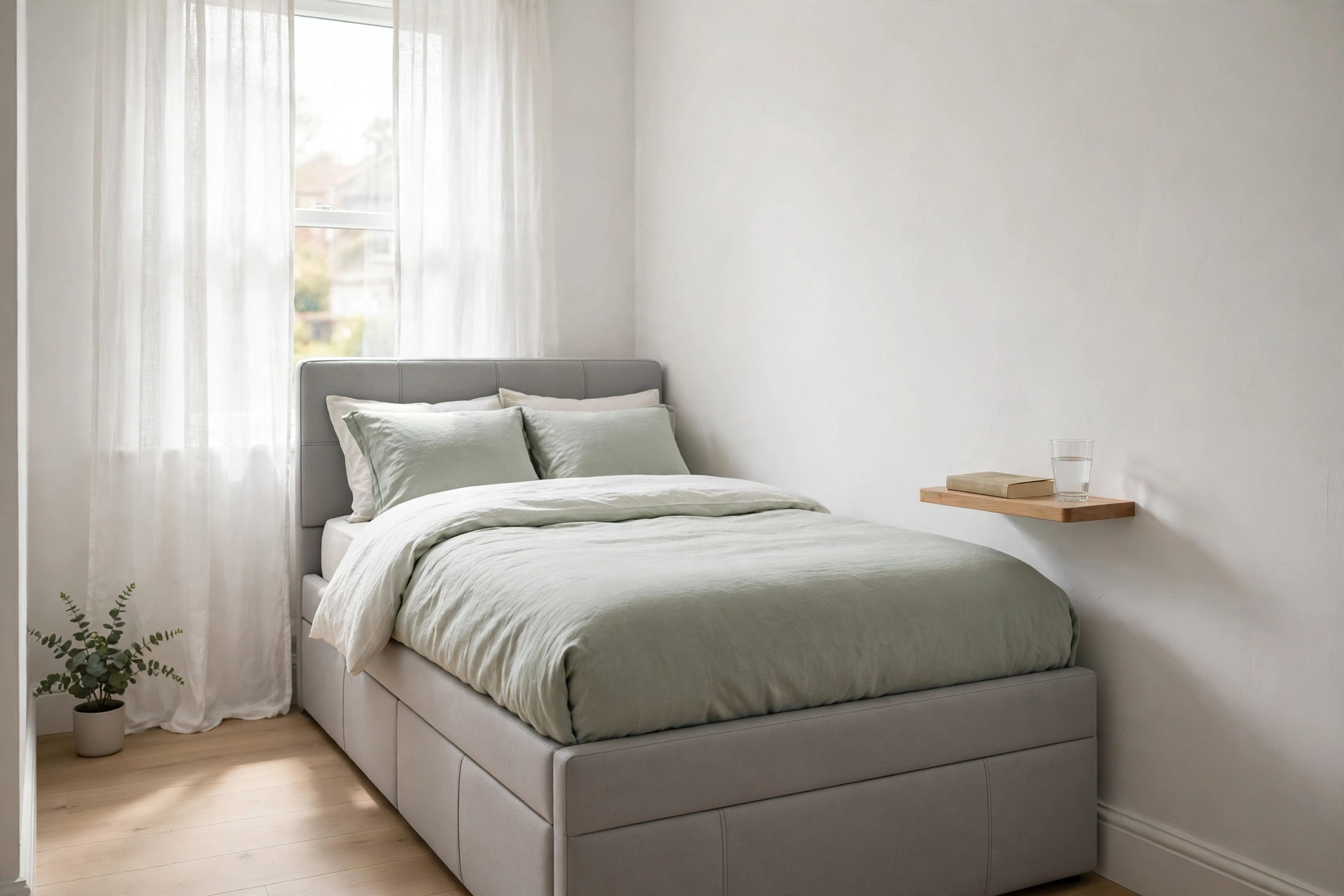
A small bedroom does not have to feel cramped. With the right furniture, a bit of planning and a few visual tricks, even a box room can feel calm, organised and surprisingly spacious. The ideas below work for UK homes of every age, from Victorian terraces with awkward alcoves to new-build flats where the second bedroom barely fits a double bed.
Prices mentioned are typical starting prices from UK retailers, checked in November 2026. You do not need to do all twelve — even three or four can transform a room.
1. Choose a Storage Bed
The bed is the biggest thing in the room, so make it work harder. An ottoman bed lifts on gas pistons to reveal the whole area under the mattress — ideal for spare bedding, out-of-season clothes and suitcases. Drawer beds are the alternative if you want to reach things without lifting the mattress.
Typical prices start from around £329 for a single ottoman bed and around £399 for a double at IKEA (the MALM ottoman), rising to around £599 for an upholstered double. A high bed frame with two under-bed storage boxes starts from around £239 for a double. Measure first — an ottoman needs room above it to lift, and drawer beds need clearance at the sides.
2. Go Fitted or Sliding with the Wardrobe
A freestanding wardrobe wastes space at the sides, on top and in front of the doors. Fitted wardrobes run wall to wall and floor to ceiling, so every centimetre is used, and sliding doors need no swing space — a real advantage when the bed nearly touches the wardrobe.
Fitted wardrobes are the biggest investment on this list. Basic fitted wardrobes typically start from around £1,000–£2,000, with mid-range designs at £3,000–£5,000, and prices are often quoted per linear metre (typically £400–£800 for mid-range builds). If that is too much, a freestanding sliding-door wardrobe is a good middle ground: a 120cm sliding wardrobe typically starts from around £279–£399. Whichever you choose, add internal organisers — hanging rails at two heights and a few drawers double the usable space.
3. Use the Walls, Not the Floor
When floor space is short, the only way is up. Tall, narrow storage uses wall space that would otherwise sit empty: a slim bookcase, floating shelves above the bed, and hooks on the back of the door all add storage without using any floor space.
Floating shelves are one of the cheapest upgrades here, with typical prices from around £10 each. Fit a shelf above the headboard for books and a lamp, or run two shelves high around the room for things you use less often. Keep the top shelf within easy reach, or it will become a dust trap. A tall chest of drawers beats a wide one in a small room every time — same storage, half the footprint.
4. Add a Large Mirror
Mirrors are the oldest small-room trick in the book, and they work. A large mirror opposite or beside a window bounces daylight around the room and makes the walls feel further apart. A full-length mirror on the back of a door does two jobs at once, and mirrored wardrobe doors combine this idea with idea 2.
Typical prices for a large wall mirror start from around £45 at Dunelm, with full-length designs from around £120. Hang the mirror where it reflects the window or a pleasant view, not a blank wall or clutter — a mirror doubles whatever it faces.

5. Keep the Colour Palette Light
Pale colours reflect light and make walls recede, which is why small bedrooms look bigger in white, soft grey, pale sage and warm cream. A single pale tone on the walls, ceiling and woodwork blurs the edges of the room and stops the eye finding a hard boundary.
Paint is the cheapest transformation on this list: a 10-litre tub of Dulux Pure Brilliant White matt emulsion typically costs around £28, usually enough for two coats in a small bedroom. If you want colour, keep it to bedding and accessories so you can change it cheaply. Matt finishes hide uneven walls better than silk, which matters in older UK homes.
6. Layer the Lighting
One ceiling light flattens a small room and leaves dark corners. Layered lighting — a ceiling light, a bedside light and one low-level or accent light — makes the same room feel larger, because the eye reads depth from pools of light.
Wall-mounted lights are the small-bedroom hero: they free up the bedside table entirely (see idea 9). Clip-on reading lights and plug-in wall lights need no electrician. Typical prices for a simple wall light start from around £20, and a dimmable bulb lets one fitting do the work of two. Keep the colour temperature consistent — warm white (2700K) throughout feels calm and unified.
7. Pick Furniture That Does Two Jobs
In a small bedroom, every piece should earn its place, and the best pieces do two jobs. A storage ottoman at the foot of the bed holds spare bedding and gives you somewhere to sit. A fold-down desk turns a corner into a workspace that disappears when the working day ends.
Look for a stool that tucks under a dressing table and a headboard with built-in shelving. Before buying anything new, ask whether something you already own could do the job — a small chest of drawers makes a bedside table with far more storage than a standard one.
8. Make the Most of Under-Bed Storage
Even without a storage bed, the space under a standard bed frame holds a surprising amount. Flat storage cases slide underneath and keep spare bedding, shoes and seasonal clothes dust-free and out of sight, using space that is otherwise wasted.
Typical prices start from around £9 for an IKEA SKUBB storage case, or around £19 for a lidded under-bed box. Measure the clearance under your bed first — most standard frames give you 15–20cm — and choose cases with handles so you can pull them out easily.
9. Mount the Bedside Essentials on the Wall
A bedside table takes up roughly 40cm of floor on each side of the bed, which in a small room can be the difference between squeezing past and walking comfortably. A wall-mounted shelf or a bedside caddy that hangs from the bed frame holds a phone, a glass of water and a book without touching the floor.
A single floating shelf beside the bed typically costs from around £10, plus a plug-in wall light from around £20, and together they free up the whole bedside area. If you share the bed and only one side has room for a table, put the shelf on the tight side. Keep cables tidy with a small clip so the wall looks clean rather than cluttered.
10. Hang Curtains High and Wide
Curtains hung just above the window frame make the window look smaller. Hang the rail close to the ceiling and extend it 15–20cm beyond each side of the window, and the window instantly looks taller and wider. When open, the fabric should sit on the wall, not covering the glass, so you lose no daylight.
Floor-length curtains that just skim the floor elongate the wall, while short curtains cut the room in half visually. Typical prices for a pair of blackout curtains start from around £20 at Dunelm and Argos, and blackout lining is worth having where street light reaches the room. Choose a colour close to the wall colour for the most spacious effect.
11. Plan the Layout Before You Buy
The best small-bedroom layout is rarely the obvious one. Pushing the bed against the longest wall, or into a corner, frees up the largest unbroken stretch of floor. Sketch the room on paper, or mark furniture positions on the floor with masking tape, before committing.
Leave at least 60cm of clear space where you need to walk, and keep the route from the door to the window open — a clear sightline to the window makes the whole room feel bigger. In a box room, one-sided bed access with a good layout beats a cramped walkway on both sides.
12. Create Zones and Declutter Ruthlessly
A small room with a clear place for everything feels calm; the same room with things spilling everywhere feels half its size. Give the room zones: sleeping, dressing, and one small surface that stays clear. Then be honest about what lives in the room — if you have not worn it in a year, it does not need prime wardrobe space.
Do a seasonal clear-out: one bag for charity, one for storage elsewhere, one for the bin. Use drawer dividers and small boxes inside wardrobes and drawers so each zone holds its shape. The one-in, one-out rule is the simplest way to keep a small bedroom feeling spacious.

Small Bedroom Ideas: Where to Start
If you are starting from scratch, begin with the bed and the wardrobe — they set the layout. Then add light colours and a mirror, which cost the least and change the feel of the room the most. The rest — shelves, lighting, curtains and storage boxes — can follow one at a time as budget allows.
A small bedroom done well is not a compromise. It is a room where everything has a place and nothing wastes space. And if you are weighing up whether a bigger home is within reach, our affordability calculator can help you work out what you could borrow — while our UK Home Buyer Toolkit brings together the other calculators you will need along the way.
Comments are closed.