
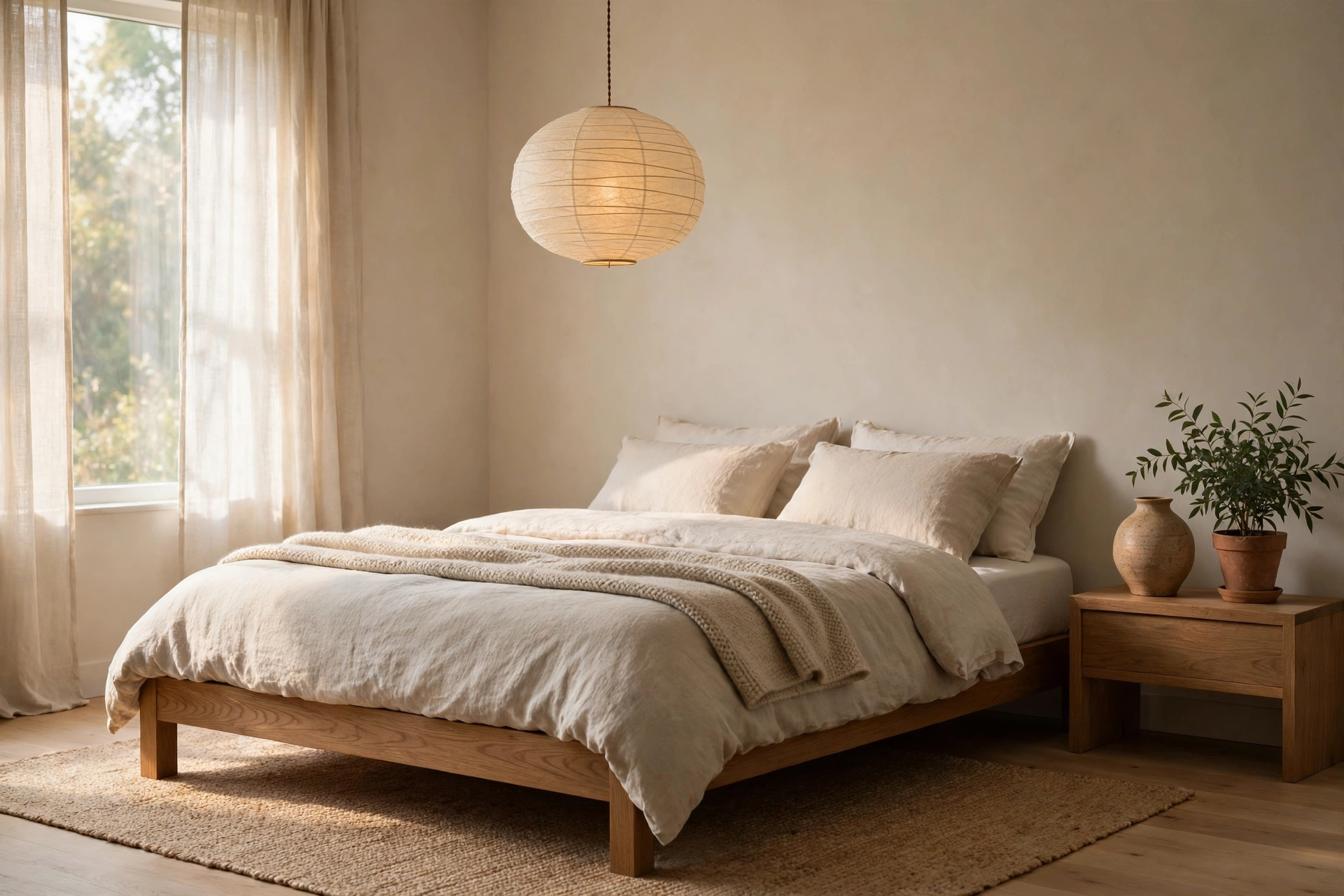
A Japandi bedroom is a quiet room that still feels warm. It blends Japanese design — restraint, imperfection, and respect for natural materials — with Scandinavian design — comfort, function, and soft, liveable warmth. Both traditions value simplicity, honest materials, and rooms that don’t overstimulate, which is exactly what a bedroom should do.
Japandi is not about owning less for the sake of it. It’s about choosing a few good pieces, giving them room to breathe, and letting texture do the work that clutter used to do. The style suits UK homes particularly well: our bedrooms are often on the small side, our light is often grey, and a warm, low, uncluttered room can make both problems feel smaller. These 12 ideas work in a Victorian terrace box room, a new-build main bedroom, or a rented flat where you can’t change much at all.
1. Start with a warm-neutral palette, not bright white
Pure bright white is the most common reason a Japandi bedroom ends up feeling clinical. Go one step warmer: warm white, oatmeal, greige, soft taupe, or a pale clay. The reliable formula used by designers is one dominant neutral, one wood tone, one supporting textile colour, and one restrained accent.
Keep every neutral warm-leaning and avoid cool greys and bright primary colours — cool grey strips the warmth out of the room almost immediately. If your bedroom is north-facing, which is common in UK homes, warm whites and greiges matter even more, because cool light makes cool paint look colder. Test two or three sample pots on the wall and check them in morning daylight and again under your evening lamps, since warm bulbs change how neutrals read.
Paint names designers return to again and again include warm off-whites such as Benjamin Moore’s White Dove and Pale Oak, and Sherwin-Williams’ Shoji White. For a single accent wall or a piece of furniture, a muted clay such as Sherwin-Williams’ Cavern Clay, or a grey-green sage such as Benjamin Moore’s Saybrook Sage, adds depth without breaking the calm.
2. Go low: the platform bed
The low platform bed is the defining piece of a Japandi bedroom, and it’s the single most important purchase in the style. A low frame — roughly 20–25 cm from the floor to the top of the mattress — drops the room’s visual centre of gravity, which makes the ceiling feel higher and the walls feel further apart. In a small UK bedroom, that effect is worth more than any other single change.
Choose solid wood with a visible grain: pale oak or ash for a lighter, Scandinavian feel; walnut or smoked oak for a moodier, Japanese feel. Keep the headboard low and simple — a slim wood panel or a plain linen rectangle — or skip it altogether. Tufted or studded headboards break the look immediately, and so do shiny veneers. If it is wood, let it look like wood.
Budget note: a solid oak platform bed is a real investment. UK prices checked in November 2026 run from around £235 for a simple solid pine or oak platform bed from a small UK maker, through £254 for an IKEA TONSTAD oak-veneer single frame (£499 for a king), to £885 and up for a made-to-order solid oak platform bed from a UK specialist. Prices change, so treat these as a guide and check the current listing before you buy.
3. Stick to one wood tone — two at most
Designers consistently recommend limiting a Japandi bedroom to a maximum of two wood species. Beyond that, the eye registers the differences between grains as visual noise, and the calm falls apart. Pick one wood and repeat it: the bed frame, the nightstands, and one low dresser or bench in the same species and a similar tone.
White oak and ash are the foundational Japandi woods — light-to-medium warm tones with visible grain. Walnut is the darker alternative and suits rooms with charcoal textiles or deeper wall tones. Match the undertone temperature: warm-toned woods go with yellow-undertone paints, and cool-toned woods go with grey-undertone paints.
4. Layer linen, wool, and cotton
Linen is the defining fabric of a Japandi bedroom. It breathes well, sleeps cool in summer and warm in winter, and it wrinkles — that’s the point. Layer three textures on the bed: washed linen sheets, a natural-fibre duvet, and a heavier wool or knit throw folded across the foot.
Keep the colours in the palette: oatmeal, sand, flax, clay, or soft stone. A muted rust throw or a sage cushion is enough accent for the whole room. In the UK, washed linen duvet sets start from around £32 at John Lewis, with cotton-linen blends at Dunelm from around £50 for a double set — again, prices checked in November 2026 and liable to change. A wool throw on top adds the weight and warmth that stops a pale room from feeling thin.
5. Keep 30% of the floor visible
This is the single most practical layout rule for a small or mid-sized bedroom: keep at least 30% of the floor completely clear. Nothing stored on it, nothing pushed against it for the sake of it. The empty floor is what makes the room feel calm, and it costs nothing.
That means being honest about what stays. A Japandi bedroom holds a bed, two nightstands, and one storage piece — four pieces of furniture. If something doesn’t fit that list, it probably belongs in another room, in the loft, or in a charity bag. Low furniture helps here too: a low dresser at 60–70 cm high keeps sightlines open in a way a tall chest of drawers never will.
6. Use soft, warm light — and let daylight do the work
Natural light should do most of the work during the day, so keep window dressings light: sheer linen or a simple roller blind in a warm neutral, not heavy blackout curtains in a dark colour. In the evening, switch to warm light. Designers recommend warm bulbs around 2700K for a Japandi bedroom, which give the cocooning depth the style is known for.
Rice-paper shades are the classic Japandi light, and they’re also one of the cheapest wins in the whole style. IKEA’s handmade rice-paper GULLSUDARE pendant shade costs from £2.50 for the 45 cm size, and its STRANDAD rice-paper floor lamp is £9 — both prices checked on IKEA UK in November 2026. A paper shade spreads a soft, diffused glow that makes the whole room feel gentler, and it suits a UK ceiling height far better than a heavy chandelier. One pendant over the bed or one floor lamp in the corner is enough; avoid bright overhead downlights as the main light source.

7. Choose storage that disappears
Storage in a Japandi bedroom should be felt, not seen. Low dressers with flat fronts and minimal hardware, woven baskets under the bed, and at most one open shelf. Built-in wardrobes with sliding doors work well because they keep the room visually quiet, and under-bed drawers are a better fit for a UK box room than a tall wardrobe that eats the wall.
The rule for surfaces is one object per surface: a ceramic vase on the nightstand, a book on the dresser, nothing else. It sounds strict, but it’s the difference between a room that feels composed and one that feels assembled. If you need more storage than the room allows, a low storage bench at the foot of the bed doubles as a seat and a place for spare bedding.
8. Add one handmade object — and let it be imperfect
Wabi-sabi, the Japanese half of Japandi, is about finding beauty in imperfection: a slightly uneven handmade ceramic, a linen weave that isn’t perfectly smooth, a piece of wood with visible grain. These details signal that the room is handmade and human, not manufactured.
You don’t need many. One handmade ceramic vase, one hand-thrown bowl on the dresser, or one piece of simple, unframed art is enough. Charity shops, local pottery studios, and UK makers on Etsy are good sources, and a single piece in the £15–£40 range will do more for the room than a shelf full of matching ornaments. Avoid matching sets and anything glossy or mass-produced-looking.
9. Pick one restrained accent — and stop there
A Japandi bedroom needs one accent, not five. Choose from the muted end of the spectrum: sage green, dusty blue, terracotta, clay, rust, or charcoal. Then use it in small doses — a cushion, a throw, a vase — and let the neutrals do the rest.
Three ready-made combinations that work in UK light: warm white walls with pale oak and sage textiles; mushroom beige walls with walnut and flax-and-clay textiles; soft greige walls with dark walnut and stone-and-charcoal textiles. Whichever you pick, keep the accent to one colour family. Two competing accents will fight each other, and the room will lose its calm.
10. Put natural texture underfoot
UK bedrooms usually have carpet, which is fine — but a natural-fibre rug on top of it adds the texture a Japandi room needs. A jute or sisal rug in a warm natural tone, a flat-weave wool rug, or a woven rattan mat beside the bed all work. Keep it simple: one rug, in a plain weave, in a colour from the palette.
Size matters more than pattern. The rug should sit mostly under the bed and extend far enough on each side that your feet land on it when you get up — roughly 60 cm of rug visible on each side of a double bed. A rug that is too small looks like a mat and breaks the room’s proportions.
11. One plant, done properly
A Japandi bedroom needs one plant, not a jungle. A single olive tree in a terracotta pot, a snake plant in a plain ceramic planter, or a trailing pothos on the dresser adds life and a soft green accent that fits the palette. The pot matters as much as the plant: matte ceramic, terracotta, or unglazed stoneware in a muted tone, never bright plastic or a shiny glazed finish.
UK bedrooms are often dry in winter with the heating on, so pick something forgiving. A snake plant or a ZZ plant will cope with low light and irregular watering far better than a fiddle-leaf fig, which sulks in most British homes. Water sparingly, wipe the leaves, and let the one plant earn its place.
12. Borrow the shoji idea — without rebuilding the room
You don’t need to install sliding paper doors to get the Japanese half of the look. A freestanding room divider with a light wood frame and linen or paper panels can screen a dressing corner in a larger bedroom, and a simple wood-framed mirror hung low on the wall echoes the same clean lines. In a rented home, a lightweight folding screen is a no-permission-needed way to add structure without drilling a single hole.
For the window, a bamboo or light wood blind gives the same warm, natural feel as a shoji screen and suits UK windows far better than a paper panel would. Keep the blind in a pale, natural tone and pair it with a sheer linen curtain if you need privacy at night.

Japandi in a small UK bedroom
Most UK bedrooms are smaller than the ones in the photos, and that’s fine — Japandi was made for small rooms. The low bed and the 30%-clear-floor rule do most of the work, but three more things help. First, keep the walls one colour; an accent wall in a small room can make it feel smaller, not bigger. Second, use a mirror — one large, plain, wood-framed mirror opposite the window bounces daylight around the room. Third, store out of sight: under-bed boxes for out-of-season clothes, and a single low dresser instead of a tall chest.
If you’re renting, almost everything here still applies: paint is the only thing you may need permission for, and even that can be skipped — a warm-neutral bed linen set, a rice-paper lamp, and a low wooden bed frame will carry the look without touching the walls. Check your tenancy agreement before painting, and use removable hooks rather than nails for anything on the walls.
What it costs: a realistic UK budget
Japandi can be done at almost any budget, because the style is about restraint, not expense. A paint-only refresh — one tin of mid-range emulsion for the walls, new linen-look bedding, and a rice-paper pendant shade — can be done for roughly £100–£200. A mid-range room — a new low bed frame, linen bedding, a wool throw, and a jute rug — typically runs to around £600–£1,200, depending on the bed you choose. A full refit with a made-to-order solid oak bed, premium paint, and handmade ceramics can easily pass £2,000.
Paint is where budgets split. Mid-range emulsion from Dulux or Crown costs roughly £20–£25 for a 2.5-litre tin, while premium emulsion from Farrow & Ball costs around £61–£68 for the same size — roughly £24–£27 per litre. If you’re repainting a whole bedroom, a mid-range paint in the right warm shade will look just as calm as the premium tin. Spend the saving where you’ll feel it: the bed and the bedding.
If you’re weighing up a bigger move rather than a refresh, our UK Home Buyer Toolkit brings together the stamp duty, affordability, and mortgage tools in one place, and the affordability calculator shows how much you could borrow based on your income and deposit. And if a cheaper refresh leaves money spare, our mortgage overpayment calculator shows what putting that money into your mortgage could save over the life of the loan.
FAQs
What is a Japandi bedroom?
A Japandi bedroom blends Japanese design — restraint, wabi-sabi imperfection, and natural materials — with Scandinavian design — warmth, comfort, and function. The result is a pared-back, warm retreat built from natural materials, low furniture, and soft layers. It’s minimal because that’s what helps the room feel restful, not minimal for its own sake.
Is Japandi expensive?
It doesn’t have to be. The cheapest changes — a warm-neutral paint colour, a rice-paper lamp shade from £2.50, and decluttering so 30% of the floor is clear — cost very little. The expensive part is usually the bed: a solid oak platform bed can cost £885 or more, but a simple solid wood platform bed starts from around £235, and an oak-veneer frame from IKEA starts at £254 for a single.
What colours work best in a Japandi bedroom?
Warm, muted neutrals: warm white, oatmeal, greige, taupe, and soft stone, with one restrained accent such as sage green, clay, terracotta, or charcoal. Avoid cool greys and bright colours — cool grey in particular strips the warmth out of the room. Keep to one dominant neutral, one wood tone, one textile colour, and one accent.
Can I do Japandi in a rented home?
Yes. Most of the style doesn’t touch the walls: a low wooden bed frame, linen bedding in warm neutrals, a rice-paper lamp, and one handmade ceramic will carry the look. If you do want to paint, check your tenancy agreement first — many landlords allow repainting if you return the room to its original colour when you leave.
Does Japandi suit a small UK bedroom?
It suits small bedrooms better than most styles. Low furniture makes the ceiling feel higher, keeping 30% of the floor clear makes the room feel bigger, and a single warm colour on the walls avoids the chopped-up feeling that feature walls can create in a small space. A large plain mirror opposite the window helps bounce the limited UK daylight around the room.


Comments are closed.