
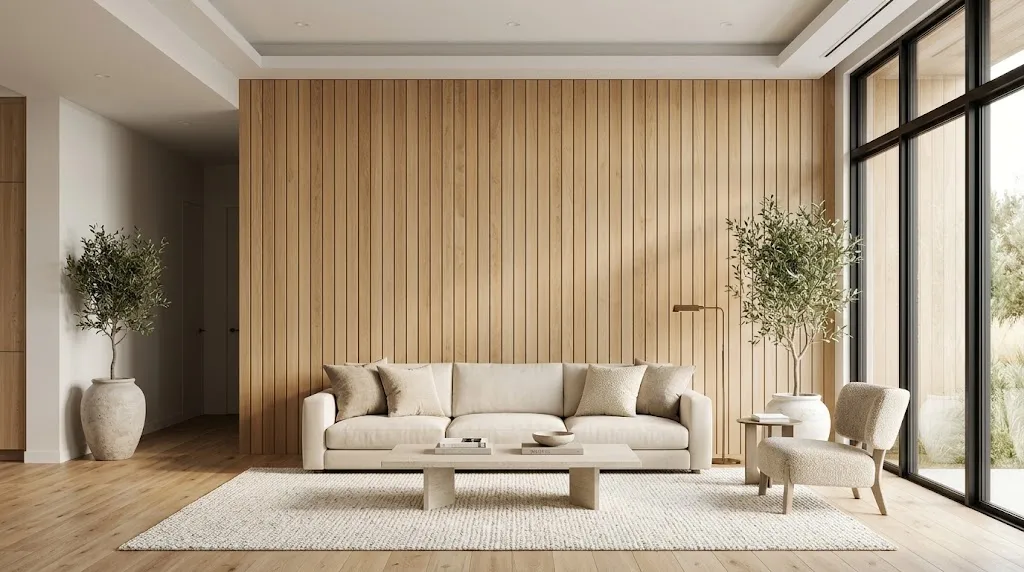
Wood paneling used to mean dark, shiny walls in a basement rec room. That image is outdated. Today, wood wall paneling is a clean, warm, and flexible way to add texture to almost any room.
This guide shows you the main types of wood paneling, the styles that work in modern homes, and the best places to use them. You will also find practical tips on sizing, finishes, moisture, and installation. By the end, you will know which option fits your space and budget.
Why Wood Paneling Is Back in Modern Homes
More homeowners want warmth in their spaces. Flat white drywall can feel cold, especially in open floor plans. Wood adds grain, shadow, and depth that paint alone cannot copy.
The new versions also look different. Designers now use lighter tones, painted finishes, slimmer profiles, and cleaner lines. Add the interest in natural and reclaimed materials, and wood paneling fits right into current design trends.
Types of Wood Paneling: Sheets vs. Boards
Modern wood paneling comes in two main forms. Both add texture, but they suit different projects.
Wood Paneling Sheets
Sheets are large, thin panels, usually 4 feet wide by 8 feet long. Thickness runs from about 1/4 inch to 1/2 inch. Most are made from plywood or hardboard, which keeps them stable.
The face can look like wide planks, beadboard, or a plain veneer. Sheets cover a lot of wall fast, so they cost less and install quicker. The trade-off is a more uniform look, since the pattern is cut or pressed into the surface.
Individual Boards
Boards are the traditional choice. Many have tongue-and-groove edges, where one board slides into the next to form a tight, gap-free wall. Others have square edges or overlapping edges.
Boards take longer to install and usually cost more per square foot. In return, you get a more authentic wood look and more control over the layout. They are a good fit if you want a custom result.
Quick comparison
- Sheets: lower cost, fast install, uniform look, best for large walls and tight budgets.
- Boards: higher cost, slower install, real wood character, best for feature walls and custom designs.
Popular Modern Wood Paneling Styles
Each style below gives a different mood. Many work in both traditional and modern rooms, so pick the one that matches your taste and your room.
Tongue and Groove

Tongue-and-groove boards have a thin tongue on one edge and a matching groove on the other. They lock together and create a flat, stable surface. Many come with one smooth face and one beaded face, so you can choose the look you like.
Most are sold unfinished. That means you can stain them for a natural look or paint them any color. Installation tip: always fit the groove onto the tongue, and protect the tongue from dents. If a board is tight, tap it with a scrap piece of the same material between your hammer and the edge.
Beadboard

Beadboard has a narrow groove, or bead, between thin vertical strips. Traditional boards are about 3 to 3½ inches wide. You can buy individual boards, but sheets are much easier to hang.
Beadboard suits farmhouse kitchens, bathrooms, and dining rooms. It also looks good on ceilings, porch roofs, and the sides of staircases. For a more modern feel, choose a wider spacing between the beads, around 3 to 4 inches, so the pattern looks calm and not busy.
Shiplap

Shiplap boards have cut edges that overlap. This leaves a small, shadowy gap between boards. It gives you a clean line with a light rustic feel.
Most people install it horizontally, but vertical shiplap is also popular. Paint it white for a crisp look, or leave it natural for warmth. A real shiplap joint has an uneven profile that helps the boards stay tight even when wood shrinks, which matters in rooms where humidity changes through the year. To make shiplap read as paneling and not siding, use wider boards, around 10 inches.
Board and Batten

Board and batten started as exterior siding. It uses wide vertical boards with thin strips, called battens, covering the seams. Today it is a favorite for entryways, hallways, and bedrooms.
You can go rustic with rough-cut wood or clean and modern with smooth boards painted in a deep color. Some designers use horizontal or diagonal layouts for extra interest. A dark painted board-and-batten wall, such as navy, forest green, or charcoal, is one of the easiest ways to make a plain room feel finished.
Raised and Flat Panel

This is a classic look from early colonial homes. A frame of horizontal rails and vertical stiles holds panels that are either raised or flat. Modern versions often use MDF, which is smooth, stable, and takes paint well.
It fits formal spaces such as foyers, studies, and dining rooms. Dining rooms benefit the most. They often have little more than a table, chairs, and a sideboard, so paneling gives the room structure. A traditional wainscot height of about 36 inches also draws the eye along a horizontal line, which can make the ceiling look taller.
Pallet and Reclaimed Wood

Reclaimed wood has mixed colors, widths, and ages. When you install it, you get a layered, textured wall full of character. It works well in organic modern and boho rooms, and it makes a strong accent wall or backsplash.
Use it with care. Bold texture can overwhelm a small space, so keep it to one wall or one feature.
If you collect your own pallet wood, follow these safety steps:
- Look for an HT stamp, which means the wood was heat-treated.
- Skip any pallet that is stained, damp, or smells odd.
- Wear a mask and goggles when you take pallets apart and sand them.
- Clean the planks with a bleach and water mix of equal parts, and sand first so the solution soaks in.
Prefinished Panels

Prefinished panels save the most time. They are made from plywood or compressed wood fibers and come already stained, primed, painted, whitewashed, or distressed. Some imitate planks, while others have textured veneers or smooth gloss.
They are a smart choice if you want the look of wood without a long finishing job. For rental-friendly or quick weekend projects, they are hard to beat.
How to Use Wood Paneling in Your Home
The right style is only half the plan. Where you put it matters just as much. Here are the best modern uses.
Statement and Accent Walls
An accent wall is the easiest way to start. Place paneling behind a bed, a sofa, or at the end of a hallway. It adds depth and gives the room a clear focal point.
Light wood or whitewashed finishes keep things airy. Darker stains and deep paint colors add drama. Geometric patterns add energy, while vertical planks make a ceiling look higher. Mixing wood with concrete, metal, or glass keeps the look modern and balanced.
Plank direction changes how a room feels. Vertical lines add height. Horizontal lines make a small room feel wider. Also think about your line of sight: a long hallway lined with horizontal boards will look even longer.
Ceiling Treatments
We often forget the ceiling, but it is a big surface. Wood paneling there adds texture and can make a large open room feel more cozy. Light wood makes a space feel open. Dark wood creates a moody, wrapped-in feeling.
To keep the room from feeling heavy, use simple furniture and neutral wall colors. Let the grain be the star.
Kitchen Backsplashes
Wood can soften a kitchen full of hard, shiny surfaces. Use it alone or mix it with tile or stone. Choose a grain or color that matches your cabinets and countertops.
Moisture and heat are the main risks. Seal the wood well with a water-resistant finish such as a water-based polyurethane, and keep it a safe distance from the stove. Many homeowners use wood only on the wall beside the sink or behind open shelves.
Modern Wainscoting
Wainscoting covers the lower part of a wall. Modern versions drop the ornate Victorian details and use clean lines and simple shapes. Heights range from about 32 inches to full height.
It works well in dining rooms, entryways, and bathrooms. Paint the paneling and the wall above in one color for a calm look, or use a bold shade above the paneling for contrast. In bathrooms, use moisture-resistant materials and a semi-gloss paint.
Built-In Shelves and Niches
Lining the back of a bookcase or niche with wood paneling makes it look planned and custom. It works around fireplaces, in home offices, and in reading nooks.
Match the wood to your floors or furniture for a smooth look. Or pick a contrasting color so the shelves stand out.
Exterior Wood Cladding
Wood also works on the outside of a home. It pairs well with stone, steel, and glass, and it adds warmth to modern architecture. Use it across a whole wall or only around an entry, porch, or terrace. Exterior wood needs the right species and finish, such as cedar or thermally modified wood, to handle weather.
Sustainable Choices
If you care about the environment, you have good options. Reclaimed wood, bamboo, and sustainably sourced timber all give you the look of wood with less impact. Look for FSC-certified products when you buy new lumber. Reclaimed wood in particular brings a worn, natural patina that looks great next to sleek furniture.
Quick Tips for Installing Wood Paneling
Good planning saves money and avoids rework. Keep these points in mind:
- Let the wood adjust. Store it in the room for 48 to 72 hours before installing so it can match the room’s humidity.
- Find the studs. Use a stud finder and mark them before you start.
- Leave a small gap. Real wood expands and shrinks, so leave about 1/8 inch at the edges and trim it with molding.
- Use the right fasteners. A brad nailer and construction adhesive give a clean, strong hold.
- Start level. Check your first board with a level. Every board after it will follow.
- Seal edges in wet rooms. Kitchens and bathrooms need sealed or moisture-resistant products.
How Much Does Wood Paneling Cost?
Prices change by region and material, so treat these as rough ranges. Plywood or hardboard sheets are usually the cheapest option, often under $70 per sheet. Solid wood boards, such as pine, cedar, or oak, can run several dollars per square foot or more. Reclaimed wood usually costs the most, though salvaged pallets can be nearly free if you do the work yourself.
If you hire a pro, labor can equal or exceed the material cost for detailed styles such as raised panel or board and batten. Get at least two quotes before you commit.
Choosing the Right Paneling for Your Space
Ask yourself three questions before you buy:
- What mood do you want? Calm and light, or bold and dramatic?
- What is your budget and skill level? Sheets and prefinished panels suit beginners. Boards and custom panels suit experienced DIYers or hired pros.
- How much moisture does the room get? Wet areas need sealed or moisture-resistant materials.
If you are unsure, test a small area or order a sample board. Look at it in the morning and at night, since light changes the color of wood a lot.
Final Thoughts
Wood paneling has moved far from its dark, dated past. With the right style, finish, and placement, it adds warmth, texture, and character that flat walls cannot match. Start small with one accent wall, a ceiling, or a backsplash. Once you see the difference, you will likely want to add more.
Frequently Asked Questions
Is wood paneling out of style?
No. Old, dark, glossy paneling is out of style. Modern paneling in lighter tones, painted colors, and cleaner profiles is popular with designers right now.
What is the best wood paneling for a modern look?
Shiplap, board and batten, and slim vertical tongue-and-groove boards are strong choices. Keep the lines simple and the color palette tight.
Can I paint wood paneling?
Yes. Clean it, sand lightly, apply a primer, and then use two coats of paint. This works for both new and existing paneling.
Can you use wood paneling in a bathroom?
Yes, but choose moisture-resistant material, seal all edges, and make sure the room has good ventilation.
Is wood paneling hard to install?
Sheets and prefinished panels are beginner-friendly. Boards and raised panels take more skill and more time.
Comments are closed.