
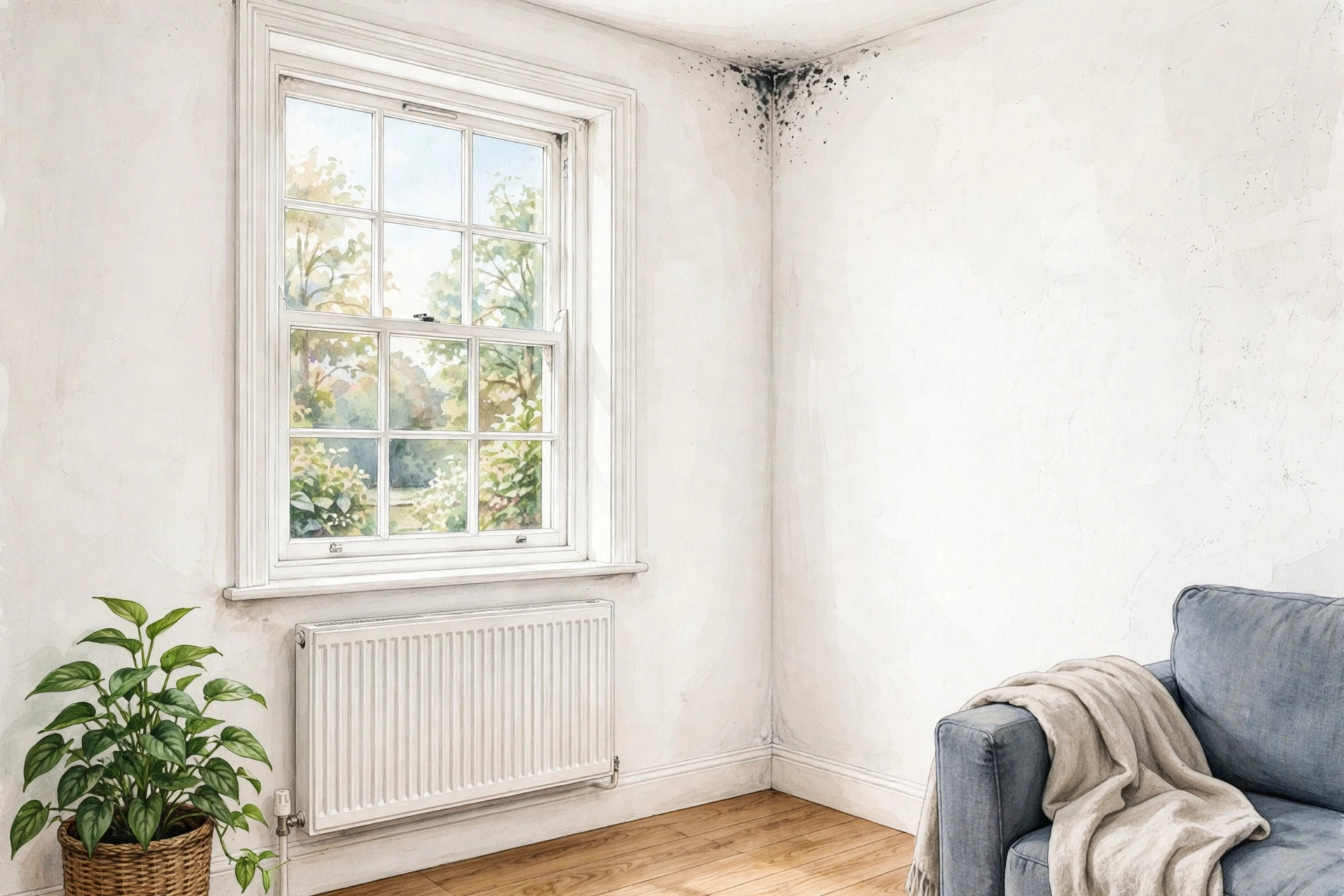
Mould on the walls is one of the most common problems in British homes — and one of the most misunderstood. It shows up as black speckles in the corner of a bedroom, a musty-smelling patch behind the wardrobe, or dark staining across a bathroom ceiling. It looks like a cleaning problem, but it is really a moisture problem: mould is a type of fungus that only grows where there is damp, and it will keep coming back until the damp is dealt with.
That matters more than the stain. Damp and mould are present in almost one in three homes in England, according to Manchester University NHS Foundation Trust, and they are linked to respiratory problems, chest infections, allergies and asthma. Children living in a damp home are up to three times more likely to have breathing problems, according to NHS Healthier Together guidance.
This guide explains how to remove mould from walls safely, how to tell what is causing it, when to leave it to a professional, what it costs in 2026, and how to stop it returning. It is written for UK homes — our damp climate, our housing stock, and our landlord and tenant rules.
Why Mould Grows on Walls in UK Homes
Mould needs moisture to grow. In most UK homes that moisture comes from condensation: warm, moist air from cooking, showering, drying clothes indoors and even breathing settles on cold surfaces such as external walls, window reveals and ceilings. If that happens regularly, mould begins to grow. Bathrooms, kitchens and bedrooms against cold external walls are the usual places.
But not every mould problem is condensation. There are three main causes, and telling them apart matters because the fix is different:
- Condensation — the most common cause. Black speckled patches in corners, around windows and on bathroom ceilings, worse in winter when windows stay shut and heating is low.
- Penetrating damp — rain getting in through damaged pointing, cracked render, leaking gutters or another external defect. The damp patch tends to get worse during or after rain and appears at irregular points on the wall.
- Rising damp — moisture drawn up from the ground through the wall. It starts at the base of the wall and works upwards, often with a visible “tide mark” and damaged skirting or plaster.
If the mould is linked to a leak, sewage, or a structural defect, cleaning alone will not fix it — the building problem has to be repaired first, and that is a job for a professional.
Safety First: Before You Touch the Mould
Mould produces spores that become airborne when disturbed, and breathing them in can trigger coughing, wheezing, sneezing, sore eyes and asthma symptoms. The NHS advises that living with damp and mould makes respiratory problems, respiratory infections, allergies and asthma more likely, and can affect the immune system. Babies, children, pregnant women, older people and anyone with asthma or an existing respiratory condition are most at risk. The death of two-year-old Awaab Ishak in 2020, after prolonged exposure to mould in his family’s social-rented home, is the reason Awaab’s Law now exists — and why damp and mould are treated as a serious health issue, not a cosmetic one.
Protect yourself before you start:
- Wear rubber gloves, eye protection, and a mask. Goggles without ventilation holes and a disposable FFP2 or FFP3 mask give better protection than a basic dust mask.
- Ventilate the room. Open a window and keep it open while you work.
- Keep children and pets out of the room until the area is clean and dry.
- Never mix cleaning products. Never mix bleach with other cleaning products, especially those containing ammonia or acids — the fumes can be dangerous.
- Never dry-brush mould. Brushing releases spores into the air. Always wipe, never brush.
Do not clean it yourself if: the mould covers more than about one square metre; it is caused by a leak, sewage or a building defect; you have asthma that is triggered by mould; or you are pregnant or have a weakened immune system. In those cases, ask someone else to help or call a mould removal specialist. If anyone in the household develops new or worsening symptoms, speak to a GP or call NHS 111.
Step-by-Step: Removing Mould from Painted Walls and Plaster
Small areas of surface mould on hard surfaces can usually be cleaned safely at home. Work through the steps in order.
1. Mist the area lightly. Spray the mouldy patch lightly with water or your cleaning solution before you touch it. This stops spores becoming airborne when you wipe.
2. Apply a mould treatment. Use a dedicated mould remover or fungicidal wash and follow the manufacturer’s instructions, leaving it for the recommended dwell time — usually 5 to 15 minutes. The dwell time is when the treatment kills the spores, so wiping too quickly is one of the most common reasons mould comes straight back.
If you prefer a household option, these are the methods UK guides commonly recommend — pick one, and never combine them:
- Diluted bleach — for white grout, tiles and hard, washable white paint. Stir two tablespoons of household bleach into one litre of cold water, apply with a sponge, wipe and dry. Skip bare plaster, natural stone and coloured fabrics, which may discolour.
- 3% hydrogen peroxide — for painted walls, grout and silicone without the bleach smell. Spray or dab it on, leave for 10–15 minutes, then wipe and dry.
- White vinegar — for routine upkeep. Mix 250 ml of white vinegar with one litre of warm water, apply with a spray or sponge, leave a few minutes, then wipe and dry.
3. Wipe, do not scrub hard. Wipe the mould off gently with a damp cloth, folding the cloth to a clean face as you go. Work from the edges of the affected area inwards so you do not spread spores outwards.
4. Dry the wall fully. Wipe with a dry cloth and let the area dry completely, using heating and ventilation to help. A wall left damp will invite the mould straight back.
5. Dispose of cloths and sponges. Bag used cloths and paper towels and put them straight in the outside bin.
6. Treat before you repaint. Never paint over untreated mould — it will grow straight through. Once the wall is clean and fully dry, you can use an anti-mould paint for extra protection, ideally one designed for condensation-prone rooms.

Removing Mould from Tiles and Grout
Tiles and grout are the easiest surfaces to clean because they are non-porous. The diluted bleach method works well on white grout and tiles, and 3% hydrogen peroxide is a good option for grout and silicone sealant. Spray the treatment on, leave it for 10–15 minutes, scrub the grout lines with an old toothbrush or stiff brush, then rinse and dry.
If the grout stays stained after cleaning, or the silicone sealant has gone black and soft, the sealant may need to be cut out and replaced — mould grows into old silicone and cannot be cleaned out of it. The same applies to cracked grout: re-grout once the area is clean and dry.
Removing Mould from Wallpaper
Mould on wallpaper is a warning sign, because it often means mould is also growing on the wall underneath. Peel back a corner to check: if the wall behind is stained or damp, strip the affected wallpaper (wearing your mask and gloves), treat the bare wall using the steps above, and do not re-paper until the wall is completely dry and the cause of the damp has been fixed. If the mould covers a large area, or the plaster underneath feels soft or crumbly, bring in a professional — the problem is deeper than the surface.
Rented Homes: Report It and Know Your Rights
If you rent your home, mould is not just your problem to solve — and you should not try to hide it by cleaning it quietly. Report it to your landlord or letting agent in writing (email is best, so you have a record), with photos and dates, and keep a copy.
In England, landlords have clear duties:
- Landlord and Tenant Act 1985, Section 11 — landlords must keep the structure and exterior of the property in repair, including roofs, walls, windows, gutters and drains. Damp caused by a structural defect falls under this duty.
- Homes (Fitness for Human Habitation) Act 2018 — rented homes must be fit for human habitation at the start of the tenancy and throughout it. Serious damp and mould can make a home unfit, and tenants can bring a claim directly in the county court.
- Housing Health and Safety Rating System (HHSRS) — councils can inspect a property, and where they find a serious (Category 1) damp and mould hazard they can serve an improvement notice requiring the landlord to carry out works.
- Awaab’s Law — in force for social housing since 27 October 2025, it requires social landlords to investigate reported damp and mould hazards within 10 working days and to make emergency hazards safe within 24 hours. The Renters’ Rights Act 2025 is extending similar duties to private landlords, with its main provisions in force from 1 May 2026.
Tenants also have a part to play: ventilate rooms, use extractor fans, and avoid drying clothes indoors where possible. But government guidance is clear that blaming a tenant’s “lifestyle” for damp and mould is not acceptable — the usual causes are building deficiencies, poor ventilation, heating or insulation.
If your landlord does not act, you can escalate to your local council’s Environmental Health team, or get free advice from Citizens Advice or Shelter. Do not withhold rent without proper advice — that is legally risky even when your complaint is justified. This section is general guidance, not legal advice; if the situation is serious, get advice from a housing adviser or solicitor.
How to Stop Mould Coming Back
Cleaning removes the mould you can see. Stopping it coming back means fixing the moisture that feeds it. In most homes that means ventilation and heating:
- Use extractor fans when cooking and showering, and leave them running for a while afterwards. A bathroom extractor fan with a humidistat sensor — one that runs until the moisture level drops, rather than switching off with the light — is one of the most effective changes you can make.
- Open windows regularly, even briefly, even in winter. A few minutes of fresh air twice a day lets moist air out.
- Keep your home warm. Heating, even for a short while each day, raises the temperature of the air and the cold surfaces where condensation forms. Cold, unheated rooms are where mould thrives.
- Do not dry clothes indoors if you can avoid it. If you must, do it in a well-ventilated room with the window open or a dehumidifier running, never in a cold bedroom.
- Use a dehumidifier in problem rooms, and consider a positive input ventilation (PIV) unit for whole-home ventilation if condensation is a house-wide problem.
- Leave a gap behind furniture pushed against cold external walls, so air can circulate.
- Fix leaks and external defects promptly — a leaking gutter or cracked render will keep feeding damp into the wall no matter how often you clean.

What Does Mould Removal Cost in the UK in 2026?
Costs depend on how much mould there is, what is causing it, and where you live — London and the South East typically add around 20–30% to professional prices. The figures below are indicative 2026 market ranges from UK cost guides; always get a proper quote for your home.
| Job | Typical cost |
|---|---|
| DIY cleaning (sprays, cloths, gloves, mask) | £10–£50 |
| Damp survey / professional diagnosis | £150–£400 |
| Professional treatment, small patch (1–2 m²) | £200–£400 |
| Professional treatment, single room | £500–£1,000 |
| Professional treatment, whole property | £725–£1,100 |
| Severe / structural remediation | £1,500–£5,000+ |
| Extractor fan, supplied and fitted | £150–£300 |
| Positive input ventilation (PIV) unit | £400–£800 |
The cheapest option is rarely the best one: a £10 spray removes the stain, but if the damp feeding it is not fixed, the mould usually returns within weeks, and you end up paying twice. A damp survey before any work is money well spent, because it identifies whether the problem is condensation, penetrating damp or rising damp — and each needs a different fix.
If damp is making you think twice about a move altogether, it is worth checking the numbers before you decide anything. Our affordability calculator shows how much you could borrow based on your income and deposit, and the UK Home Buyer Toolkit brings together stamp duty, affordability and mortgage tools in one place.
FAQs
Is black mould dangerous?
Damp and mould can affect your health. According to the NHS, living with damp and mould makes respiratory problems, respiratory infections, allergies and asthma more likely, and can affect the immune system. Babies, children, pregnant women and people with asthma or existing respiratory conditions are most at risk. Small surface patches can usually be cleaned safely with the right protection, but large areas, recurring mould, or mould linked to a leak should be handled by a professional — and anyone with new or worsening symptoms should speak to a GP or call NHS 111.
Can I just paint over mould?
No. Painting over untreated mould does not kill it — it will grow straight through the new paint. Clean and treat the wall first, let it dry fully, and only then repaint, ideally with an anti-mould paint.
Does bleach kill mould?
Diluted bleach removes surface mould from hard, washable surfaces such as tiles, grout and white painted walls. It does not fix the moisture problem that caused the mould, so the mould will return unless the damp is dealt with. Never mix bleach with other cleaning products, and do not use it on bare plaster, natural stone or coloured fabrics.
How long does it take for mould to come back after cleaning?
If the cause is not fixed, mould can return within weeks. If you improve ventilation and heating and fix any leaks, a properly cleaned wall should stay clear. Mould that keeps returning despite cleaning is a sign the cause is not condensation — it may be penetrating or rising damp, and it needs professional investigation.
Who pays for mould removal in a rented home?
It depends on the cause. If the mould comes from a structural defect, a leak, or a failure of the building, the landlord is responsible. If it is purely condensation from everyday living, tenants are expected to ventilate properly — but landlords are still expected to make sure the property has adequate ventilation and heating. Report the problem to your landlord in writing first, and get advice from Citizens Advice or your council’s Environmental Health team if nothing happens.
The Bottom Line
Mould on walls is a moisture problem wearing a cleaning problem’s clothes. Clean small patches safely — gloves, goggles, an FFP2 or FFP3 mask, wipe rather than brush, and never mix cleaning products. Then fix the moisture: ventilate, heat the home, stop drying clothes indoors, and repair leaks and external defects. And if the mould covers more than about a square metre, keeps coming back, or is linked to a leak or structural problem, call a professional rather than tackling it yourself.
If you are weighing up a move to a drier, better-ventilated home, our UK Home Buyer Toolkit and mortgage overpayment calculator can help you work out what a move would really cost.

Comments are closed.