
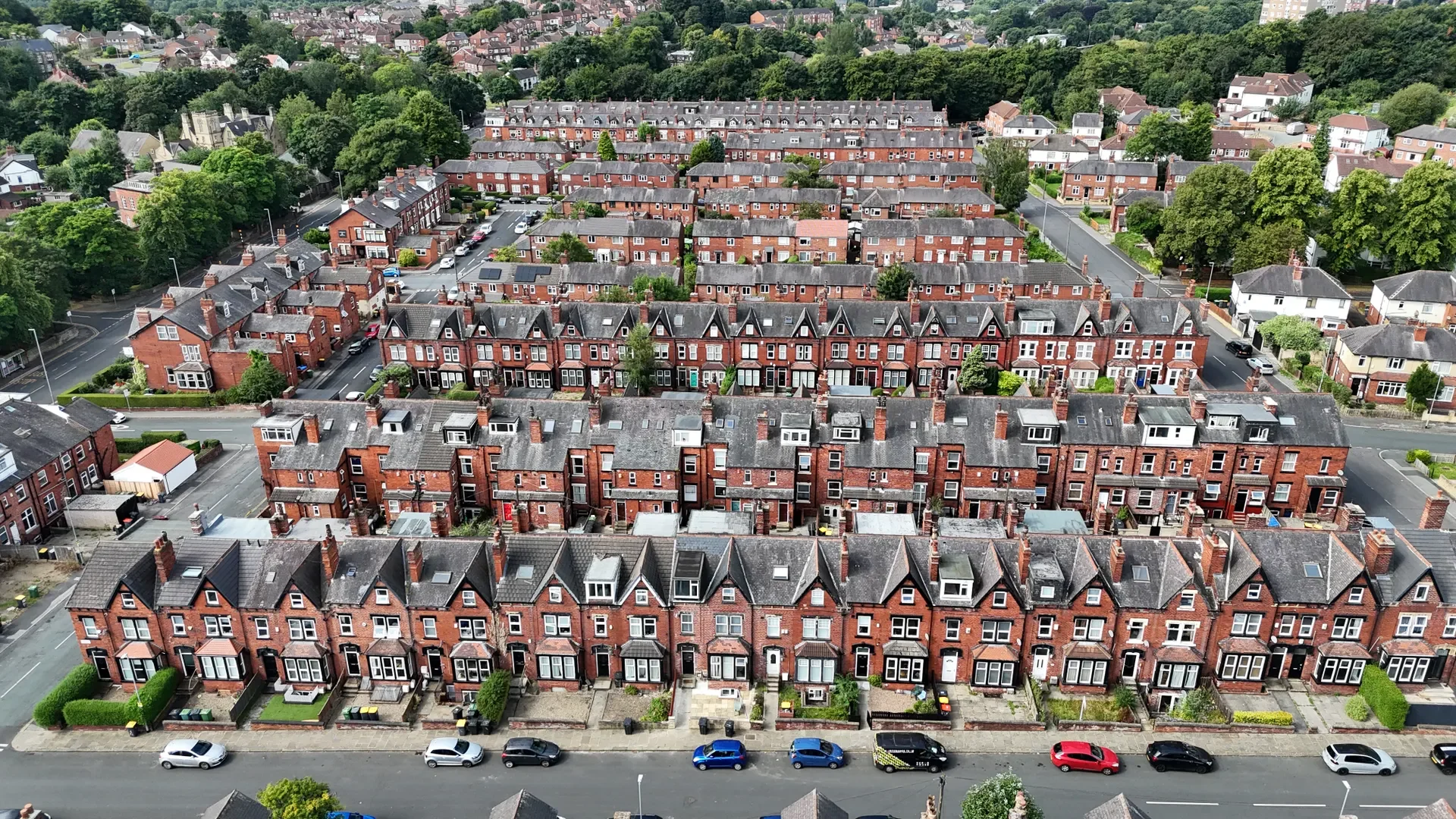
If you have followed house prices this autumn, you may have noticed something confusing: one headline says prices are flat, another says they rose, and a third gives an average price far higher than the rest. So which house price index should you trust in 2026? None of them is wrong — they simply measure different things, at different stages of a sale, and over different groups of homes.
Here are the latest headline figures side by side:
| Index | Latest month | What it measures | Average price | Monthly change | Annual change |
|---|---|---|---|---|---|
| Nationwide | September 2026 | Mortgage approvals | £274,251 | -0.2% | +0.8% |
| Lloyds (formerly Halifax) | September 2026 | Mortgage approvals | £298,441 | 0.0% | 0.0% |
| Rightmove | October 2026 | Asking prices of newly listed homes | £371,015 | +1.0% | -0.1% |
| ONS / HM Land Registry UK HPI | June 2026 | Completed sales | £272,000 | +0.1% | +2.0% |
Note that these figures do not all cover the same month, so they are not a like-for-like contest.
Nationwide: the early signal from mortgage approvals
Nationwide’s index is based on its own mortgage approvals. Because it uses approvals rather than completed sales, it is published quickly — usually within days of the month ending — which makes it one of the earliest indicators of where prices are heading.
In September 2026, Nationwide reported an average UK house price of £274,251, down 0.2% on the month on a seasonally adjusted basis, with annual growth slowing to 0.8% from 1.6% in August — the weakest annual growth rate since December 2025. The monthly change is seasonally adjusted; the average price itself is not.
The limitation is coverage: the index only reflects Nationwide mortgage borrowers, so cash buyers are left out, and an approval is not yet a completed purchase.
Lloyds (formerly Halifax): the other lender lens
The Lloyds House Price Index is the new name for the long-running Halifax House Price Index. Renamed in July 2026, its methodology is unchanged: it is still based on Halifax and Lloyds mortgage data. Like Nationwide, it measures mortgage approvals, not completed sales, and therefore also excludes cash buyers.
In September 2026, Lloyds reported an average UK property price of £298,441, unchanged on both the month and the year. That flat reading sits alongside Nationwide’s small monthly fall and modest annual rise — a reminder that two lender indices can differ simply because they lend to different customers buying different mixes of homes. The gap between the two lender averages, about £24,000 in September, shows why no single average should be treated as “the” price of a typical home.

Rightmove: what sellers are asking, not what buyers pay
Rightmove’s index is the odd one out, and that is exactly why its average price looks so much higher. It measures the asking prices of homes newly listed on its website — the price sellers hope to achieve when a property first comes to market. It does not record what buyers eventually agree to pay, and it includes homes that may never sell. It also covers Great Britain rather than the whole of the UK.
In October 2026, Rightmove reported an average asking price for newly listed homes of £371,015, up 1.0% — or £3,575 — on September, but 0.1% lower than a year earlier.
That makes Rightmove most useful as a gauge of seller confidence and of the price at which homes are entering the market — and the least useful of the four for judging what a home actually sold for.
ONS and HM Land Registry UK HPI: the official record, with a lag
The UK House Price Index (UK HPI), produced by HM Land Registry, the ONS and the devolved land registers, is the official measure. It is based on completed sales at the end of the conveyancing process, and it covers both cash and mortgage purchases across the whole of the UK. That makes it the most comprehensive of the four indices — and the slowest to appear.
For June 2026, the UK HPI put the average UK property price at £272,000, up 0.1% on the month and 2.0% on the year. Because sales take time to complete and then to be registered, the latest UK HPI figures describe the market as it was a few months ago, not as it is today. The most recent months are also provisional and can be revised as more sales are registered.
Why the numbers disagree
First, they measure different stages of a sale. Rightmove captures the asking price at listing. Nationwide and Lloyds capture the price at mortgage approval, part-way through the process. The UK HPI captures the completed sale price, months later. A single home can therefore appear in different indices at different prices and in different months.
Second, they cover different buyers. The lender indices only include their own mortgage customers. The UK HPI includes everyone, including cash buyers, who are invisible to the lender indices. Rightmove includes any seller listing on its site, whether or not the home sells.
Third, they cover different periods and places. Rightmove’s October figures are more recent than the UK HPI’s June figures, and Rightmove covers Great Britain while the others cover the UK.
Which index should you use?
The best index depends on what you are trying to do.
If you are buying, start with Nationwide and Lloyds for the most up-to-date sense of direction, then check the UK HPI for what homes in your area actually sold for. Before deciding what you can afford, run the numbers for your own budget — the Affordability Calculator can help you work out what monthly payments different prices would mean.
If you are selling, Rightmove is the most relevant for setting an asking price, because it shows what competing sellers are asking right now. But treat it as a starting point, not a valuation: what matters is what similar homes near you have actually achieved, which is where completed-sale data from the UK HPI comes in. Remember too that moving costs money beyond the sale price itself — the Moving Costs Calculator can help you budget for the full cost of a move.
If you are remortgaging, the lender indices give the freshest steer on market direction, while the UK HPI gives the most complete record of achieved prices that a lender’s valuation may reflect. Neither index values your individual home, though — local comparable sales will matter far more than any national average.

The bottom line
There is no single house price index that tells the whole story, and that is fine. Rightmove shows what sellers are asking, Nationwide and Lloyds show what mortgage borrowers are agreeing early in the process, and the UK HPI shows what completed sales actually achieved. Used together, they describe a market that was broadly flat to modestly higher in 2026. The mistake is to pick the headline that suits your hopes and ignore the rest. Check what each index actually measures, and look at recent sales of similar homes in your own area before making a decision. For a broader set of buyer tools, see the UK Home Buyer Toolkit.
Frequently asked questions
Why is Rightmove’s average price so much higher than the others?
Because Rightmove measures asking prices for newly listed homes, not prices buyers actually pay. Sellers often list above the price they eventually accept, and the index includes homes that never sell.
Is the UK HPI the most accurate house price index?
It is the most comprehensive, because it is based on completed sales including cash purchases across the whole UK. Its main drawback is timing: it lags the other indices by a few months, and its latest figures are provisional.
Why do Nationwide and Lloyds give different average prices?
Both are based on their own mortgage approvals, so each reflects its own customers and the mix of homes they buy. Different borrower profiles and regional mixes produce different averages, even in the same month. Neither figure is wrong; they simply describe different slices of the market.
Which index should I use to value my own home?
None of them, on its own. National averages describe no individual property. For a realistic sense of your home’s value, look at recent completed sales of similar homes in your local area, and get a professional valuation or agent appraisal first.

Comments are closed.