
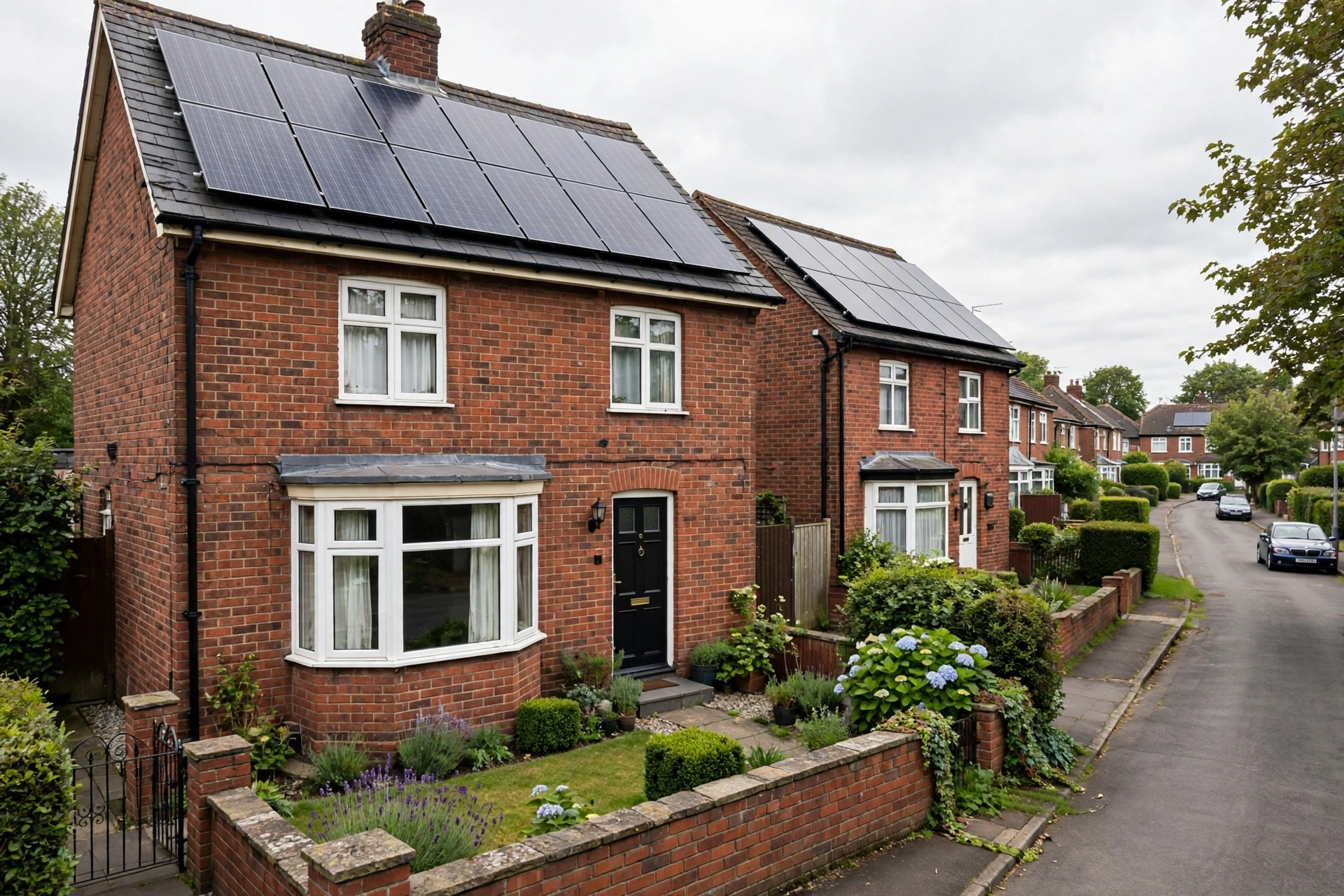
A typical 4kW solar panel system costs between £6,000 and £8,500 fully installed in the UK in 2026. That is the size most often fitted to a three-bedroom semi-detached home, and it is the figure quoted by most MCS-certified installers once panels, inverter, scaffolding and labour are all included. The Energy Saving Trust puts a slightly larger 4.5kWp system at around £7,600, while government cost data built from the MCS installation database puts a 4kW system at roughly £6,400 at the median price, or about £8,400 at the average price for systems fitted to existing homes.
What you pay depends on the size of the system, your roof, where you live, and whether you add a battery. This guide sets out realistic 2026 prices by system size, what a quote includes, what a battery adds, what you can earn through the Smart Export Guarantee, and how long payback takes.
Solar panel costs by system size
The table below shows typical installed prices for MCS-certified systems in 2026, at 0% VAT. The ranges reflect the spread between government MCS-based cost data and published installer pricing, so treat them as realistic estimates rather than fixed quotes. Generation figures assume a well-sited, unshaded, south-facing roof, at roughly 850kWh per kWp per year.
| System size | Panels (approx.) | Typical installed cost | Electricity generated (approx.) | Best suited to |
|---|---|---|---|---|
| 3kW | 7–8 | £4,800–£6,300 | ~2,550kWh a year | 1–2 bedroom home, low daytime use |
| 3.5kW | 8–9 | £5,600–£7,400 | ~3,000kWh a year | 2–3 bedroom home |
| 4kW | 9–10 | £6,000–£8,500 | ~3,400kWh a year | 3 bedroom home, the most common size |
| 5kW | 12 | £7,500–£9,500 | ~4,250kWh a year | 3–4 bedroom home, higher use or EV |
| 6kW | 14–15 | £9,000–£11,000 | ~5,100kWh a year | Larger home, heat pump or EV charging |
The average cost across MCS-registered domestic installations in early 2026 was about £1,686 per kW, with the average installation costing £8,677 overall. Smaller systems cost more per kW because fixed costs — scaffolding, inverter, labour and certification — are spread across fewer panels. Quotes for the same specification can vary by £2,000 to £3,000 between installers, and some of that gap reflects genuine differences in panel quality, inverter brand, warranty terms and aftercare. Always compare at least three quotes on the same specification.
What is included in the price?
A proper installed quote should include everything needed to get the system generating:
- Solar panels — typically 400W-plus panels in 2026, with TOPCon cells (22–24% efficiency) now the standard specification.
- Inverter — converts the panels’ direct current into alternating current your home can use. Budget for a replacement after around 12 years; the Energy Saving Trust notes it is unlikely to last the panels’ full 25-plus-year life.
- Mounting kit — rails, brackets and fixings suited to your roof type.
- Scaffolding — usually to one or two sides of the house, included in most quotes.
- Labour and electrical work — fitting, wiring to current regulations (BS 7671), and connection to your consumer unit.
- MCS certification — your installer registers the system and issues an MCS certificate, which you need to qualify for Smart Export Guarantee payments.
- DNO notification — your installer notifies the local Distribution Network Operator, which runs the local grid.
- Monitoring — most inverters now come with an app so you can see what your panels are generating.
Usually not included: a battery, roof repairs, bird-proofing mesh, and extended warranties. Ask for each to be priced separately so you can see what is optional.

How much does battery storage add?
A battery stores surplus solar electricity during the day for use in the evening, instead of exporting it cheaply and buying electricity back at full price later. It is optional, and it is the single biggest add-on cost.
| Battery size | Typical installed cost | Best suited to |
|---|---|---|
| 5kWh | £2,500–£4,000 | Smaller systems, 1–2 person households |
| 10kWh | £4,500–£8,000 | Typical family home, the most popular size |
| 13.5kWh (premium, e.g. Tesla Powerwall 3) | £8,500–£11,000 | Larger homes, EV households |
The Energy Saving Trust gives £5,000 to £8,000 for a battery, while installer pricing guides put a quality 10kWh lithium iron phosphate (LiFePO4) system at £4,500 to £7,000 installed. Fitting a battery with the panels is usually cheaper than adding one later, because the scaffolding is already up and a hybrid inverter can be fitted from the start. A battery typically lengthens payback, but it can raise the share of your own solar electricity you use from around a third to around two-thirds.
Smart Export Guarantee: what you get paid
The Smart Export Guarantee (SEG) requires licensed electricity suppliers with more than 150,000 customers to offer a tariff paying you for surplus electricity exported to the grid. You need an MCS-certified installation and a smart meter that records exports. Rates vary widely:
| Situation | Typical SEG rate (October 2026) |
|---|---|
| Open to anyone, no switching needed | 3p–6p per kWh, except Fuse Energy at 13p |
| You buy your electricity from that supplier | 12p–13p per kWh (fixed 12 months at E.ON Next and EDF) |
| Supplier installed your system | 15p–25p per kWh (e.g. Good Energy 25p for 12 months, then 12p) |
| Battery + time-of-use tariff (e.g. Octopus Flux) | Up to around 27p–29p per kWh at peak times (variable) |
For a typical 4kW system exporting about half of what it generates, export income at 13p per kWh works out at roughly £210 to £290 a year. But every unit you use yourself is worth more than every unit you export: under the Ofgem price cap for October to December 2026, electricity you buy costs 26.32p per kWh, so using your own solar power saves 26.32p a unit, while exporting it typically earns far less. SEG rates change regularly, so check the supplier’s own tariff page before signing up.
0% VAT — but only until 31 March 2027
Domestic solar installations are currently zero-rated for VAT in Great Britain under HMRC’s energy-saving materials relief, and standalone batteries have qualified since February 2024. That saves roughly £325 on an average 4kW system compared with the 5% reduced rate.
The zero rate is temporary. Under VAT Notice 708/6 it runs until 31 March 2027, and from 1 April 2027 qualifying installations revert to the 5% reduced rate — not the 20% standard rate. HM Treasury confirmed this in June 2026, and the Autumn Budget of 28 October 2026 did not extend the relief. The date that matters is the tax point of your job — usually completion or payment — so agree the VAT treatment and timing in writing with your installer, and treat any future extension as a bonus, not a plan.
How long is the payback period?
The Energy Saving Trust, using July 2026 fuel prices, puts payback for a typical 4.5kWp system at 9 to 12 years across Great Britain when export payments are included — 9 years in London, 10 to 11 in Manchester, 9 to 10 in Aberystwyth and 11 to 12 in Stirling. Annual savings with an export tariff run from £740 to £930 a year in London and Manchester. Without an export tariff, the same system saves only £190 to £330 a year on bills and takes 23 to 40 years to pay back — longer than the panels last. Signing up for an export tariff on the day your system is registered is one of the most important steps in the whole process.
Panels are expected to last 25 years or more, so a system that pays back in 9 to 12 years should deliver well over a decade of near-free electricity after that. Your own payback depends on your daytime electricity use, roof orientation, location and export rate.
Is your roof suitable?
Most pitched roofs in the UK can take solar panels, but a few factors decide how much electricity you will generate:
- Direction. South-facing roofs generate the most. East- and west-facing roofs still work well but generate less over the year than a south-facing roof of the same size.
- Angle. A pitch of around 30 to 40 degrees is usually ideal, but most UK roof pitches between 15 and 50 degrees perform perfectly well.
- Shading. Trees, chimneys, dormers and neighbouring buildings all cut output. Even partial shade on one panel can drag down a whole string unless optimisers or microinverters are fitted.
- Roof condition. Panels add weight and will sit on your roof for 25 years or more. If the roof covering is near the end of its life, re-roof first.
- Space. A 4kW system needs roughly 20 square metres of usable roof. Roof windows, vents and chimneys all eat into that.
Most domestic installations are permitted development and do not need planning permission, but listed buildings, conservation areas and some flats are exceptions. Your installer should confirm the position for your property before work starts.

Choosing an MCS-certified installer
MCS — the Microgeneration Certification Scheme — is the quality standard for renewable installations in the UK, and MCS certification is what qualifies your system for Smart Export Guarantee payments. MCS recorded 148,531 certified solar installations in the first half of 2026 alone, and the Energy Saving Trust estimates there are now nearly 1.7 million home installations across the UK.
When choosing an installer, check MCS certification on the MCS website and confirm the installer will issue an MCS certificate on completion. Get at least three quotes on the same system size and specification, with scaffolding, inverter brand and warranty terms stated. Ask for a written performance estimate based on your roof, using MCS-approved calculations. Check the warranties — 25-year panel warranties are standard in 2026, inverter warranties typically 5 to 12 years — and check consumer protection: reputable installers belong to a consumer code such as RECC (Renewable Energy Consumer Code), and deposits should be protected. Be wary of pressure selling: a genuine quote does not expire in 24 hours.
There is no universal grant for solar panels in 2026. The main support for lower-income households in England is the Warm Homes: Local Grant, delivered by councils, generally for households on £36,000 a year or less with an EPC rating of D to G. For most homeowners, the real support is 0% VAT and SEG export payments.
Is it worth it in 2026?
For a home with a suitable, unshaded roof, solar panels remain one of the more reliable home improvements you can buy: a 4kW system at £6,000 to £8,500, paying back in 9 to 12 years with an export tariff, then producing electricity for well over a decade more. The numbers are strongest if you are home during the day, can shift washing, dishwashing and EV charging into daylight hours, and secure a decent export rate. A battery improves self-use but adds £4,500 to £8,000 and lengthens payback, so price it separately and judge it on your own usage rather than as an automatic extra.
If you are buying a home and weighing up the upfront cost against everything else in the move, our affordability calculator can help you work out what your budget genuinely allows. And if you are planning the wider costs of a purchase, our UK Home Buyer Toolkit brings together the calculators for stamp duty, moving costs and mortgage overpayments in one place. Get three MCS-certified quotes, check the VAT position in writing, and sign up for an export tariff the day your system is registered.

Comments are closed.