
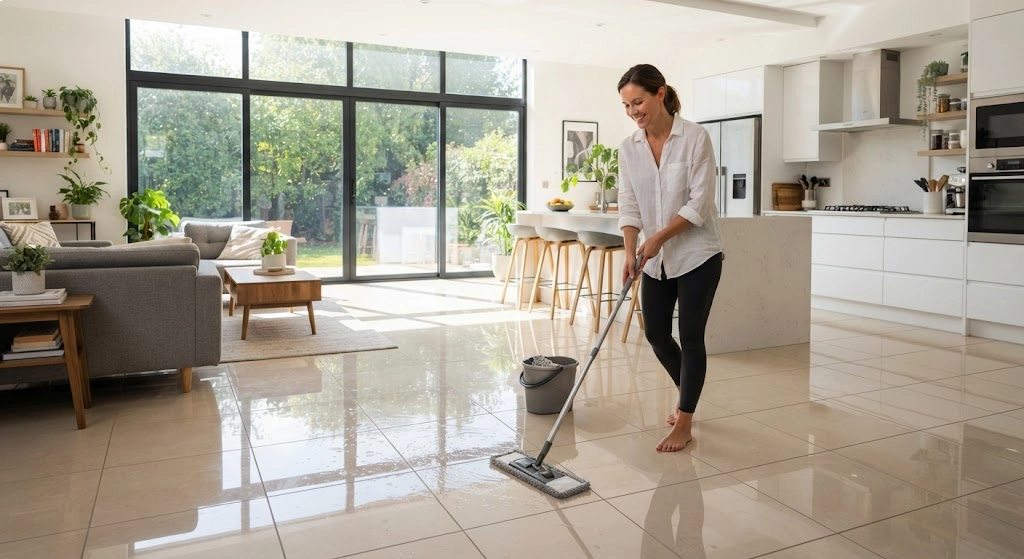
Sweep or vacuum tile floors daily to remove grit before it scratches the surface. Mop weekly with warm water and a pH-neutral cleaner, dry the floor after cleaning, and seal grout once a year. Wipe up spills fast, use furniture pads, and avoid harsh chemicals like bleach or ammonia on natural stone.
Tile floors are one of the best investments you can make in your home. They handle water, foot traffic, and daily messes better than almost any other flooring type. But tile isn’t completely maintenance-free. Grout can stain, finishes can dull, and grit can scratch the surface if you’re not careful.
The good news is that keeping tile looking sharp doesn’t take much effort. A few smart habits go a long way. This guide walks you through everything you need to know, from your daily routine to deep cleaning and long-term protection.
Know Your Tile Type Before You Start Cleaning

Not all tile is the same, and that matters more than most homeowners realize. Glazed ceramic tile has a protective coating baked right into it, so it resists stains and moisture without much fuss. Porcelain tile is even denser and tougher, making it a solid choice for busy kitchens and entryways.
Natural stone tile is a different story. Materials like marble, travertine, and slate are porous. That means they soak up spills and stains much faster than ceramic or porcelain. Stone tile also needs sealing and gentler, pH-neutral products to stay in good shape.
Before you grab a cleaner off the shelf, check what kind of tile you have. Using the wrong product on stone can etch or dull the surface permanently. When in doubt, check the manufacturer’s care instructions or ask your flooring installer what they recommend.
Sweep or Vacuum Every Day

This is the single most important habit for tile care. Dirt, sand, and small pebbles act like sandpaper when they get pushed around under shoes or furniture. Over time, that grinding action dulls the finish and leaves tiny scratches you can’t buff out.
A daily sweep with a soft-bristle broom handles this easily. If you’d rather vacuum, use one with a hard-floor setting and no beater bar, since the spinning brush can scratch tile just as much as the dirt does. This step takes two or three minutes but saves your floor from years of slow wear.
Entryways and kitchens need the most attention since they collect the most foot traffic. If you live somewhere with harsh winters, this becomes even more important, since salt and sand track in fast and can be tough on grout lines.
Mop the Right Way, Not Just Any Way
Mopping keeps tile looking fresh, but doing it wrong can actually cause problems. Skip the vinegar-and-water combos you might see floating around online, especially on natural stone, since the acid can wear down the surface over time. Stick with warm water and a mild, pH-neutral cleaner made for tile instead.
Wring your mop out well before you use it. Tile floors don’t need to be soaking wet to get clean, and too much water can seep into grout lines and cause staining or mildew underneath. A damp mop does the job just as well as a dripping one.
After mopping, dry the floor with a clean towel or microfiber cloth. This step gets skipped a lot, but it prevents water spots and keeps grout from absorbing extra moisture. Once or twice a week is usually enough for most homes, though busy kitchens might need it more often.
Deal With Spills the Moment They Happen
Grout is porous, which means it soaks up whatever lands on it if you let a spill sit too long. Coffee, wine, and sauce are common culprits that can leave a stain behind if you don’t act fast. The fix is simple: wipe up spills as soon as you notice them.
For oil-based messes, a regular cleaner might not cut it. Reach for a degreasing cleaner that’s labeled safe for your tile type. It’ll break down the grease without leaving a slippery residue behind.
Bathrooms bring their own challenge in the form of mineral deposits from hard water. If you notice a cloudy buildup near the tub or sink, a bathroom-specific cleaner formulated for mineral removal usually clears it up fast.
Give Your Grout Some Extra Care
Grout takes more abuse than the tile itself, mostly because it’s more porous and sits at ground level collecting everything that gets tracked in. A baking soda paste is one of the easiest ways to brighten dingy grout lines without harsh chemicals. Mix it with a little water, spread it on the grout, and scrub gently with a soft brush.
For tougher stains, a commercial grout cleaner paired with a stiff, non-metal brush usually does the trick. Avoid steel wool or scouring pads no matter how stubborn the stain looks, since these can scratch both the tile and the grout.
Sealing your grout once a year makes this whole process easier. A good sealer repels moisture and stains before they set in, which means less scrubbing down the road. Clean the grout thoroughly first, let it dry completely, then apply the sealer with a small brush or applicator and wipe away any excess.
Schedule a Deep Clean a Few Times a Year
Your regular sweeping and mopping routine keeps things presentable, but it won’t catch everything. Every few months, plan a deeper clean to remove buildup that daily maintenance misses. High-traffic areas like entryways and kitchens might need this more often than bedrooms or hallways.
Start by clearing the space of rugs, furniture, and anything else in the way. Use a tile and grout cleaner along with a soft brush to work through the grout lines specifically, since that’s where most of the buildup hides. Rinse thoroughly afterward so no cleaner residue is left behind, which can attract more dirt if you skip this step.
This is also a good time to check for any cracked tiles or grout that’s starting to crumble. Catching small issues early means an easy fix instead of a bigger repair job later.
Protect Your Floor From Everyday Wear
A little prevention saves you a lot of cleaning down the road. Place mats or rugs at every entryway, since most dirt tracked into a home lands within six feet of the door. Keeping that grit outside means less of it ends up grinding into your tile.
Felt pads under furniture legs prevent scratches when chairs and tables get moved around. This matters most in dining rooms and living rooms where furniture shifts often. Heavy objects should be set down gently rather than dropped, since even porcelain can chip under a sudden impact.
If you have pets, trimmed nails make a real difference too. Long nails clicking across tile day after day can leave small scratches that add up over time. A quick trim every few weeks protects both your floor and your pet’s paws.
Avoid These Common Tile Cleaning Mistakes
A few habits can undo all your hard work without you realizing it. Wax-based cleaning products might sound appealing for extra shine, but they leave a residue that dulls tile and actually makes future cleaning harder. Skip them entirely and stick with products made specifically for tile.
Harsh chemicals like bleach or ammonia can also cause problems, especially on natural stone or colored grout. Unless a product is specifically labeled safe for your tile type, it’s better to leave it on the shelf. Always check the label before applying anything you haven’t used before.
Scrubbing harder isn’t always the answer either. If a stain is being stubborn, let your cleaner sit for a few minutes before wiping instead of pressing down with more force. This gives the product time to break down the stain naturally, without risking damage to the finish.
Keep Your Tile Looking Like New for Years
Tile floors reward you for a little consistency. Daily sweeping, weekly mopping, and quick spill cleanup handle most of the work. Add in yearly grout sealing and a few deep cleans throughout the year, and your floor will hold up beautifully no matter how much traffic it sees.
The habits in this guide aren’t complicated, and none of them take much time out of your day. Stick with them, and your tile will still look great years down the road, whether it’s in a busy kitchen, a bathroom, or an entryway that sees foot traffic every single day.


Comments are closed.