
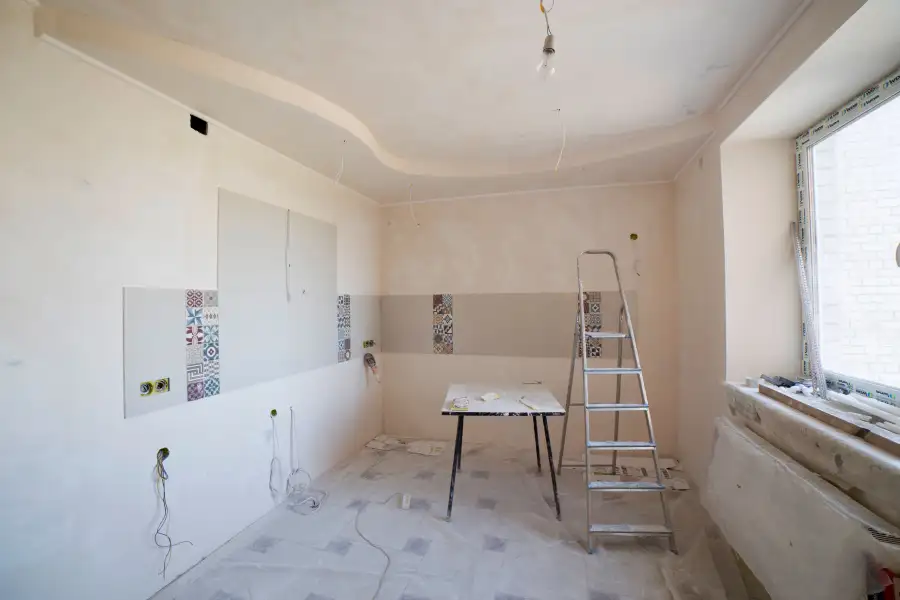
Renovating a home can improve comfort, functionality, and long-term value, but not every project makes financial sense. Before committing to new finishes or major structural work, homeowners need to consider the property’s condition, likely costs, local market, and how long they expect to remain there. Here’s what you need to know:
1. Start With the Reason for Renovating
The strongest renovation plans usually begin with a practical problem. A growing family may need another bedroom, an outdated kitchen may restrict how the household uses the space, or poor insulation and inefficient layouts may make everyday living unnecessarily expensive.
Understanding the reason for the work helps determine whether a cosmetic update is enough or whether a larger project is justified. It also prevents homeowners from spending heavily on features that add little practical value.
2. Compare Renovation Costs With Moving
A major renovation should be considered alongside the alternative of moving. Estate agent fees, stamp duty or other transaction costs, moving expenses, and the price difference between properties can significantly affect the calculation.
Renovation can make more sense when a home’s location works well, but its layout does not. Extensions, loft conversions, and redesigned living spaces can provide additional functionality without giving up an established neighborhood.
The scale of the wider renovation market also shows how common this choice has become. According to Harvard University’s Joint Center for Housing Studies, spending on home improvements and repairs reached $611 billion in 2022 and was expected to remain above $600 billion through 2025.
3. Look Beyond the Visible Improvements
Structural conditions should be assessed before budgeting for finishes. Roofing, drainage, electrical systems, plumbing, foundations, and insulation can all affect the real cost of a renovation. This is also where professional planning matters. A builder should be able to identify potential complications before construction begins, rather than discovering them after walls are opened or materials have been ordered.
4. Get a Detailed Cost Picture
A headline quote rarely tells the whole story. Homeowners should ask what is included, which materials are allowed for, how variations are handled, and whether planning or building approvals are included.
For larger renovation projects, some builders provide an initial estimate before developing a detailed proposal. For example, Proud Projects describes a process involving site assessment, preliminary estimates, detailed proposals, and design documentation before construction begins. Its published process also notes that larger projects may involve a separate investment fee for detailed proposal work.
5. Think About Resale Value
Renovations can influence a property’s appeal, but spending more does not automatically produce a proportional increase in value. Improvements that address common buyer priorities, such as functional kitchens, additional bathrooms, storage, and usable living space, may have broader appeal than highly personalized features. Local market conditions also play a large role. A renovation that makes sense in a high-demand area may not produce the same return elsewhere.
6. Consider How the Work Will Affect Daily Life
The practical disruption of construction is easy to underestimate. Kitchens and bathrooms can become difficult to use, while extensions may affect gardens, access, and parking for months. Ask how long each stage is expected to take, whether the home can remain occupied, and how materials, waste, and site access will be managed. A realistic schedule can be as important as the final design.
Endnote
A successful renovation is ultimately about making a considered investment rather than simply spending more on a property. By weighing practical needs, costs, future plans, and potential resale appeal, homeowners can approach construction with clearer expectations and make improvements that remain useful long after the work is finished.

Comments are closed.