
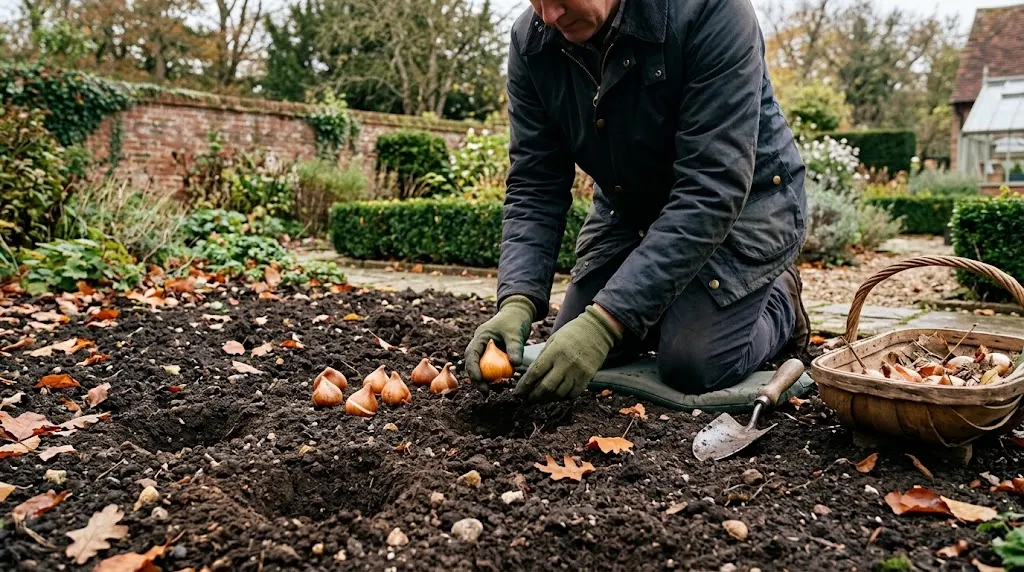
In most of the UK, plant tulip bulbs from late October to the end of December, with November the sweet spot. Plant them two to three times their own height deep, roughly 10 to 20 cm, with the pointed end up. Planting too early, in September, raises the risk of tulip fire disease.
If you’ve ever stood in a garden centre in September with a bag of tulip bulbs in your hand, itching to get started, you’ll know the feeling. Everything else is going into the ground right now. Daffodils, crocuses, hyacinths. Why should the tulips wait?
Because they really do prefer it. Tulips are the late arrivals of the bulb world, and getting the timing right is the difference between a border full of colour in April and a few sulky green shoots. This guide covers when to plant, how deep, what to do about squirrels, and why the bulbs sitting in your shed might be fine. If you’re tidying the whole garden while you’re at it, our guide to seasonal outdoor garden maintenance is a useful companion.
The best time to plant tulip bulbs in the UK

The Royal Horticultural Society suggests planting spring bulbs like daffodils, crocuses and hyacinths by the end of September, but tulips later, around November. Other UK bulb specialists give a slightly wider window, from late October through to the end of December.
So the practical answer is this:
- Late October to mid-November: a good start date for most of the country
- November: the usual sweet spot
- December: still fine, as long as the ground isn’t frozen or waterlogged
Why the wait? Tulips don’t need a head start. They want cooler soil and a proper winter. Plant them too early while the ground’s still warm and they can start growing before they should. Worse, early planting is linked to tulip fire, a fungal disease that leaves scorched, distorted leaves and spoiled flowers. Once it’s in the soil, it’s a nuisance to shift.
It’s also fine to leave them a little late. If you forget and it’s already late November, don’t panic. Plant them anyway. A bulb in the ground in December beats a bulb in a paper bag in January.
Does it matter where you live?
A bit. The UK isn’t one climate, and a few degrees can shift your window by a couple of weeks.
Scotland and northern England: The ground cools sooner, so you can begin earlier, from mid-October. Just be wary of planting into cold, sodden soil later on.
Midlands and most of England: Late October to November is ideal.
The south and south-west: Mild autumns mean the soil stays warm longer. Hold off until November, and December planting works well here.
Wales and Northern Ireland: Wet ground is the bigger concern. Choose your planting day carefully, and add grit in heavy soil.
The soil matters more than the date on the calendar. If it’s cooled down and isn’t a puddle, you’re good to go. If you’re not sure what’s growing well around you, our roundup of outdoor plants and best picks for your garden gives some ideas for companion planting.
Choosing good tulip bulbs

Not all bulbs are equal. A few things to look for when you’re buying:
- Firm and heavy. A bulb that feels light, soft or squishy is past it.
- No mould. A bit of loose papery skin is normal. Blue or green fuzz isn’t.
- Size. Larger bulbs generally flower better. Bargain bags of tiny ones can disappoint.
- A reputable supplier. Cheaper isn’t always better with bulbs.
If you order early, don’t plant them early. Store them somewhere cool, dry and airy, like a garage or shed, until it’s time. A paper bag or a cardboard box is better than plastic, which traps moisture and encourages rot. Check them now and then and bin any that go soft.
How to plant tulip bulbs, step by step
1. Pick the right spot
Tulips like a sunny, open spot with free-draining soil. They tolerate light shade, but they’ll flower best in full sun. What they hate most is wet feet over winter. If your soil’s heavy clay, mix in some grit or sharp sand to help the water move through.
2. Loosen the soil
Dig over the area and break up any lumps. If the ground’s poor, work in some well-rotted compost or leaf mould first.
3. Dig to the right depth
A good rule is to plant tulips at two to three times their own height. For most standard bulbs, that means somewhere between 10 and 20 cm deep. Deeper planting also helps protect them from hungry squirrels and from frost.
4. Place them pointy end up
The pointed tip goes up and the flat, roots end goes down. Don’t worry if you’re not sure. Tulips are surprisingly good at righting themselves, though it costs them a bit of energy.
5. Space them properly
Leave at least twice the bulb’s width between each one. For the best show, plant in groups of six or more rather than in a thin, straight line. Odd numbers and loose clusters look more natural than soldiers in a row.
6. Cover and firm down
Fill the hole, press the soil gently, and water lightly if the ground’s dry. If it’s already damp, as it often is in a British autumn, you can skip the watering.
7. Label them
You’ll thank yourself in March. A cheap plant label saves a lot of guesswork, and you won’t accidentally dig them up while planting something else.
Planting tulips in pots and containers
No garden? No problem. Tulips do brilliantly in pots, and it’s a great way to brighten up a patio, balcony or front step.
- Use a large pot with drainage holes. Cramped containers and blocked holes are the commonest reasons for rotted bulbs.
- Add a layer of crocks or grit at the bottom, then use multi-purpose compost mixed with some grit.
- You can plant bulbs closer together in pots, nearly touching, for a fuller display. Keep them a little apart from the sides.
- Water after planting, then leave them. Over winter, rain will usually do the job, but check the compost isn’t bone dry.
- If it gets really cold, move pots next to the house wall or lift them off the ground using pot feet.
Common tulip mistakes (and how to avoid them)
- Planting too early. September is usually too soon, and it raises the risk of disease.
- Planting too shallow. Shallow bulbs flower less well and are easy pickings for squirrels.
- Waterlogged soil. Tulips rot in soggy ground. Improve drainage first.
- Forgetting about pests. Slugs, mice and squirrels all take a fancy to tulips.
- Cutting the leaves back too soon. After flowering, let the foliage die back naturally so the bulb can recharge.
- Planting in a deep shade. You’ll get tall, floppy stems and few flowers.
- Leaving old, diseased bulbs in the ground. If you’ve had tulip fire, avoid replanting tulips in the same spot for a few years.
Dealing with squirrels, mice and slugs
Anyone who’s lost a whole row of tulips overnight knows the pain. A few things help.
- Plant deeper. It makes digging harder for squirrels.
- Cover the soil with chicken wire or fine mesh until shoots appear.
- Use pots with a wire cage on top.
- Try grit around the bulbs, which slugs dislike crossing.
- Plant daffodils nearby. Daffodils are poisonous to many animals, and some gardeners find it deters them, though results vary.
Nothing’s 100% guaranteed, but a bit of protection goes a long way.
What to do after the tulips flower
When the petals drop, deadhead the flower but leave the stem and leaves alone. The bulb is busy storing energy for next year. Once the foliage has turned yellow and floppy, you can cut it back.
Here’s the honest bit. In many UK gardens, especially with the larger, showy hybrid tulips, flowering gets weaker each year. A damp summer doesn’t help. Some gardeners lift the bulbs after the leaves die back, dry them and replant in autumn. Others simply treat tulips as annuals and replace them. Species tulips and some Darwin hybrids tend to be more reliable at coming back year after year, so look at the label before you buy.
Tidying up while you’re out there
Autumn planting usually comes alongside a general garden clear-up. If fallen leaves are covering your beds, a decent leaf blower saves your back, though a rake is gentler on soil with new bulbs. And if you’ve got wildlife in mind, our DIY bird bath project is a nice weekend job to go with it.
Frequently asked questions
Can I plant tulip bulbs in September?
You can, but it’s generally too early in the UK. Warm soil can encourage disease, especially tulip fire. Wait until at least mid-autumn if you can.
What’s the latest I can plant tulips?
Late December is usually fine, as long as the soil isn’t frozen. Even January planting can work, though flowers may come a bit later.
How deep should tulip bulbs be planted?
Roughly two to three times the height of the bulb, which usually means 10 to 20 cm. Go deeper in light, sandy soil.
How far apart should I plant tulips?
At least twice the width of the bulb. For pots, you can plant them closer together.
Should I water tulip bulbs after planting?
Only if the soil is dry. In a typical British autumn, rain does most of the work.
Do tulips come back every year?
Some do, some don’t. Species tulips and certain Darwin hybrids are the most reliable. Many large hybrid tulips fade after the first year or two, especially in wet summers.
Can I plant tulip bulbs in the same hole as daffodils?
It’s better to plant them separately. They need different depths and timing, and tulips go in later than daffodils.
What if my tulips come up in winter?
Don’t worry. A bit of early green growth is normal and usually survives cold snaps. If the shoots are very early, it can help to add a light mulch.
Final thoughts
Tulips reward patience. Wait until the weather’s turned, plant them deep, give them well-drained soil, and protect them from hungry visitors. Do that and you’ll have a proper show come spring.
If you can only remember one thing, make it this: November, not September. Pick up your bulbs now, store them somewhere dry, and plant when the soil has cooled. Your future self, looking out at a bed full of colour in April, will be glad you did.

Comments are closed.