
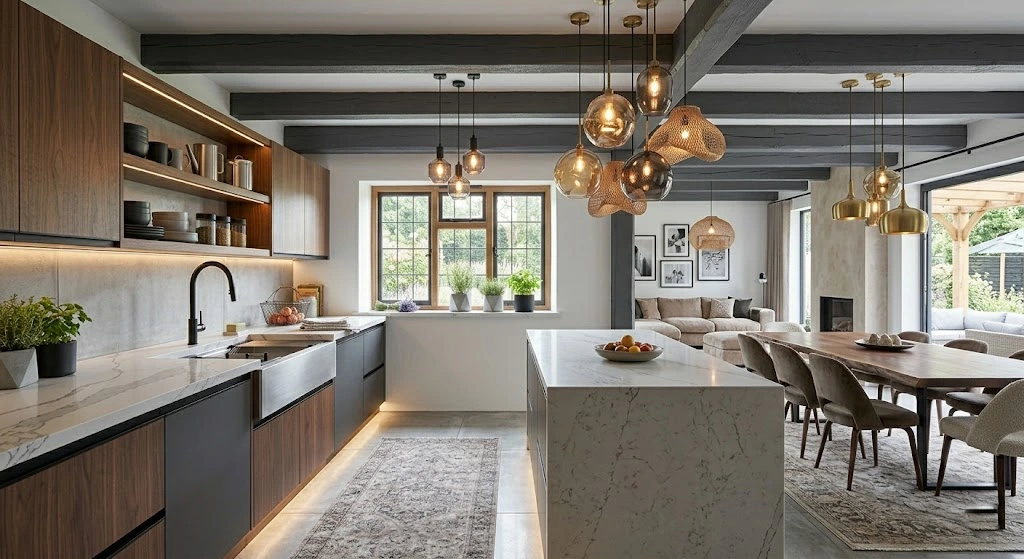
Interior designers rely on pendant lights to anchor a room, add drama, and create warmth. This guide covers 15 expert-approved styles, placement tips, and everything you need to choose the right one.
Pendant lights do more than illuminate a space. They define it. Whether you are redesigning a kitchen, refreshing a dining room, or adding character to a bedroom, the right pendant light can completely change how a room feels and functions. This guide covers 15 designer-loved styles, key buying tips, installation advice, and answers to the most common questions homeowners ask before choosing one.
15 Pendant Light Styles Designers Actually Recommend
Here are the styles interior designers consistently return to across projects. Each one has earned its reputation through both looks and performance.

1. Schoolhouse Pendant: A timeless glass globe with a metal fitter. Works in kitchens, hallways, and reading nooks. Pairs beautifully with white or light grey cabinetry.
2. Rattan or Wicker Pendant brings organic warmth to living rooms and bedrooms. Best used in coastal, Japandi, or bohemian interiors. Available in natural, bleached, or black finishes.
3. Drum Shade Pendant A fabric or linen drum shade softens the light beautifully. Ideal above dining tables and in bedrooms where ambiance matters more than task lighting.
4. Industrial Cage Pendant: An open metal cage around a bare Edison bulb. Perfect for loft spaces, home offices, and kitchens with exposed brick or dark cabinetry.
5. Smoked or Tinted Glass Pendant Amber, smoke, or clear glass with visible bulbs adds sophistication. This style works especially well in bars, dining areas, and moody living rooms.
6. Sputnik Chandelier Pendant Multi-arm brass or chrome bursts that act as a statement piece. Used in entryways, living rooms, and above large dining tables to create visual drama.
7. Lantern Pendant Traditional metal lantern shapes work in farmhouse, transitional, and Mediterranean interiors. The black iron lantern is particularly popular in entryways.
8. Blown Glass Pendant Handcrafted glass in round, teardrop, or elongated forms. Each piece is unique. Best used in pairs or trios over kitchen islands or dining tables.
9. Cone or Funnel Pendant A simple downward-facing cone directs light efficiently. Great for task lighting over kitchen islands and breakfast bars where focus matters.
10. Cluster Pendant Multiple pendants grouped at varying heights from one canopy. Creates a striking sculptural effect without requiring multiple ceiling cutouts.
11. Plug-in Pendant No hardwiring needed. Designers use these in rentals, bedrooms, and reading corners where flexibility is a priority. Available in most popular styles.
12. Oversized Statement Pendant: One large fixture, often 24 inches or wider, used as a room anchor. Best above large dining tables, in double-height entryways, or open plan living spaces.
13. Linear Multi-Light Pendant: A horizontal bar with multiple bulbs or shades. Ideal for long kitchen islands, billiard tables, or rectangular dining tables. Proportional coverage is the key benefit.
14. Mineral or Stone Pendant Marble, alabaster, or concrete shades create a grounded, earthy look. Often used in luxury kitchens and spa-inspired bathrooms.
15. Japandi Washi Paper Pendant Inspired by Japanese and Scandinavian design, these light rice paper or linen fixtures cast a warm, diffused glow. Perfect for minimalist bedrooms and meditation spaces.
Where to Hang Pendant Lights in Your Home
Placement is everything. Hanging a pendant at the wrong height can ruin both the look and the function of the fixture.
- Kitchen island: Bottom of the shade should hang 30 to 36 inches above the countertop
- Dining table: Bottom of the shade should sit 28 to 34 inches above the tabletop
- Entryway: Allow at least 7 feet of clearance from the floor to the bottom of the fixture
- Bedroom: Center above the nightstand at roughly 48 to 72 inches from the floor, depending on ceiling height
- Bathroom: Mount at least 75 to 80 inches above the floor and away from direct water exposure
Always account for ceiling height before purchasing. A fixture designed for an 8-foot ceiling will look cramped in a 10-foot space.
How to Choose the Right Size Pendant Light
Sizing a pendant light incorrectly is one of the most common mistakes homeowners make. Use these formulas.
For a single pendant over a table or island: Add the room dimensions in feet. That total in inches is roughly the ideal fixture diameter. A 10×12-foot room works well with a 22-inch pendant.
For multiple pendants over a kitchen island: Use fixtures that are 10 to 12 inches in diameter and space them 24 inches apart and **24 inches from each end of the island.
For entryways with high ceilings: Choose taller fixtures such as lanterns or elongated pendants that fill vertical space proportionally.
What Makes a Pendant Light Designer-Worthy
Not every pendant light earns a place in a well-designed home. Designers look for specific qualities before recommending a fixture.
- Scale: The fixture must match the room size and ceiling height
- Material quality: Brass, copper, blown glass, and spun steel hold up visually and physically
- Cord or rod adjustability: Essential for kitchens, islands, and high ceilings
- Bulb compatibility: Many premium fixtures require specific Edison, LED, or halogen bulbs
- Finish durability: Matte black, brushed nickel, and aged brass resist fingerprints and wear
- UL or ETL listing: A safety certification that confirms the fixture meets electrical standards
A poorly scaled fixture, even an expensive one, will always feel off. Designers always match the pendant to the purpose of the space first.
Pendant Light Overview Table
| Feature | What to Look For |
|---|---|
| Cord Length | Adjustable, minimum 60 inches |
| Shade Material | Glass, metal, fabric, or rattan |
| Bulb Base | E26 standard or GU10 |
| Ceiling Compatibility | Standard, sloped, or vaulted |
| IP Rating (outdoor use) | IP44 or higher |
| Wattage Range | 40W to 100W depending on room size |
Pendant Light Cost Guide by Style
Prices vary by brand, material quality, and retailer. Brands like Visual Comfort, Rejuvenation, CB2, West Elm, and Schoolhouse Electric are consistently recommended by designers.
| Style | Average Price Range |
|---|---|
| Plug-in pendant | $25 to $80 |
| Schoolhouse glass pendant | $60 to $200 |
| Rattan or wicker pendant | $50 to $180 |
| Blown glass pendant | $120 to $600 |
| Sputnik chandelier pendant | $150 to $900 |
| Linear multi-light pendant | $100 to $500 |
| Marble or alabaster pendant | $300 to $1,200 |
How to Install a Pendant Light Safely
If you have basic electrical knowledge and the circuit is already in place, installing a pendant light is manageable as a DIY project.
- Turn off the circuit breaker for the room where you are working
- Remove the existing fixture and note the wire connections (black, white, green or bare copper)
- Attach the mounting bracket from the pendant kit to the ceiling box
- Connect the wires by matching black to black, white to white, and ground to ground using wire nuts
- Thread the cord or rod through the canopy and secure the canopy to the bracket
- Hang and adjust the cord or rod length before tightening everything
- Install the bulb, restore power at the breaker, and test the fixture
If you are not confident with wiring, always hire a licensed electrician. Incorrect wiring is a fire risk and a code violation.
Top Mistakes to Avoid When Buying Pendant Lights
Even experienced homeowners make these errors. Avoid them from the start.
- Buying without measuring ceiling height and available drop length
- Choosing a style that clashes with existing hardware finishes
- Ignoring the lumens output and buying a decorative fixture for a task area
- Purchasing non-dimmable fixtures for dining rooms or bedrooms
- Installing a single small pendant over a large dining table
- Forgetting to verify the ceiling box is rated for the fixture weight
FAQs About Pendant Lights
How low should a pendant light hang over a kitchen island?
The bottom of the shade should hang between 30 and 36 inches above the countertop. This provides good task lighting without blocking sightlines across the kitchen.
Can I install a pendant light without hardwiring?
Yes. Plug-in pendant lights are available in most styles and require only a standard wall outlet. They are ideal for renters or spaces without existing ceiling wiring.
How many pendant lights do I need over a kitchen island?
A general rule is one pendant for every 2 feet of island length. A 6-foot island typically works well with three evenly spaced pendants.
What bulb should I use in a pendant light?
Most designers recommend warm white LED bulbs in the 2700K to 3000K range. They use less energy, last longer, and create a flattering, comfortable light.
Are pendant lights suitable for low ceilings?
Yes, with the right fixture. Choose a flush-mount or semi-flush pendant with minimal drop for ceilings under 8 feet. Avoid long cord or rod styles in low spaces.
What is the difference between a pendant light and a chandelier?
A pendant light is typically a single fixture hanging from one cord, rod, or chain. A chandelier has multiple arms or lights extending from a central body. Both are suspended ceiling fixtures.
How do I clean a glass pendant light shade?
Turn off the light and allow the bulb to cool. Remove the shade if possible and wipe with a damp microfiber cloth. For stubborn grime, use a mild dish soap solution and dry immediately to prevent water spots.
Is a Pendant Light Worth It in 2026?
Absolutely. A well-chosen pendant light is one of the highest-impact, lowest-cost upgrades you can make to any room. It adds personality, improves lighting quality, and increases the perceived value of your space.
Start with your room size, ceiling height, and existing finishes. Then narrow down by style and budget. Whether you choose a sculptural blown glass piece or a simple schoolhouse globe, the right pendant light will earn its place every single day.
The best time to upgrade your lighting is now. Spaces that feel flat or unfinished almost always improve dramatically with one well-placed pendant.


Comments are closed.