
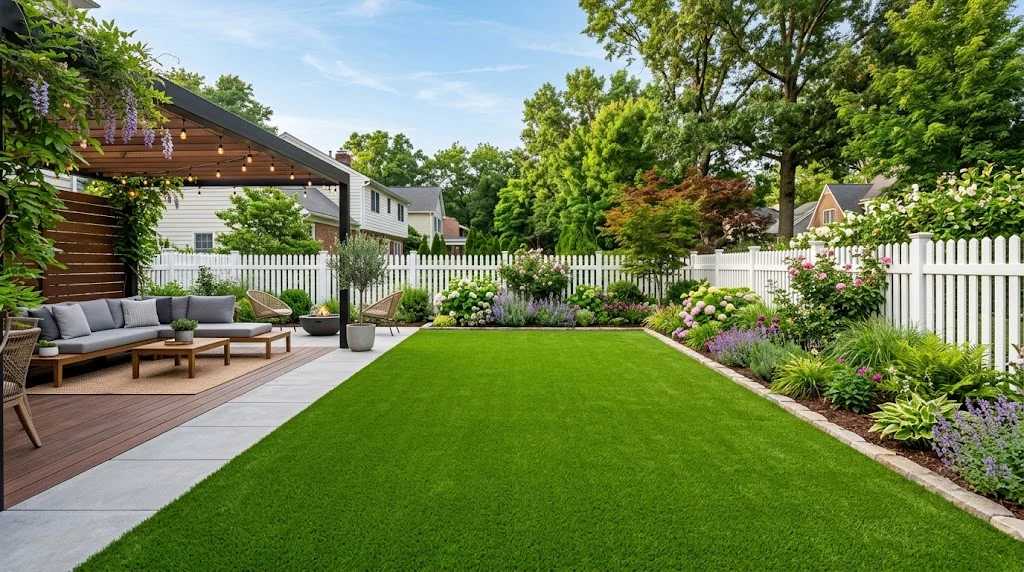
Synthetic grass installation price typically runs between $8 and $20 per square foot, including materials and labor. A standard 500-square-foot yard costs around $7,000 to $9,500. Prices shift based on turf quality, yard shape, slope, and your local labor rates.
Thinking about ripping out your natural lawn and switching to turf? The first question everyone asks is the same: how much will this actually cost me? The honest answer is that synthetic grass installation price depends on several moving parts, and no two yards price out the same way.
This guide breaks down real numbers from actual installers and pricing data. You’ll see what drives the cost up, what brings it down, and how to budget for your own project without any surprises.
What Determines the Price of Synthetic Grass Installation

Your final bill comes from three main pieces. The turf material itself makes up a big chunk of the cost. Labor for site prep and installation adds another layer. Then extras like base rock, infill, and edging round out the total.
Yard size plays a role too, but not in the way most people expect. Smaller yards often cost more per square foot than larger ones. Installers have fixed costs for equipment, delivery, and cleanup that don’t shrink just because your yard is small, so those costs get spread across fewer square feet.
Shape matters as much as size. A simple rectangular lawn installs fast and cheap. A yard full of curves, garden beds, and tight corners takes longer to cut and fit, and that extra labor shows up on your invoice.
Average Cost Per Square Foot

Most homeowners pay between $8 and $20 per square foot for a full synthetic grass installation, materials and labor combined. Basic polypropylene setups sit at the low end of that range. Premium nylon turf with heavy face weight and long fade warranties pushes toward the top.
For a typical 500-square-foot backyard, total project costs land around $7,000 to $9,500. Bump that up to 2,500 square feet, and your per-square-foot rate actually drops, often landing closer to $9 per square foot, since fixed costs get spread across more area.
Location changes the math too. Cities with a high cost of living, like New York or Boston, see rates as high as $23 per square foot. Smaller metro areas and towns with lower labor costs often land well under $15 per square foot for the same job.
Material Costs Explained
Synthetic turf comes in three main types, and each one has its own price tag. Polypropylene is the budget pick, running $2 to $6 per square foot for materials alone. It works fine for decorative spots that don’t see much foot traffic, but it wears out faster under heavy use.
Polyethylene turf hits the sweet spot for most homes. It costs $3 to $5 per square foot for materials, looks realistic, and holds up well for years of everyday use. This is the material most installers recommend for family backyards.
Nylon sits at the top of the price ladder, running $5 to $8 per square foot for materials only. It resists heat and holds its shape under heavy foot traffic better than any other option, which makes it a common choice for sports areas and high-use commercial spaces.
Face weight and pile height also shift the price. Turf with a face weight between 50 and 80 ounces per square yard costs more than lighter 35-ounce products, but it looks fuller and lasts longer. Longer pile heights, around 1.5 to 2.5 inches, give a more natural look and typically cost a bit more than shorter, budget-friendly blades.
Labor Costs and Site Preparation
Labor usually makes up 50% to 60% of your total synthetic grass installation price. Installers charge anywhere from $3 to $12 per square foot depending on your region and the complexity of the job.
Before any turf gets laid down, your yard needs proper prep work. Crews remove your existing grass, level the ground, and add a compacted base layer of gravel or crushed stone for drainage. This step alone can cost $1.20 to $2.25 per square foot, and skipping it is the number one reason artificial lawns end up wrinkled or waterlogged within a year or two.
Grass removal itself adds another $1 to $2.75 per square foot on top of installation, unless your yard is already bare dirt. If you’re converting an existing lawn, factor this into your budget from the start so it doesn’t catch you off guard later.
Slopes make everything harder. Getting turf to lay flat and stay anchored on an incline takes extra time and specialized fastening methods. Expect a 50% to 60% price increase for sloped installations compared to flat, level ground.
Additional Costs to Budget For
Infill is the material poured into the turf to keep the blades standing upright and add cushioning underfoot. Depending on the type you choose, rubber, sand, or silica, this adds $0.30 to $1.75 per pound, and most yards need roughly one pound per square foot.
Drainage systems matter most in areas with heavy rainfall. A proper drainage layer runs $1 to $5 per square foot, and it’s worth the investment if your region sees regular storms. Without it, water pools instead of soaking through, and your lawn can turn into a soggy mess.
Edging keeps everything in place along the borders of your lawn. This typically costs $1 to $3 per linear foot and gives the whole installation a clean, finished look. If your yard already has a wall, fence, or pavement bordering it, you might be able to skip this cost altogether.
Cost by Project Size
Small projects under 200 square feet often see the highest per-square-foot rates, sometimes reaching $20 or more. The fixed costs of delivery, equipment, and setup just don’t shrink for a tiny job.
Mid-size lawns between 300 and 500 square feet, the most common residential project size, typically land in the $12 to $19 per square foot range. This is where most homeowners end up spending, with total costs between $3,600 and $9,500.
Larger installations above 2,000 square feet benefit from economies of scale. Per-square-foot pricing can drop to $8 or $9, though your total project cost still climbs given the added square footage.
DIY vs Professional Installation
Installing synthetic grass yourself can save real money on labor, sometimes $1,700 to $6,000 on a standard 500-square-foot yard. But this is a physically demanding job that requires precise grading, proper base compaction, and careful seam work.
Mistakes during DIY installation tend to show up later as drainage problems, wrinkles, or shifting turf, and fixing those issues after the fact often costs more than hiring a professional in the first place. If you’re confident with landscaping tools and have the time to dedicate to a multi-day project, DIY can work. For most homeowners, professional installation delivers a more reliable result.
How to Get the Best Price on Synthetic Grass Installation
Get quotes from at least three or four local installers before committing to anyone. Pricing varies more than most people expect, even within the same city, so shopping around genuinely pays off.
Ask your installer if doing some of the prep work yourself, like clearing debris or removing old grass, could lower the labor bill. Many contractors will knock a few dollars off per square foot if you handle part of the groundwork.
Choose mid-range polyethylene turf unless you have a specific reason to go premium. It offers the best balance of cost, appearance, and durability for the vast majority of residential yards, and you won’t be paying extra for performance features you don’t actually need.
How Long Does Synthetic Grass Actually Last
Price only tells half the story. A quality synthetic lawn typically lasts 15 to 25 years with basic upkeep, and that lifespan changes how you should think about the upfront cost. Spread a $9,000 installation over 20 years, and you’re looking at $450 a year for a lawn that never needs mowing, watering, or fertilizing.
Compare that to a natural lawn, which can run $100 to $300 a month in water, mowing service, and seasonal treatments depending on where you live. Over the same 20-year stretch, natural grass maintenance can easily surpass what you’d spend installing turf in the first place. That math is a big reason homeowners in drought-prone regions have shifted toward synthetic options over the past several years.
Warranty length is worth checking closely before you buy. Most reputable turf products come with an 8 to 10 year fade warranty, and some premium brands stretch that further. A shorter warranty usually signals a cheaper backing material that won’t hold color as well under constant sun exposure.
Final Thoughts
Synthetic grass installation price varies widely, but most homeowners land somewhere between $8 and $20 per square foot once materials, labor, and site prep are all factored in. Understanding where your money goes, turf type, labor, base prep, and extras, puts you in a much stronger position to compare quotes and avoid overpaying.
Get a few written estimates before you decide. A clear breakdown of material and labor costs upfront is the easiest way to make sure your new lawn stays within budget from day one.

Comments are closed.