
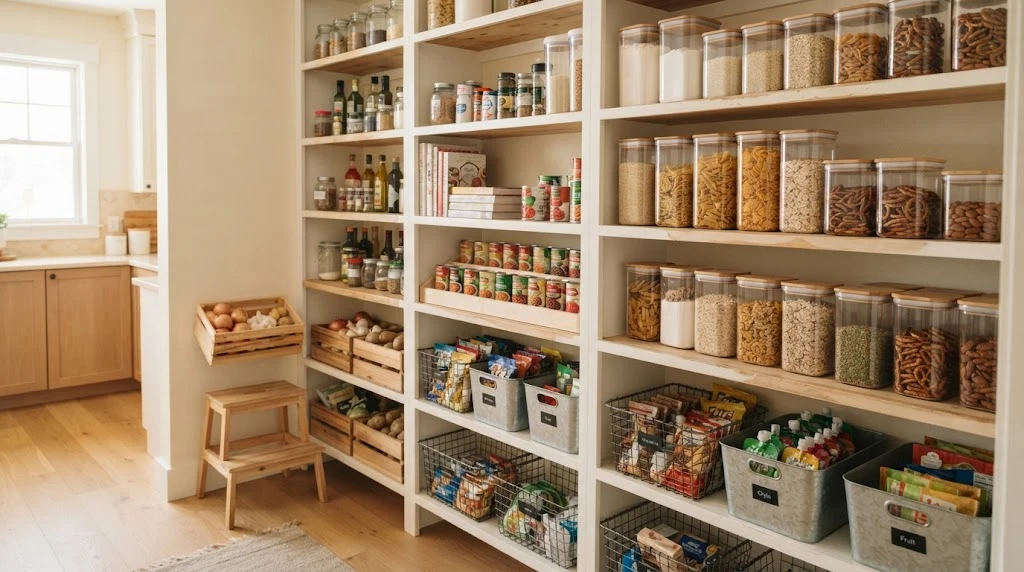
To organize a pantry, start by removing everything and tossing expired items. Group food into zones like snacks, baking, and grains. Store items in clear, labeled containers, and place everyday staples at eye level. Check and refresh your pantry every few months to keep it running smoothly.
Open your pantry right now. Be honest. Is it a place where you can find what you need in ten seconds, or is it a shelf-shaped mystery box? For most people, it’s somewhere in between — a little bit organized, a little bit chaos, and a lot of duplicate spice jars.
The good news is that pantry organization isn’t complicated. You don’t need a full renovation or a bank account to match. You need a plan, a few containers, and about an afternoon. Once your pantry has a system, it stays that way with barely any effort. Let’s walk through how to get there.
Why a Messy Pantry Costs You More Than Time
A disorganized pantry doesn’t just look bad. It costs real money. The average household throws away hundreds of dollars in food each year, and a lot of that waste comes from items buried in the back of a shelf until they expire. You buy a second bag of rice because you couldn’t see the first one. You forget about the crackers behind the cereal boxes until they go stale.
There’s also the mental side of it. A cluttered pantry makes cooking feel like a chore before you’ve even turned on the stove. You open the door, sigh, and start digging. A clear, organized space does the opposite. It makes meal prep faster and takes one small source of daily stress off your plate.
Start by Clearing Everything Out

Before you buy a single bin, empty the whole pantry. Pull every can, box, and bag onto your counter or kitchen table. This sounds like more work than it is, and it’s the only way to really see what you own.
While everything is out, check expiration dates. Toss anything that’s expired, stale, or something you know you’ll never use. Be honest with yourself about that jar of exotic spice you bought for one recipe three years ago. This step alone often clears out a surprising amount of space, since most pantries are holding onto items nobody remembers buying.
Wipe down the shelves while they’re empty. Crumbs and sticky spills build up over time, and it’s much easier to clean bare shelves than ones packed with jars.
Sort Everything Into Zones

Once your pantry is empty and clean, group your food into categories before anything goes back in. Think about how you actually use your kitchen. Breakfast items belong together. Baking supplies belong together. Snacks, canned goods, grains, and pasta each get their own section.
This zoning approach works because it matches how your brain searches for things. When you want cereal, you go straight to the breakfast zone instead of scanning the entire pantry. When your kids want a snack, they know exactly where to look, which means less time keeping them out of things they shouldn’t touch.
Keep the zones flexible. Your family’s habits will shift, and your pantry should shift with them. If you started buying more snacks for lunches, give that zone more shelf space. There’s no single correct layout, just the one that fits how your household actually eats.
Put the Right Items in the Right Spots
Once you know your zones, think about placement within the pantry itself. Eye-level shelves should hold the things you reach for every day, like cereal, snacks, and cooking oils. Save the top shelves for items you use less often, such as holiday baking supplies or bulk backups.
Lower shelves work well for heavier items and for things kids need to grab on their own, like cups or snack bins. Keep the very back corners for backstock, things you’ll use eventually but don’t need this week. Just make sure nothing gets so buried back there that you forget it exists.
If your pantry has deep shelves, consider adding a lazy Susan or small riser to keep items from getting lost in the back. Deep shelves are one of the biggest reasons food goes bad unnoticed, since anything more than a foot deep tends to disappear from view.
Clear Containers Make a Bigger Difference Than You’d Think
Once your zones are set, containers are the next step. Clear bins and jars let you see what you have at a glance, which cuts down on both waste and duplicate purchases. Decanting flour, sugar, rice, pasta, cereal, and coffee into matching containers is one of the simplest upgrades you can make to a pantry.
You don’t need fancy glass canisters to make this work. Plastic containers with airtight lids do the job just fine and cost far less. What matters is consistency. A pantry full of matching containers looks calmer and functions better than one with a mix of random bags and boxes, even if the food inside is identical.
Containers also protect your food. Airtight lids keep pests out and keep dry goods fresh longer than the bags they came in. That’s a real, practical benefit beyond just looking tidy.
Labels Save You From Guesswork
Once your food is in containers, label everything. This step feels small, but it makes a huge difference for anyone else who uses the kitchen. A label tells your partner or kids exactly where the pasta goes back after dinner, which means your organized system actually stays organized.
Simple labels work best. Write the item name, and if it helps, add the date you decanted it. This is especially useful for items like flour and grains, which don’t have a visible expiration date once they’re out of the original packaging. A quick glance at the label tells you if something has been sitting too long.
If you have young kids, picture labels can help them find snacks and put things away on their own. It turns pantry organization into something the whole family maintains, not just one person’s ongoing project.
Small Pantries Need Smart Choices, Not More Stuff
Not everyone has a walk-in pantry, and that’s fine. Small pantries or single cabinets just need smarter choices instead of more space. Vertical storage is your best friend here. Add stackable bins, tiered shelves, or door-mounted racks to use every inch of height, not just shelf depth.
The back of the pantry door is often wasted space. A simple over-the-door organizer can hold spices, snack packets, or foil and plastic wrap, freeing up shelf space for bulkier items. Slim, uniform containers also help more in a small pantry than a large one, since every inch of width counts.
Resist the urge to buy more storage than you need. A small pantry stays functional when you’re intentional about what goes in it, not when you cram in every organizing product you can find.
Keep the System Going With Regular Check-Ins
An organized pantry doesn’t stay that way forever without a little upkeep. Set aside ten minutes every couple of months to walk through your shelves. Toss expired items, wipe up spills, and put anything that’s drifted out of its zone back where it belongs.
This is also a good time to notice what’s not working. Maybe the baking zone keeps overflowing, or the snack bin is always empty by Wednesday. Small adjustments like these keep your system realistic instead of forcing your family to adapt to a layout that doesn’t fit how you actually live.
Seasonal check-ins matter too. Before the holidays, you might need extra space for baking supplies. In summer, snack and drink storage might take priority. Letting your pantry flex with the seasons keeps it useful year-round instead of becoming outdated the moment your habits change.
A Few Common Mistakes to Avoid
One mistake people make is buying every organizing product they see before they’ve actually sorted their food. Bins and labels are tools, not a starting point. Sort first, then buy only what you need to support that system.
Another common issue is ignoring shelf depth. Deep shelves without risers or pull-out trays hide food and waste space. If your pantry has deep shelving, a simple riser or basket system solves the problem without any renovation.
Finally, don’t build a system so complicated that only you can maintain it. If labels are confusing or zones don’t make intuitive sense, the rest of your household will slowly undo your work. Simple, clear systems last. Complicated ones fall apart within a month.
A well-organized pantry isn’t about perfection. It’s about knowing what you have, finding it quickly, and wasting less food and money along the way. Clear it out, sort it into zones, add containers and labels, and check in every so often. That’s really all it takes to turn a chaotic shelf into a space that actually works for your kitchen.


Comments are closed.