
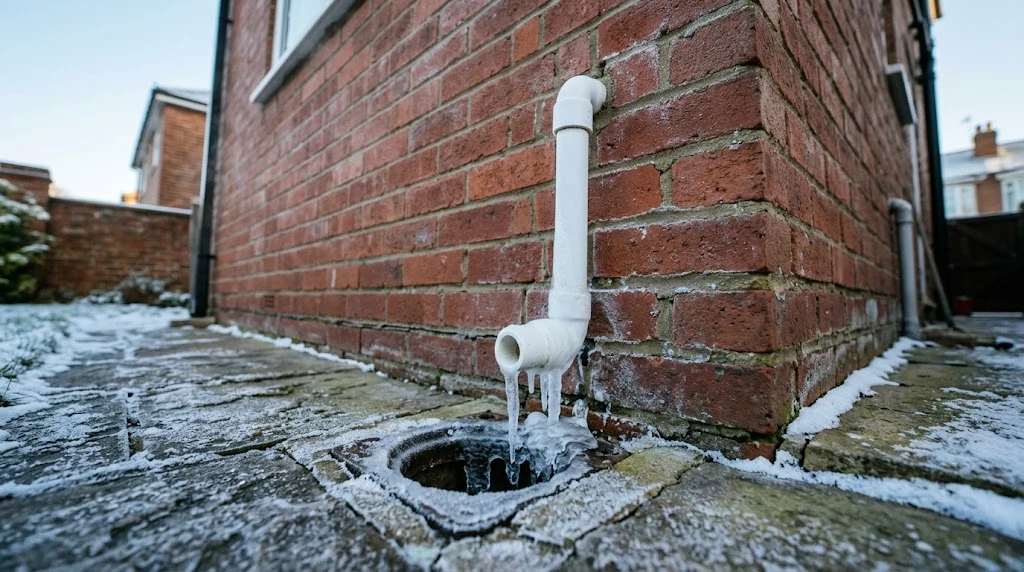
What is a frozen condensate pipe? It is the plastic drain pipe from your condensing boiler, blocked with ice. The boiler shuts down to protect itself. You lose heating and hot water. If the pipe is low and easy to reach, thaw it with a hot water bottle or hot (not boiling) water. Then reset the boiler. If it still won’t start, call a Gas Safe engineer.
It’s a freezing morning. You turn the heating up. Nothing happens. No hum. No click. No hot water for the shower.
The boiler shows a fault code you’ve never seen. You can hear a faint gurgle inside.
Before you book an engineer, go outside. Look for a thin white or grey plastic pipe leaving the wall. Follow it to the drain. If it’s iced up, you’ve found the problem.
Good news: this is one of the few boiler faults you can often fix yourself. A hot water bottle is usually all it takes.
This guide explains what the pipe does and how to spot a freeze. It shows you how to thaw it safely and when to stop. It also covers what to change so it doesn’t happen again.
What Is a Condensate Pipe, and Why Does It Freeze?

A condensing boiler is efficient. It pulls extra heat out of the exhaust gases before they leave your home. That cooling turns vapour into water.
This water is called condensate. It is slightly acidic. It can’t sit inside the boiler. So a plastic pipe carries it away to a drain.
You almost certainly have one. Since 1 April 2005, new gas boilers in the UK have had to be condensing models. If your boiler is under twenty years old, it has a condensate pipe.
The problem is where the pipe runs. Ideally, it stays inside the house. It joins a sink waste or a soil stack. British Standard BS 6798 says it should end at an internal drain where possible.
Often that wasn’t practical. So the pipe was pushed through the wall and into the garden.
Outside, a thin trickle of water sits in a small plastic pipe. Nothing keeps it warm. Most freeze-related boiler breakdowns involve an external pipe.
Ice forms where water lingers. That means the open end, a bend or a dip in the run. Once the pipe is blocked, the condensate has nowhere to go.
The boiler then switches itself off. This is a safety feature. It stops waste water backing up into the appliance and damaging it.
Signs Your Condensate Pipe Has Frozen

The symptoms are easy to recognise. You don’t need all of them. Two or three together are a strong clue.
- The boiler cuts out in cold weather. No heating. No hot water. It worked yesterday.
- Gurgling or bubbling. You may hear it from the boiler or the pipe.
- A fault code or warning light. Codes vary by brand. Baxi lists E133 or E28 for many boilers. Worcester Bosch lists EA, D5 or a slow blue flashing light. Check your manual for yours.
- A freezing night. If it hasn’t been below zero, a frozen pipe is unlikely. Look for another cause.
- Ice on the pipe outside. Look for frost or a solid white plug in the plastic pipe near your boiler.
Can’t find the pipe? Check your manual. It shows where the condensate outlet sits on your model.
Stay Safe Before You Start
Thawing a pipe is simple. A few ground rules keep it that way.
- Only act if the pipe is low and easy to reach. Is your boiler upstairs, with the pipe high on the wall? Don’t climb a ladder in freezing weather. Call an engineer.
- Never use boiling water. It can damage the plastic. It can also freeze on the path and make it a skating rink. Hot water is enough.
- No blowtorch, heat gun or naked flame. Plastic and fire don’t mix.
- Watch your footing. Frost and spilled water make paving slippery. Wear shoes with grip.
- Smell gas? Stop. Open the windows. Don’t touch any switches. Call the National Gas Emergency Service on 0800 111 999.
Switch the heating off at the thermostat while you work. That way the boiler won’t try to fire up against a blocked pipe.
How to Thaw a Frozen Condensate Pipe, Step by Step
- Confirm the cause. Check the signs above. Make sure there is real ice and a real freeze.
- Turn the heating off. Use the thermostat or programmer.
- Find the frozen part. Start at the open end. Then check bends and low points.
- Apply gentle heat. Hold a hot water bottle against the pipe. A microwaveable heat pack works too. So does a cloth soaked in hot water. You can also pour hot water slowly along the outside of the pipe. One housing association suggests about 60 to 70°C. That is hot, but well below boiling. Pour on the outside, never into the pipe.
- Be patient. Keep going until the ice clears. You’ll see the plug drop out or hear water run. Don’t turn up the heat to rush it.
- Reset the boiler. Check your manual for how to clear the fault. Most boilers have a reset button. Once it restarts, you’ll hear it fire up as normal.
If the pipe was the only problem, heating and hot water return within minutes.
What If the Boiler Still Won’t Start?
Don’t keep pressing reset. Something else may be wrong.
The condensate trap can clog with sediment. This is common on boilers that haven’t been serviced for years. Clearing it is not a DIY job. Opening a gas boiler is work for a Gas Safe registered engineer.
Call one if:
- the fault code comes straight back after a reset
- you can’t reach the pipe safely
- you can’t find any ice, but the boiler keeps shutting down
- you see water leaking from the pipe, the boiler or the wall joint
Renting? Tell your landlord. Don’t pay for the repair yourself. Landlords are generally responsible for keeping heating and hot water installations in good repair.
Don’t ignore a leak. Water soaks into walls and floors fast. Our guide to what happens after a hidden plumbing leak shows how quickly damage spreads. If water has already reached the structure, a professional water damage restoration service can dry it out before mould sets in.
How to Stop Your Condensate Pipe Freezing Again
Thawing the pipe gets you warm. It doesn’t fix the cause. Expect a repeat on the next cold night unless you act.
These fixes make the biggest difference. They’re listed roughly from easiest to hardest.
Insulate the External Section
Wrap any outdoor part of the pipe in weatherproof insulation. Foam lagging is a cheap start. Secure it with strong tape or cable ties. You can fit it yourself if you can reach the pipe safely.
Pick a product made for outdoor use. Indoor foam breaks down in rain and sun. Cover the whole exposed run. Include the bends and the open end, where ice usually starts.
Keep the Outside Run Short, and Make It Wider
Length and width both matter. Worcester Bosch says an external condensate run should be no longer than 3 metres for most boilers. It should also be insulated. The company suggests moving up to 32mm pipe.
A wider pipe holds more water before it blocks. A small amount of ice can’t seal it so easily. Rules vary by model. Ask your engineer what your manufacturer requires.
Move the Pipe Indoors
This is the permanent fix. An engineer may be able to reroute the pipe to an internal drain. That could be a sink waste, a washbasin waste or a soil stack.
Inside the house, the pipe stays above freezing. The problem simply goes away. It costs more than lagging. But if your pipe freezes every winter, it’s worth the quote.
Consider Trace Heating or a Siphon-Style Boiler
Trace heating is an electric element fitted along the pipe. It keeps the water from freezing. A qualified engineer must install it.
Replacing your boiler? Ask about models with a siphon-type condensate release. Which? lists this as one way to cut the risk.
Get the Boiler Serviced Every Year
A yearly service lets an engineer clear the trap and check the pipe run. They can spot a weak install before the cold snap. It’s also a good moment to ask if the route could be improved.
Renting? Here’s What to Do
Tenants can still help. Thawing a reachable pipe with warm water is fine in most cases. But don’t alter the pipework or fit trace heating without your landlord’s say-so.
Take a photo of the frozen pipe. Report it in writing. Mention that it happened in freezing weather. Ask whether they’ll insulate or reroute it.
If it keeps happening, your case for a permanent fix gets stronger.
Frozen Condensate Pipe vs Frozen Water Pipes
People often mix these up. They are different problems with different risks.
| Frozen condensate pipe | Frozen water pipe | |
|---|---|---|
| What’s inside | Acidic waste water from the boiler | Clean supply water |
| Typical symptom | Boiler shuts down, gurgling, fault code | Trickle or no water from taps |
| Main risk | Loss of heating and hot water | Burst pipe and flooding |
| Usual quick fix | Warm the outside pipe, reset the boiler | Warm the pipe gently, open the tap, shut off the water if it leaks |
A frozen condensate pipe rarely floods your home. A frozen water pipe can. If your taps have stopped running, or you think a pipe has split, read our guide on how to fix a burst pipe in winter. It shows how to shut off the supply and get it repaired.
A Quick Winter Boiler Checklist
Do these before the cold arrives. Around the time the clocks go back is ideal.
- Find your condensate pipe. Take a photo, so you know what to look for at 6am in the dark.
- Check whether any of it runs outside. Note how long that section is.
- Insulate the exposed length with weatherproof lagging.
- Book your annual boiler service if you haven’t already.
- Learn where your water shut-off valve is. Our plumbing tips to avoid a disaster this Christmas cover this and other holiday basics.
- Save a Gas Safe engineer’s number in your phone.
- Fit a working carbon monoxide alarm near the boiler.
Is your boiler noisy even when it isn’t freezing? Read our list of warning signs your plumbing system is failing. Gurgling, banging and rattling aren’t always about ice.
Frequently Asked Questions
Can I pour boiling water on a frozen condensate pipe?
No. Boiling water can damage the plastic. It can also freeze on the ground and cause a slip. Use a hot water bottle, a warm cloth or hot water poured slowly over the outside of the pipe.
How do I know it’s the condensate pipe and not something else?
Look for four clues. The boiler shuts down in freezing weather. It gurgles. It shows a fault code. And there is ice on the outside plastic pipe. No freeze, or no ice? The cause is probably different. Call an engineer.
Will a frozen condensate pipe damage my boiler?
Usually not. The automatic shutdown is there to prevent damage. Thaw the pipe, reset the boiler and it should run. If it keeps happening, fix the cause with insulation, a wider pipe or a reroute.
Does a condensate pipe have to be insulated?
For external sections, usually yes. Worcester Bosch says external runs should be kept to 3 metres and insulated for most boilers. Some models have exceptions where the pipe is 32mm. Check your manual or ask your installer.
Can I thaw the pipe myself?
Yes, if the pipe is low and you can reach it safely. Use warm water, not boiling. If the pipe is high up, or you’re unsure, call a Gas Safe engineer.
Why does my condensate pipe keep freezing?
The outside run is probably long, narrow or uninsulated. Or it has a dip where water pools. Insulating it, widening it or moving it indoors are the most reliable long-term fixes.
Final Thoughts
A frozen condensate pipe is a common reason for a boiler failing in cold weather. It is also one of the easiest to deal with.
A hot water bottle, some patience and a reset button get most homes warm again in minutes.
The real work comes afterwards. Insulate the pipe. Keep the outside run short. Ask about a wider pipe or an indoor route. Book your annual service.
Do that this autumn, and the next cold snap is a non-event.

Comments are closed.