
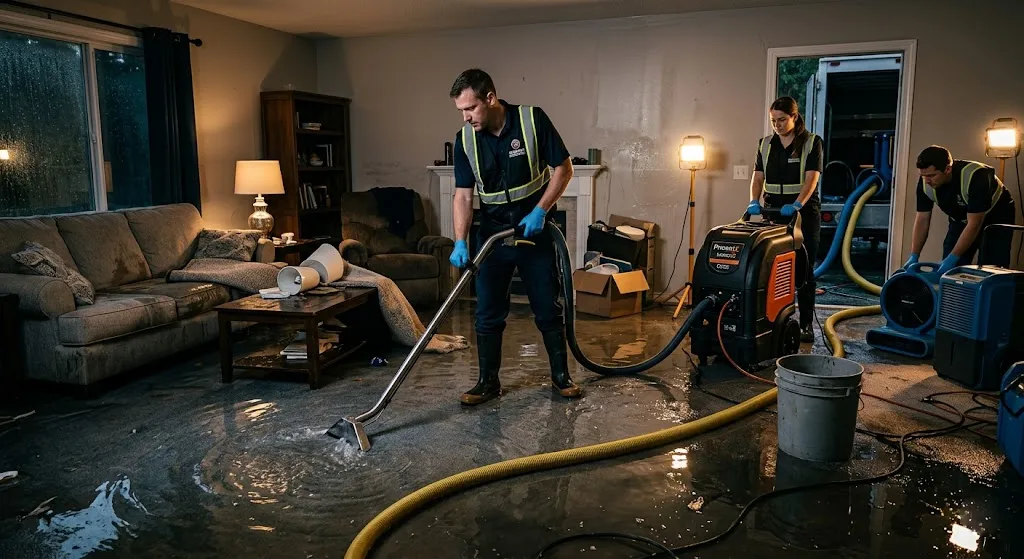
Professional water damage restoration is the process of removing standing water, drying structural materials, controlling humidity, stopping mold growth, and repairing damaged areas after a flood, burst pipe, or leak. Professionals use specialized equipment to restore your property to its pre-damage condition safely and efficiently.
Water damage is one of the most stressful things a homeowner can face. One moment everything is fine. The next, you’re standing in a flooded kitchen or a soaked basement wondering what to do first. That feeling of panic is completely normal — but the decisions you make in the first few hours matter more than most people realize.
This guide walks you through everything you need to know about professional water damage restoration service, how the process works, and why acting fast is the single most important thing you can do.
What Is Professional Water Damage Restoration?
Water damage restoration is the process of removing standing water, drying structural materials, controlling humidity, preventing mold growth, and repairing damaged building components after leaks, flooding, burst pipes, or appliance failures.

It’s not just about mopping up water and calling it a day. Moisture can spread into drywall, subfloors, insulation, and electrical systems quickly, so professional mitigation and structural drying help reduce secondary damage and shorten overall restoration timelines.
Think of it this way — what you see on the surface is rarely the full picture. Water travels. It seeps into places you can’t see, and if it stays there, you end up with a much bigger problem down the road.
Why You Shouldn’t Handle It Yourself
Many homeowners reach for a mop and a fan and hope for the best. That’s understandable, but it rarely works. Without professional help, moisture can lead to mold growth, unpleasant odors, and long-term deterioration.
Professional water restoration companies use specialized equipment — such as air movers, dehumidifiers, and moisture meters — to dry and dehumidify your property after water damage. This advanced technology helps locate leaks and determine flow rates.
A regular household fan simply can’t do what industrial drying equipment does. Professionals also monitor the drying process closely to make sure all affected materials reach safe moisture levels. That’s a level of precision that DIY methods just can’t match.
How Fast Does Water Damage Get Worse?
Speed is everything with water damage. Water and bacteria-growth damage can begin within hours. Mold can start growing in as little as 24 to 48 hours if moisture isn’t controlled. Structural materials like wood and drywall absorb water quickly, and the longer they stay wet, the harder they are to save.
With rapid response, your floors, walls, and priceless possessions can often be preserved and restored. That’s why most reputable restoration companies offer 24/7 emergency response. Every hour counts when your home is soaked.
The Step-by-Step Restoration Process
Professional water damage restoration follows a clear, structured process. Here’s exactly what happens when a team shows up at your door.
Inspection and Damage Assessment
After professionals arrive at your home, they thoroughly assess the water damage and help you understand its severity, any hazards that may be present, and determine what can be restored.
This step shapes everything that follows. Technicians use moisture meters and thermal imaging cameras to find water hiding in walls, floors, and ceilings. They document the damage carefully — not just for your benefit, but also to support your insurance claim.
Water Extraction
Service work normally begins with a thorough extraction of water. This helps prevent the spread of water in the structure and reduces drying time. Typically, hundreds or thousands of gallons of water are removed using powerful pumps and extraction units during the water removal process.
This phase happens fast. The sooner water is out of your home, the better your chances of saving flooring, walls, and personal belongings. Extraction is the foundation of the whole restoration effort.
Drying and Dehumidification
Once the standing water is gone, the real drying work begins. Professionals deploy moisture-detection and drying equipment to remove water hidden within building materials or other areas. They begin the drying process to all affected areas with air movers and specialized dehumidifiers.
This stage can take several days depending on the extent of the damage. Technicians check moisture readings regularly to track progress and adjust equipment placement as needed. Rushing this step is one of the most common mistakes — and it leads to mold problems later.
Cleaning, Sanitizing, and Mold Prevention
Water damage — especially from flooding or sewage backups — brings contaminants into your home. Professionals apply an EPA-registered disinfectant per the manufacturer’s guidance to protect the health and safety of the building’s occupants from potential mold growth.
Flood damage cleanup services focus on removing contaminated water, sanitizing affected areas, and restoring safe living conditions. This isn’t just about what you can see. It’s about making sure your home is actually safe to live in once the work is done.
Repairs and Full Restoration
The final step of the restoration process typically involves moisture testing to verify dryness, and then construction services to rebuild the structure that was removed. This can include electrical work, plumbing, drywall, and finish materials.
The goal is to return your property to pre-loss conditions. A full-service restoration company handles everything from start to finish, so you’re not left coordinating between a dozen different contractors.
What Causes Water Damage in the First Place?
Water damage comes from more sources than most people expect. Water emergencies can strike at any time, whether caused by storms, plumbing failures, or sewage backups.
The most likely areas in your home to see damage include ceilings, kitchens, walls, and basements — because leaky pipes and floods are most common in those areas. Appliance failures, roof leaks, and overflowing toilets are also frequent culprits. No home is completely immune, which is why knowing who to call before disaster strikes can save you a lot of stress.
How Professional Restoration Helps With Insurance
Dealing with your insurance company after water damage is rarely straightforward. Professional restoration companies help you navigate the insurance claims process and coordinate the necessary paperwork for a quicker, easier experience.
Documentation and claim support help property owners and insurance professionals move faster. Good restoration companies photograph everything, log moisture readings, and create detailed reports that show exactly what happened and what was done to fix it. That documentation protects you if there’s ever a dispute with your insurer.
What to Look for in a Restoration Company
Not every restoration company delivers the same quality of work. Here’s what separates a reliable team from one that cuts corners.
Look for a company with certified technicians. The Institute of Inspection, Cleaning and Restoration Certification (IICRC) is the industry standard for restoration training. Certified technicians follow proven procedures and use proper equipment — not improvised workarounds.
Response time matters too. The best teams are on-site quickly, whether you call on a Saturday afternoon or 3 a.m. on a Tuesday. Water damage doesn’t wait for business hours, and neither should your restoration team.
Ask about their equipment as well. Professional-grade air movers, dehumidifiers, and moisture meters are non-negotiable for a thorough job. If a company shows up with basic fans and a wet-vac, that’s a red flag.
Finally, look for transparent communication. You should know exactly what’s happening in your home, what the timeline looks like, and what it’s going to cost before work begins.
The Cost of Waiting Too Long
Here’s the hard truth — delaying professional water damage restoration almost always costs you more money. What starts as a manageable water extraction job can turn into a full mold remediation project if you wait too long. Timely extraction helps reduce drying time and lowers repair costs, making it an essential first step in the restoration process.
Structural damage compounds over time. Wet wood warps and weakens. Drywall crumbles. Insulation loses its effectiveness. The longer moisture sits, the more it destroys — and the more expensive it becomes to fix.
Your Next Step After Water Damage
If your home or business has taken on water, the most important thing you can do right now is call a professional restoration service. Don’t wait to see if it dries on its own. Don’t assume a fan will handle it. Act fast, get a certified team on-site, and let them assess the full scope of the damage.
The recovery process for water damage involves cleaning, sanitizing, repairing, and restoring the property to the state it was in before the damage occurred. With the right team, that’s absolutely achievable — but only if you move quickly.
Your home is worth protecting. A professional water damage restoration service gives you the best chance of getting it back to exactly how it was.


Comments are closed.