
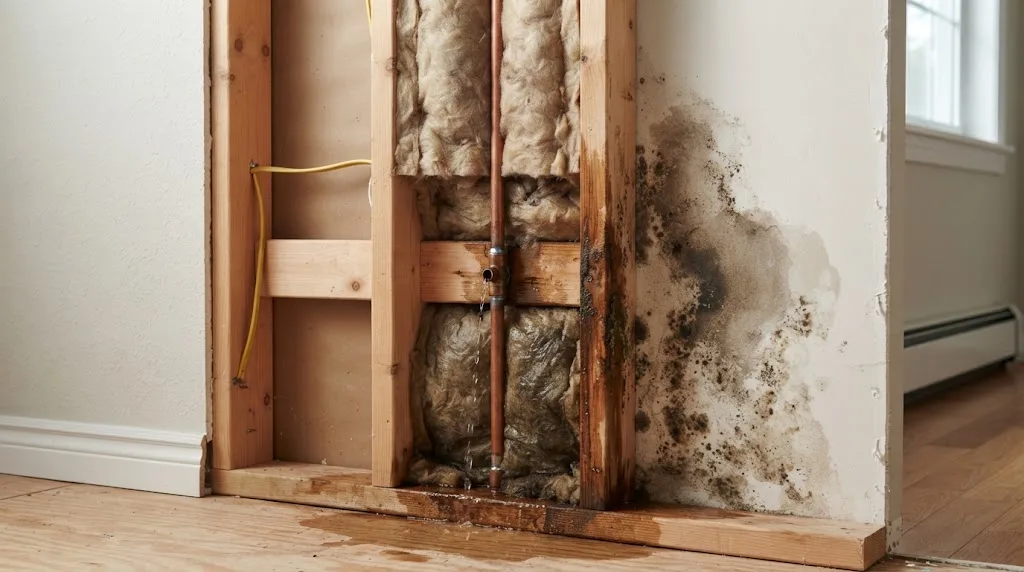
After a hidden plumbing leak starts, water soaks into drywall, insulation, and flooring within hours. Mold can begin growing in 24 to 48 hours. Within a week, wood starts to rot and metal fixtures can rust. Left alone, the damage spreads far beyond the original leak site.
What Counts as a Hidden Plumbing Leak
A hidden plumbing leak is one you can’t see happening. It might be a pipe leaking slowly inside a wall, a slab leak under your foundation, or a small drip behind your dishwasher. You won’t see water pooling on the floor right away. Instead, the water travels through building materials, often showing up somewhere far from where it started.
This is what makes hidden leaks so dangerous. A leak you can see gets fixed fast. A leak you can’t see keeps working against your home every single day, sometimes for weeks, before you notice anything wrong.
The First 24 Hours After a Hidden Leak

Water moves fast once it escapes a pipe. Drywall starts absorbing moisture within hours, and it doesn’t take much for the paper backing to soften. Wood flooring begins soaking up water almost right away too, though the warping and cupping you’d notice takes a bit longer to show.
During this first day, the leak is doing damage you can’t see yet. Insulation behind your walls soaks up water like a sponge and holds onto it. Because insulation stays hidden inside the wall cavity, it keeps the area damp long after the surface looks dry. This trapped moisture sets the stage for everything that follows.
Days Two Through Seven: Mold Takes Hold

Mold doesn’t wait long. Most mold species need only 24 to 48 hours of moisture and the right temperature to start growing. Once it takes hold behind a wall or under a floor, it spreads quietly while you go about your normal routine.
By day two or three, you might start noticing a musty smell in one part of your house. That smell is often your first real clue that something’s wrong. Wood surfaces near the leak may begin to darken or feel soft to the touch. Metal fixtures and fasteners near the moisture can start rusting within the first week, which weakens their grip on whatever they’re holding together.
Doors and window frames near the leak site sometimes start sticking around this point too. Wood swells as it absorbs water, and a door that used to close easily suddenly catches on the frame. It’s a small sign, but it often means water has been sitting somewhere nearby for several days already.
Weeks Later: Structural Damage Builds
If a hidden leak goes unnoticed for weeks, the damage moves from cosmetic to structural. Wood framing that stays wet for an extended period starts to rot. Rotted wood loses its strength, and in serious cases, this can affect the framing that holds up your floor or ceiling.
Concrete and tile absorb moisture much more slowly than drywall or wood, which means leaks under a slab or behind tile can hide for a long time before anyone notices. By the time you see cracked tile or a soft spot in your flooring, the leak underneath may have been running for a month or longer.
Ceilings tell their own story during this stage. Water trapped above a ceiling adds weight as it pools, and drywall isn’t built to hold that kind of load. Ceilings can look completely normal right up until they sag or collapse without much warning.
Why Water Damage Shows Up in a Different Spot
One of the most confusing parts of a hidden leak is that the damage often appears nowhere near the actual leak. Water follows gravity and the path of least resistance through your home’s structure. It can travel along a wooden beam, drip down inside a wall cavity, and land several feet away from where the pipe first failed.
This is why a stain on your ceiling might trace back to a leak in a bathroom on the floor above, on the opposite side of the house. It’s also why fixing the leak itself doesn’t automatically fix the water damage. The water that already escaped is still sitting in your walls, floors, or insulation, and it needs to dry out completely or it will keep causing problems.
Warning Signs Your Home Might Have a Hidden Leak
A few clues tend to show up before the damage becomes obvious. Your water bill might jump noticeably higher than usual with no clear reason why. You might hear water running or dripping somewhere in the house even when every faucet is off. A patch of your yard might stay green and lush while the grass around it dries out normally, which often points to a leaking line underground.
Inside the house, watch for discoloration on walls or ceilings, paint that starts bubbling or peeling for no reason, or flooring that feels soft or springs back slightly when you step on it. Any musty odor that won’t go away is worth taking seriously too. None of these signs guarantee a leak on their own, but together they’re strong reasons to call a plumber for an inspection.
What Happens When You Call a Plumber
A plumber investigating a hidden leak usually starts with tools like moisture meters and infrared cameras rather than tearing into your walls right away. These tools let them map out where the water has traveled without guessing. Once they find the source, most leak repairs are completed in a few hours, though the exact time depends on where the pipe is located and how hard it is to reach.
Repairing the pipe is only the first step. If water has already soaked into your walls, floors, or insulation, that moisture has to be dried out properly, or mold and rot will keep spreading even after the leak itself is fixed. This is often where a separate water damage or restoration team gets involved, using fans and dehumidifiers to pull the remaining moisture out of your home’s structure.
The Real Cost of Waiting
Ignoring a small drip because it seems harmless is one of the most expensive mistakes a homeowner can make. A leak caught within the first day or two might only need a simple pipe repair and some drywall patching. The same leak left alone for a month can mean replacing rotted framing, tearing out moldy insulation, and repainting or re-flooring an entire room.
Mold remediation alone can turn a small plumbing job into a much bigger project, especially if the mold has spread through wall cavities or ductwork. Structural repairs cost even more, since they often require rebuilding parts of your home rather than simply patching them. The longer a hidden leak runs, the more expensive and disruptive the fix becomes.
How to Catch Leaks Before They Cause Damage
You don’t have to wait for visible damage to protect your home. Check your plumbing connections and appliance hoses a few times a year, since these spots are common places for slow leaks to start. Installing leak sensors under sinks, near water heaters, and in the basement gives you an early alert before a small drip turns into a real problem.
Keeping an eye on your water bill each month is a simple habit that can catch a leak long before you’d ever see it. A sudden spike with no obvious explanation is worth investigating right away. Scheduling a professional plumbing inspection every year or two also helps catch weak spots in aging pipes before they fail completely.
A hidden plumbing leak rarely announces itself right away, but it never stays quiet for long either. The sooner you catch the warning signs, the smaller and cheaper the fix will be. If something feels off in your home, whether it’s a smell, a stain, or a bill that doesn’t add up, it’s worth getting a plumber to take a look before that hidden leak turns into a much bigger repair.


Comments are closed.