
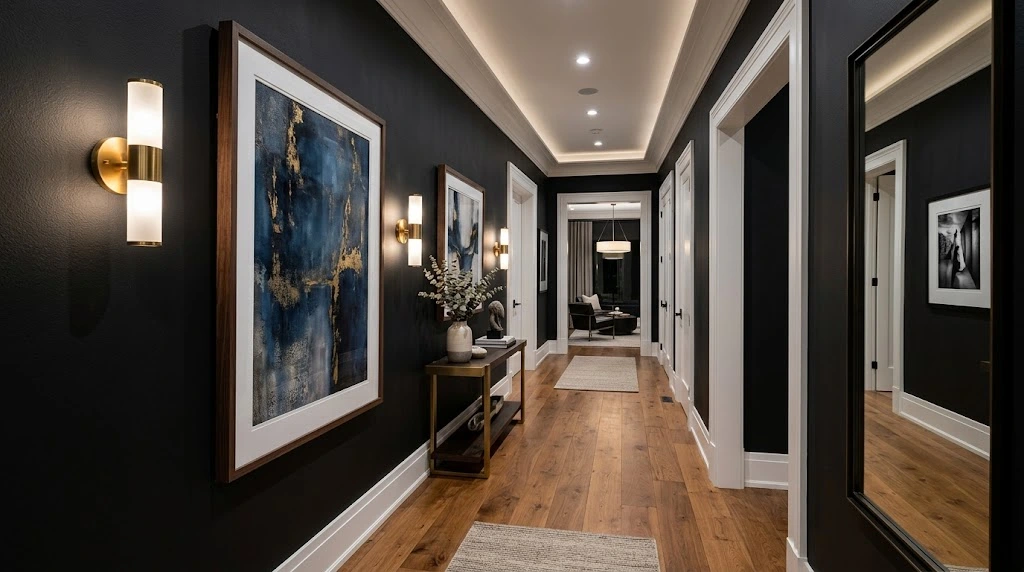
Trending dark hallway ideas for 2026 include charcoal and deep green paint, layered lighting with picture lights and step lights, gallery walls with dark frames, metal and glass accents, and Victorian-inspired molding. These choices turn narrow, forgotten passageways into bold, memorable spaces.
Your hallway probably doesn’t get much love. It’s the space you walk through, not the space you sit in. But that’s changing fast. Homeowners are done treating hallways like leftover space, and dark colors are leading the charge.
Why Dark Hallways Are Having a Moment

For years, the advice was simple: keep hallways light and bright. Dark paint felt risky in a space with little natural light. That advice is flipping in 2026.
Designers now treat hallways as their own small rooms, not just connectors between bigger ones. Going dark in a hallway is one of 2026’s most striking trends, especially in homes with good natural or artificial lighting, and moody shades like charcoal, deep navy, or forest green create an intimate, gallery-like atmosphere that makes artwork and architectural details pop. The contrast between a dark wall and a bright adjoining room actually makes both spaces feel more dramatic. Instead of hiding the hallway, you turn it into a moment.
Choosing the Right Dark Paint Color
Not every dark shade works the same way. Some feel cozy. Some feel cold. Some feel like a boutique hotel lobby. Picking the right one depends on the mood you want and how much light your hallway gets.
Charcoal grays remain a safe, sophisticated choice because they read as dark without going fully black. A shade like Iron Ore adds architectural presence to a long, narrow passageway while staying rich and deep without swallowing all the light, making it a strong option for a high-contrast, gallery-like display of art. If you want something with more personality, a deep charcoal with green undertones can feel less stark than pure black. A color like Grizzle Gray mixes charcoal gray with a muted, dark green for a complex, organic feel that gives a hallway a natural, layered undertone instead of a flat black look.
Deep green is also having a real moment right now. The 2026 hallway trend draws from historic Victorian homes, pairing dark, rich green walls with classic molding and trim to add depth while honoring architectural details like paneling and arches. This combination works especially well in older homes with existing trim you want to show off.
Layered Lighting Makes or Breaks a Dark Hallway

Paint color gets all the attention, but lighting is what actually makes a dark hallway livable. Skip this step and your bold new wall color just looks like a mistake. Get it right and the same color looks intentional and warm.
The goal is layers, not one single overhead bulb. Step lights guide movement along the floor, while ceiling fixtures and light spilling in from nearby rooms add depth, making the hallway feel connected to the rest of the home instead of isolated. Wall sconces and picture lights add another layer on top of that. Installing picture lights or wall sconces keeps the space from feeling cave-like, and paying attention to sight lines from adjacent rooms ensures the dark color enhances rather than interrupts your home’s flow.
If your hallway only gets light from one end, add a mirror across from a light source. It bounces light down the corridor and helps the dark walls feel intentional rather than gloomy.
Adding Contrast With White Trim and Molding
Dark walls need a partner, and crisp white trim is usually the best one. The contrast does two things at once. It keeps the space from feeling like a black hole, and it shows off any architectural detail you already have.
Board and batten millwork against a dark wall creates real depth, almost like a shadow box effect. Baseboards, door frames, and crown molding painted bright white pop hard against charcoal or navy walls. Even a plain hallway with no existing trim can gain this look by adding simple flat panel molding before painting.
Gallery Walls That Pop Against Dark Backgrounds
A dark hallway is basically a built-in art gallery waiting to happen. Framed pieces read completely differently against a black or charcoal wall than they do against white. The dark background pulls the eye straight to the art instead of competing with it.
A deep black wall can anchor a hallway corner and turn it into a focal point rather than a gap, with a vertical stack of framed artwork centered above a slim bench and simple planters adding depth, while the dark background pulls the frames forward and light flooring keeps the space balanced. Vertical arrangements work especially well in narrow hallways because they draw the eye up and make the ceiling feel higher.
You don’t need matching frames either. Frames can vary in size yet stay aligned in height across the wall, which keeps a dense gallery arrangement from feeling chaotic even when it stretches the full length of the hallway.The key is consistency in one area, whether that’s frame color, height, or spacing, so the eye has something to follow.
Mixing Textures for Depth
Flat paint on a dark wall can look one-dimensional if you stop there. Texture is what gives a dark hallway real character. Wood paneling, woven baskets, and matte finishes all catch light differently, and that variation keeps the space from feeling flat.
Pairing rough materials with smooth ones adds instant depth. Weathered wood panels meeting crisp white trim, along with a simple chair and bench near a window, create a resting point where rough wood adds depth and smooth paneling keeps the structure clear along the lower wall. A woven pendant light or a jute runner underfoot does the same job on a smaller scale, softening a dark, moody wall without lightening the actual paint color.
Metal and Glass Accents for a Modern Edge
If you want your dark hallway to feel sleek rather than cozy, metal and glass are your best friends. These materials reflect light instead of absorbing it, which balances out a dark wall color. Trending dark hallway ideas often include monochromatic color schemes paired with metal and glass accents, such as silver picture frames or glass stair balustrades.
Black metal stair railings against white walls create a strong, modern contrast that photographs well and holds up over time. A contemporary hallway can feel sophisticated and sleek largely because glass and black metal accents complement white walls, creating a clean monochromatic contrast, while polished concrete flooring adds a maintenance-friendly finishing touch. This combination works particularly well in newer builds or renovated homes with an industrial edge.
The Boutique Hotel Look
There’s a specific dark hallway style trending right now that borrows directly from high-end hotels. It’s moody but not heavy, dramatic but not dark for the sake of it. This style, sometimes called the Moody Grey hallway, draws inspiration from the boutique hotel trend for 2026, using dark walls, soft lighting, and minimal embellishment to turn narrow, overlooked spaces into intentional moments of atmosphere.
The trick to pulling this off at home is restraint. One or two well-placed light fixtures do more work than a cluttered gallery wall. A single piece of statement art, a runner in a neutral tone, and warm dimmable lighting go a long way toward that hotel-lobby feeling.
Smart Storage That Doesn’t Disrupt the Mood
Hallways still need to work as functional spaces, even the dramatic ones. The good news is storage doesn’t have to fight against a dark color scheme. Built-in shelving, slim console tables, and hidden cabinets can all blend into dark walls instead of standing out.
Vertical wood panels can hide storage along one wall, adding warmth and texture without visual noise, while dark frames line the opposite wall in a clean sequence that draws attention forward toward a brighter room beyond. This approach lets you keep the hallway functional without breaking the moody atmosphere you worked to create.
Flooring Choices That Work With Dark Walls
Flooring matters more than people expect in a dark hallway. Go too dark on the floor as well, and the space can feel like a tunnel. A lighter floor, whether that’s pale wood, light tile, or polished concrete, keeps the contrast working in your favor.
Pattern is another option worth considering. Checkered tile or a patterned runner adds movement to the floor, which draws the eye forward instead of down. This works especially well in longer hallways where you want the walk to feel more interesting.
When to Skip the Dark Hallway Trend
Dark hallways aren’t right for every home, and that’s worth saying plainly. If your hallway is genuinely tight and gets little to no natural light, going dark can backfire. Pale shades like whites, soft creams, and light pastels work like magic for tight spaces because they bounce light around the room and create an illusion of width, while dark colors absorb light and can make a narrow hallway feel even smaller.
Before committing to a dark color, walk your hallway at different times of day. If it already feels dim and closed in without any paint on the walls, a lighter palette with dark accents, like a black stair rail or a few framed prints, might give you the drama you want without losing the space entirely.
Dark hallways work because they turn a space nobody thinks about into one that actually says something about your home. Start with paint, layer in real lighting, and let contrast do the rest. The hallway you walk through every day deserves a little more than a leftover coat of white.


Comments are closed.