
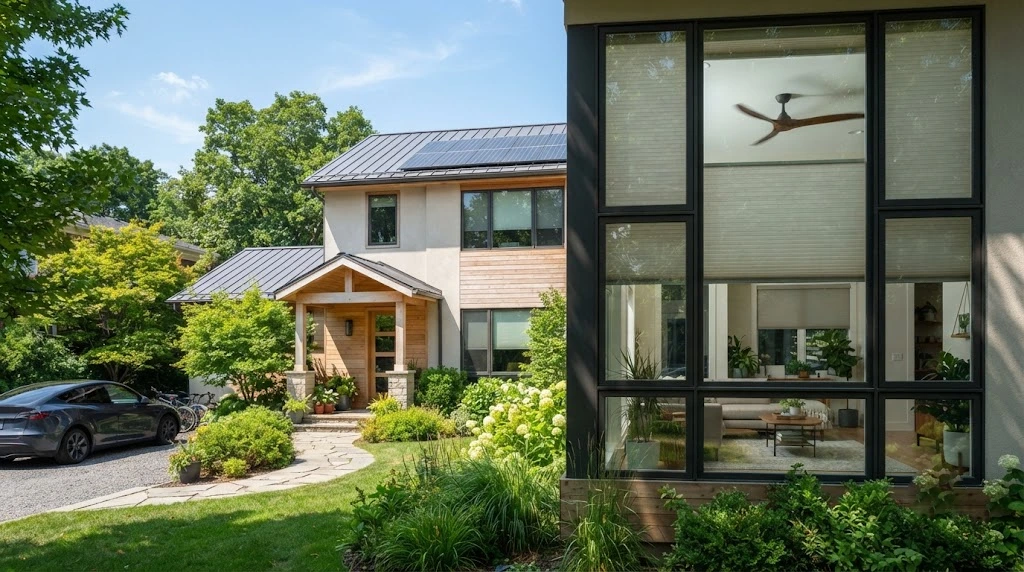
Keep your house cool without raising your energy bill by blocking sun during the day, running ceiling fans to feel cooler at a higher thermostat setting, sealing air leaks, and running heat-producing appliances at night. These small habits can cut cooling costs by a noticeable amount without any major spending.
Summer heat has a way of sneaking up on you. One minute the house feels fine, and the next you’re reaching for the thermostat and dropping it five degrees just to feel normal again. That habit adds up fast on your electric bill.
The good news is you don’t have to choose between comfort and cost. A few smart habits and small changes around your home can keep things cool without your air conditioner running nonstop. Cooling already makes up a large share of a typical home’s summer energy use, so even small improvements here can lead to real savings. Let’s walk through what actually works.
Start With Your Windows
Sunlight pouring through your windows is one of the biggest reasons your house heats up during the day. When sun hits the glass, it creates a greenhouse effect inside your rooms. Your air conditioner then has to work overtime just to keep up.
Close your blinds, shades, or curtains on windows that face south and west during the sunniest hours. These are the windows that take the most direct hit from the sun in the afternoon. If you want extra protection, look into light-colored or reflective window coverings. They bounce sunlight away instead of letting it soak into the room.
In the morning, your east-facing windows get the most sun, so it’s worth covering those too until midday. Once the sun moves past your house, you can open things back up and let natural light in without the heat that comes with it.
Let Fans Do More of the Work
Ceiling fans and box fans don’t actually lower the temperature of a room. What they do is move air across your skin, which helps sweat evaporate faster and makes you feel cooler. This is called a wind-chill effect, and it works well enough that you can raise your thermostat several degrees without noticing a difference in comfort.
Check the direction your ceiling fan spins. During summer, the blades should turn counterclockwise so they push air straight down into the room. If your fan spins the wrong way, there’s usually a small switch on the base you can flip.
Pairing fans with your air conditioner lets you raise your thermostat by a few degrees while still feeling just as comfortable. That small shift can lower your cooling costs without any drop in comfort. Just remember to turn fans off when you leave a room. They cool people, not empty spaces, so running one in a room nobody’s in just wastes electricity.
Watch Your Thermostat Habits
It’s tempting to crank the thermostat way down when you walk into a hot house, but that doesn’t cool things faster. Your air conditioner runs at the same speed no matter how low you set it. Setting it to 60 degrees just means it runs longer than it needs to, which drives up your bill without getting you cool any sooner.
A better approach is to pick a comfortable setting and stick close to it. Many experts suggest keeping your thermostat between 74 and 78 degrees during the day when you’re home, and raising it a few more degrees when the house is empty. If you have pets or elderly family members at home, keep their comfort and safety in mind before raising the temperature too much.
A programmable or smart thermostat makes this easier because it adjusts the temperature automatically based on your schedule. You set it once, and it handles the rest. That means you get the savings from raising the temperature during the day without having to remember to do it yourself.
Time Your Appliance Use
Ovens, dryers, and dishwashers all release heat while they run, and that heat adds to the load your air conditioner has to fight against. Running these appliances during the hottest part of the day forces your cooling system to work harder just to keep the temperature steady.
Try shifting these tasks to early morning or evening when outdoor temperatures are lower. Air-drying clothes on a rack instead of using the dryer is another easy way to cut both heat and electricity use at the same time. On especially hot days, skipping the oven altogether and using a microwave, slow cooker, or grill outside can make a real difference in how hard your AC has to work.
Seal Up the Gaps
Even a small gap around a door or window can let a surprising amount of heat into your home. Over time, these little leaks force your air conditioner to run longer than it should, just to make up for the warm air sneaking in.
Check the seals around your windows and doors for cracks or gaps. Caulk is a simple, inexpensive fix for gaps that don’t move, like around window frames. For doors and other spots that open and close, weather stripping does the job and takes less than an hour to install.
It’s also worth checking your attic insulation if your home is older or you’ve noticed rooms upstairs getting especially hot. Proper insulation keeps the cool air you’re paying for inside your home instead of letting it escape through the roof.
Use the Night Air to Your Advantage
Once the sun goes down and outdoor temperatures drop below the temperature inside your house, opening windows can bring in a wave of free cooling. This works best in climates where nights cool down significantly, so check your local weather before relying on it.
Open windows on opposite sides of the house to create a cross breeze. Placing a box fan facing outward in one window helps push warm air out while pulling cooler air in through the other side. Just be sure to close everything back up in the early morning before the outdoor temperature climbs again, so you trap that cool air inside.
Keep Your AC System in Good Shape
Your air conditioner works harder than it needs to when it’s dirty or poorly maintained. A clogged air filter restricts airflow, forcing the system to run longer to reach the same temperature. Check your filter every month during peak summer use and replace it when it looks dirty, usually every one to three months.
If your ductwork has leaks, cool air can escape before it ever reaches your rooms. Sealing those leaks improves airflow and helps your system run more efficiently. Scheduling a yearly tune-up with a technician can also catch small issues before they turn into expensive repairs or a system that struggles all summer long.
Small Habits Add Up
None of these changes require a big investment or a total overhaul of your home. Closing blinds, adjusting your fan direction, sealing a few gaps, and shifting when you run your appliances are all small habits. But together, they can meaningfully lower how hard your air conditioner has to work.
Try picking two or three of these tips to start with this week. Once they become second nature, add a few more. Your house will stay comfortable, and your energy bill won’t have to take the hit.


Comments are closed.