
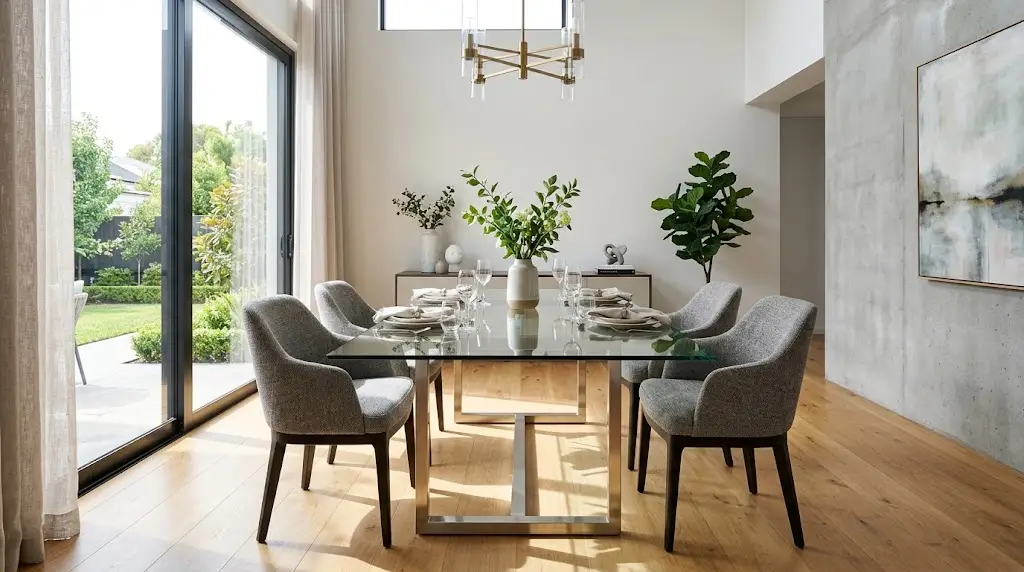
To choose a glass table, pick tempered glass at least 10-12mm thick for dining use, match the size to your room and seating needs, check the base for stability, and confirm the edges are polished smooth. Round tables suit small spaces; rectangular tables fit larger groups.
How to Choose a Glass Table
A glass table can make a room feel bigger and brighter in a way wood or metal just can’t match. Light passes through it. Floors show underneath it. Small rooms breathe easier with one in the corner instead of a bulky wooden slab.
But not all glass tables are built the same. Some are safe enough for a house full of kids and pets. Others crack under normal use. The difference usually comes down to a few things: the type of glass, the thickness, the base, and the size you pick for your space.
This guide walks through each of those factors so you can shop smart and skip the tables that look good in a showroom but fall apart at home.
Why Glass Type Matters More Than Looks

Not all glass is created equal, and this is the first thing to check before you fall in love with a design. There are three main types you’ll run into: annealed, tempered, and laminated.
Annealed glass is regular glass, cooled slowly during manufacturing with no extra treatment. It’s cheap, but it’s also the weakest option. If it breaks, it shatters into large, sharp shards. Skip this for any table that gets daily use, especially if you have kids running around.
Tempered glass is the industry standard for tables, and for good reason. It goes through a heating and rapid cooling process that makes it roughly four times stronger than regular glass. If it does break, it crumbles into small, blunt pieces instead of jagged shards. That single feature makes it the safer, smarter pick for almost every home.
Laminated glass takes safety a step further. It sandwiches a layer of durable film between two glass sheets, so even if the glass cracks, the pieces stay stuck to the film instead of scattering. It costs more, but it’s worth considering for a coffee table in a home with toddlers or for outdoor tables exposed to weather and impact.
When you’re browsing, always ask the seller directly what type of glass the tabletop uses. A listing that doesn’t mention “tempered” anywhere in the description is worth a second look before you buy.
Getting the Thickness Right
Thickness is where a lot of buyers get tripped up, because a table can look identical in a photo whether it’s 6mm or 15mm thick. You won’t feel the difference until you’re leaning on it.
For a small side table or accent piece, 6-8mm tempered glass is usually enough. These pieces don’t carry much weight, and a thinner top keeps the overall design light and modern.
Dining tables need more muscle. A dining tabletop should sit in the 10-12mm range at minimum. This thickness handles the daily load of plates, pots, elbows, and the occasional heavy dish without flexing or feeling fragile. Larger dining tables, especially anything over six feet long, do better with 15mm glass or a design with extra support underneath.
Coffee tables and console tables fall somewhere in between. Most hold up fine at 10mm, though if the table sees a lot of foot traffic or gets used as extra seating occasionally, bumping up to 12mm adds peace of mind.
Outdoor tables need special attention because they face wind, temperature swings, and sun exposure. Stick with tempered glass rated for outdoor use, and lean toward the thicker end of the range for your table size.
One more tip: if you’re comparing two tables at similar prices, check the glass thickness listed in the specs. A big price gap between two similar-looking tables often comes down to a thinner top, not a lower-quality base.
Picking the Right Shape and Size for Your Room
A glass table only works if it actually fits the space you’re putting it in, and this is easy to get wrong when you’re shopping online without a tape measure in hand.
Start by measuring your room, not just guessing based on how big the table looks in a photo. For dining tables, plan on roughly 24 inches of width per person so everyone has room for a plate and elbows without bumping into their neighbor. A table for four typically works well around 47 x 30 inches. Six people need at least 60 inches in length, and 70 inches gives everyone real breathing room.
Round tables are worth a serious look if your dining area is on the smaller side or oddly shaped. They eliminate sharp corners, which matters in a home with small children, and they let one extra guest squeeze in without anyone feeling cramped. A round table also keeps conversation flowing since nobody is stuck at a distant corner.
Rectangular tables make more sense for larger families or anyone who hosts often. They fit better against a wall, and they’re easier to extend if you need more seating for holidays or gatherings.
For coffee tables, leave at least 14-18 inches of walking space between the table edge and your sofa or chairs. This keeps the flow of the room comfortable and prevents constant bumped shins.
Also think about how the table will look with your existing furniture. Clear tempered glass is the safest style choice because it pairs with almost any chair material, from wood to metal to upholstered fabric. Frosted or tinted glass can look striking, but it’s a bolder commitment that may clash if you update your chairs or decor down the road.
Don’t Skip the Base
It’s tempting to focus all your attention on the glass itself, but the base is doing just as much work, if not more. A wobbly or poorly built base can make even the best glass top feel unstable.
Wood bases bring warmth and work well in traditional or farmhouse-style rooms. Metal bases, especially in black or brushed steel, lean industrial or modern and tend to feel sturdier under heavy use. Stone or concrete bases add serious weight and a high-end look, though they’re heavier to move if you rearrange furniture often.
Whatever material you choose, check how the glass actually attaches to the base. Look for rubber pads, silicone bumpers, or a lip design that keeps the glass from sliding or grinding directly against a hard surface. Metal-on-glass or wood-on-glass contact without a buffer can cause chips over time, especially at the corners.
If you can, test the table in person before buying. Push down gently near the edge and see if the top flexes or the base wobbles. A well-built table should feel solid, not springy. If you’re shopping online only, read reviews closely for mentions of wobbling or instability, since that’s the complaint that shows up most often with cheaper builds.
Edges, Corners, and Everyday Safety
The edges of a glass table matter more than most people realize until they bump into one. Raw or sharp-cut edges are uncomfortable at best and dangerous at worst, especially in a home with kids at coffee-table height.
Look for polished or beveled edges, which are rounded and smooth to the touch. Pencil-polished edges are a common style that removes the sharp line along the border of the glass. Some tables also offer rounded corners instead of hard 90-degree points, which is a smart choice for any low table near where children play.
If you already own a glass table with sharp corners, silicone corner guards are a cheap and easy fix. They’re nearly invisible once installed and remove a real hazard without replacing the whole table.
Living With a Glass Table Day to Day
Glass tables ask for a bit more upkeep than wood or laminate, and it helps to know that going in rather than being surprised later. Fingerprints and water rings show up fast on a clear glass surface, especially right after meals or when kids touch the table between bites.
The fix is simple: keep a microfiber cloth and a bottle of glass cleaner nearby. A quick wipe after dinner or before guests arrive keeps the table looking sharp without much effort. Avoid paper towels, which can leave lint and tiny scratches over time, and skip abrasive cleaners that dull the glass’s shine.
Coasters and placemats aren’t just decorative on a glass table. They protect against heat marks from hot dishes and reduce the number of rings you’ll need to wipe away later. Over time, this small habit keeps the table looking new for years instead of months.
Making the Final Decision
Choosing a glass table comes down to matching the table to how you actually live, not just how it looks in a catalog. Start with tempered glass as your baseline for safety, then size the thickness to the table’s job, thin for accent pieces, thicker for anything that takes daily weight.
Measure your room honestly before you fall for a shape or size that won’t fit. Spend real attention on the base, since a heavy, well-built base often matters more to how the table feels day to day than an extra millimeter of glass thickness. Check the edges for a smooth, polished finish, and budget a few minutes a week for wiping it down.
Get those pieces right, and a glass table earns its place as a long-term addition to your home instead of a short-lived trend.


Comments are closed.