
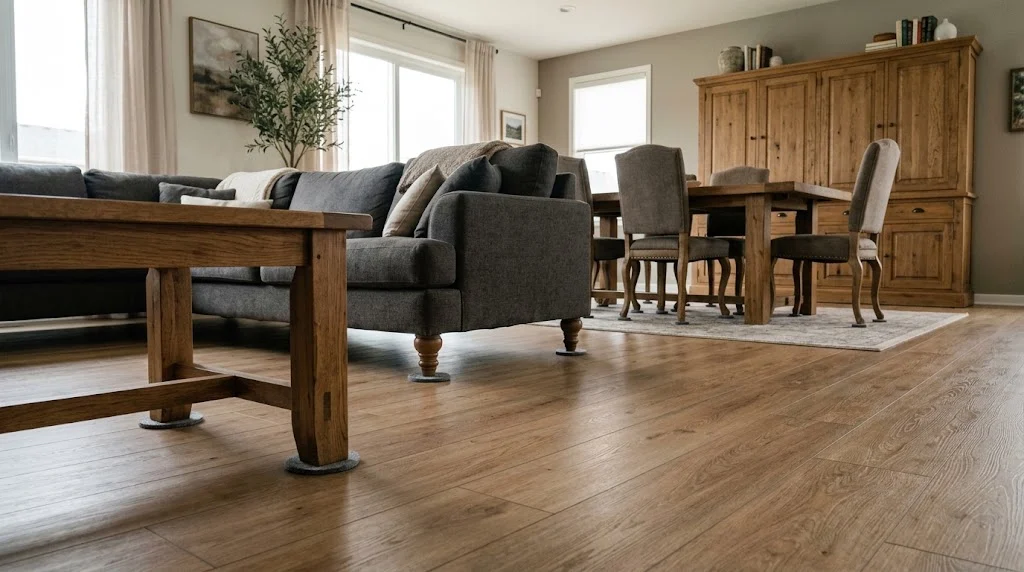
Protect vinyl flooring from heavy furniture by using felt or rubber pads under every leg, lifting items instead of dragging them, and adding furniture sliders for large pieces. Rotate furniture now and then, keep floors clean, and skip rubber-backed mats or wheels, since they can stain or dent vinyl over time.
Vinyl flooring looks great and holds up well against daily life. But heavy furniture can still leave dents, scuffs, or scratches if you’re not careful. The good news is that protecting your floor doesn’t take much effort or money. A few smart habits can keep your vinyl looking new for years.
Why Heavy Furniture Damages Vinyl Flooring
Vinyl flooring has a wear layer on top that shields it from scratches and stains. This layer is thin, usually less than a millimeter thick. When something heavy presses down on a small area, like a chair leg or a table foot, all that weight concentrates on one tiny point.
That pressure can push through the wear layer and into the softer material underneath. Once that happens, the dent is often permanent. Sharp or narrow furniture legs make this worse because they focus weight into an even smaller spot.
Dragging furniture adds another problem. Friction between the furniture leg and the floor can scuff or tear the surface. Grit and dirt trapped under a leg act like sandpaper, grinding into the vinyl every time something moves even slightly.
Use Felt Pads or Caps Under Furniture Legs

Felt pads are the easiest fix for most furniture. They slide onto or stick under table legs, chair legs, and sofa feet. This creates a soft cushion between the wood or metal and your vinyl floor.
Pick pads that are large enough to spread the weight across a wider area. A bigger pad means less pressure on any single point. Cheap, thin pads wear out fast and stop protecting your floor.
Check your pads every few months. Dirt and grit build up underneath them over time. If a pad gets dirty or worn down, replace it right away, since a damaged pad can scratch the floor instead of protecting it.
Avoid rubber or plastic caps if you can help it. Rubber can react with vinyl and cause dark stains that are nearly impossible to remove. Felt or soft composite materials work much better and won’t leave marks behind.
Lift Furniture Instead of Dragging It
This one tip prevents more damage than almost anything else. Dragging a couch or dresser across vinyl creates friction that can tear or scuff the surface instantly. Even a short drag across the room can leave a visible scratch.
Always lift furniture when you need to move it. Grab a friend or family member if the piece is too heavy for one person. Two people lifting together is much safer for your back and your floor.
For furniture you can’t lift alone, plywood or hardboard panels help a lot. Lay the panels down first, then slide the furniture across them instead of directly on the vinyl. This spreads the weight out and keeps the floor safe from gouges.
Add Furniture Sliders for Heavy Pieces
Furniture sliders are flat discs that go under heavy items like sofas, bookshelves, or dressers. You place them under each leg or corner, then push the furniture gently across the floor. The slider glides smoothly and keeps the furniture from digging into the vinyl.
Sliders work best on flat, stable furniture. Look for ones made from felt or soft plastic designed for hard floors. Avoid metal or hard plastic sliders, since they can scratch the surface just as easily as bare furniture legs.
Sliders are especially useful when rearranging a room. Instead of struggling to lift a heavy bookshelf, you can slide it into place with much less effort and zero damage to your floor.
Rotate Heavy Furniture Every Few Months
Leaving a couch or table in the exact same spot for years puts constant pressure on the same few points. Over time, this creates permanent indentations in the vinyl. Once vinyl dents deeply enough, it rarely bounces back.
Try shifting your furniture slightly every few months. Even moving a sofa a few inches changes where the weight lands. This small habit spreads out the pressure and gives the floor time to recover between spots.
Rotating furniture also gives you a good excuse to clean underneath and behind pieces you don’t normally move. Dust and debris collect in these hidden spots, and cleaning them regularly keeps your whole floor looking better.
Keep Your Vinyl Floor Clean
Dirt might seem harmless, but it causes real damage over time. Small particles of grit get trapped under furniture legs and pads. Every time the furniture shifts even slightly, that grit scratches the surface underneath.
Sweep or vacuum your floors regularly to remove loose dirt before it becomes a problem. If you vacuum, skip the beater bar attachment, since it can scratch the vinyl surface. A soft brush attachment works much better.
For deeper cleaning, use a damp microfiber mop with a cleaner made specifically for vinyl floors. Skip harsh chemicals and abrasive scrubbers, since these can dull the finish or wear away the protective top layer faster than normal use would.
Avoid Wheels and Casters Without Proper Protection
Furniture with wheels, like office chairs or rolling carts, poses a unique risk to vinyl flooring. Hard plastic or metal wheels can scratch and gouge the surface with regular use. Even small movements back and forth add up over months and years.
If you use rolling furniture, look for wide, soft wheels designed for hard floors. Narrow or hard wheels focus weight into a small area, which increases the chance of denting. Wide, soft wheels spread that weight out and roll more smoothly.
A chair mat is another solid option for desks and rolling chairs. Place it under the entire range of motion the chair covers. This keeps the wheels off the vinyl completely and protects a much larger area than pads alone.
Choose the Right Placement for Extra-Heavy Items
Some furniture, like pianos, large appliances, or heavy bookshelves, needs extra planning before you place it. Think about where these items will sit for the long term, since moving them often isn’t practical.
Use large, flat furniture cups under the legs of extra-heavy pieces. These cups spread weight over a bigger surface area than standard felt pads. Look for cups made from non-staining materials so they won’t discolor your vinyl over time.
If possible, place an area rug under very heavy furniture. A rug adds a layer of cushioning that helps absorb pressure. Just make sure the rug backing isn’t made of rubber, since rubber can cause the same staining problems as rubber furniture caps.
Watch Out for Rubber-Backed Mats and Accessories
Rubber and vinyl don’t mix well together. Long-term contact between rubber and vinyl flooring can cause dark, stubborn stains that are extremely hard to remove. This applies to rug backings, furniture caps, and even some wheel materials.
Always check the backing on any mat before placing it on your vinyl floor. Choose mats with felt, foam, or fabric backing instead. These materials protect your floor without the risk of chemical staining.
If you already have a rubber-backed mat down, consider swapping it out sooner rather than later. Catching the problem early can prevent a stain from setting in permanently.
Final Thoughts on Protecting Your Vinyl Floor
Protecting vinyl flooring from heavy furniture doesn’t require expensive products or major effort. Felt pads, careful lifting, and a bit of regular maintenance go a long way. Small habits, repeated consistently, make the biggest difference over time.
Take a few minutes this week to check the furniture in your home. Add pads where they’re missing, swap out worn ones, and think about rotating pieces that haven’t moved in a while. Your vinyl floor will thank you with years of good looks and solid performance.


Comments are closed.