
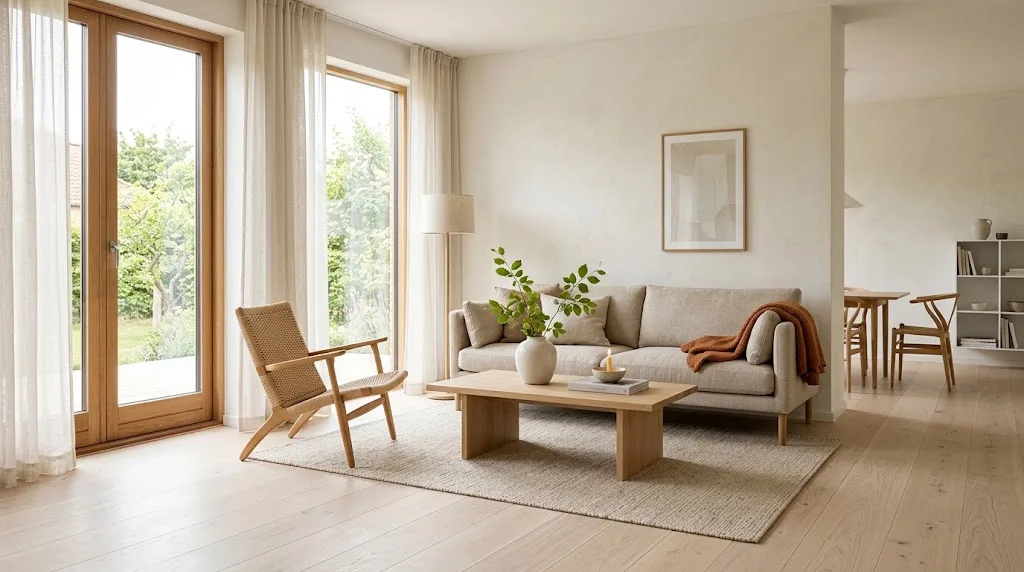
An airy Scandi-Danish living room uses white walls, pale wood floors, simple furniture, and lots of daylight. Light oak or ash adds warmth without making the room feel heavy. Add wool, linen, and soft lamps for hygge, the Danish sense of cozy comfort.
Picture a Saturday morning in Copenhagen. Pale light fills a small living room. The floor is light oak, the sofa is soft and plain, and a wool blanket rests over the arm of a wooden chair. Nothing in the room shouts, yet you feel calm the moment you walk in.
That feeling is what a Scandi-Danish living room delivers. This guide shows you how to build it in your own home, step by step. You will learn which woods work best, which colors keep a room bright, and how to add warmth without clutter. Most of these tips cost less than you might expect.
What Makes a Living Room Scandi-Danish?
Scandinavian design began in the 1950s in Denmark, Sweden, Norway, and Finland. It grew from long, dark winters and a belief that good design should be useful and affordable. Denmark added its own focus on craft. Danish makers built chairs, tables, and cabinets with curved wooden shapes, and they built them to be used every day.
When people say “Scandi-Danish,” they usually mean a blend of both. You get the bright, minimal look of the wider Nordic region and the handmade warmth of Danish furniture. Three ideas hold it together: plenty of daylight, simple and useful pieces, and hygge. Hygge is the Danish idea of cozy contentment. Combine all three and the room feels airy but never cold.
Why Natural Wood Sits at the Center
White walls and open space can feel chilly on their own. Wood fixes that. Warm wood and soft textiles keep a white palette from feeling sterile. Wood also adds grain and small color shifts, so your eyes have something gentle to rest on.
Wood also fits the Nordic love of honest materials. A Danish chair does not hide its oak under thick paint. You see the grain, the joints, and the care that went into it. Over time the wood changes slightly with use, and most people like that.
There is a practical side too. Solid wood can last for decades. Many Danish chairs from the 1950s are still in daily use. One good piece often beats replacing cheaper ones every few years.
Start With Daylight

Daylight comes first. Copenhagen gets only about seven hours of it in December, so Danes learned to use every minute. Keep window coverings minimal so as much natural light as possible comes in.
Swap heavy drapes for sheer linen curtains. Skip curtains altogether on windows that don’t need privacy. Hang what you keep high and wide, so the fabric sits beside the glass instead of over it. Clean your windows often, because dirty glass blocks more light than you think.
Mirrors help too. Place one across from your brightest window and it sends light deeper into the room. A large round mirror with a thin wood frame suits the style. Keep tall furniture away from the window wall.
Layout matters as much as glass. An open, airy layout lets light travel through the room. Pull the sofa a little away from the wall, keep walking paths clear, and avoid bulky shelves near windows.
Choose a Calm Color Palette
Start with a base of warm white or soft grey. Light walls and ceilings reflect daylight from outside. Pick a white with a slight warm tone, such as cream or chalk. Pure bright white can look blue next to wood.
Next, add soft neutrals like oatmeal, pale grey, sand, and light beige. Use them on the sofa, rug, and curtains. A handy guide is 60 percent base color, 30 percent secondary neutrals, and 10 percent accents.
For accents, choose one or two muted shades. Dusty blue, sage green, and soft clay all pair well with pale wood. Deeper tones like navy or black can work too when you use them in small doses, such as a picture frame or a lamp base. A touch of black gives the eye a clear point and keeps the room from looking washed out.
Pick the Right Wood Tones

Not every wood suits an airy room. Light woods keep Scandinavian rooms bright, both in furniture and on the floor. Oak, ash, beech, birch, and pine are the usual picks. Teak and walnut appear in vintage Danish pieces, and they look great as a single accent.
Floors set the mood. Wide-plank pale oak or whitewashed boards work best, while dark walnut, red oak, and high-gloss finishes break the airy effect. Many Danish homes use a soap finish, a mild matte treatment that keeps wood pale and lets the grain show. If you rent, a large light rug over dark floors gets you part of the way there.
Stick to two or three wood tones at most. Choose one main tone, such as light oak, and one deeper accent, such as teak. Match undertones too. Warm, yellow-toned woods look best with other warm woods, and cooler grey-toned woods sit better together.
Keep the finish matte or satin. Shiny varnish reflects glare and looks heavier. Natural oil or soap finishes feel better to touch and hide small scratches.
Furniture With Clean Lines

Danish furniture is famous for good reason. Designers like Hans Wegner and Børge Mogensen made pieces with simple lines and gentle curves. Mogensen was known for his faith in craftsmanship and honest materials, and he often worked in solid oak. Their chairs are comfortable, plain, and built to last.
You don’t need a famous name to get the look. Choose a sofa with slim wooden legs. Legs let you see the floor underneath, which makes the room feel bigger. A low back and straight arms keep the shape calm.
Add one wooden armchair, a low coffee table in oak or ash, and a sideboard for storage. Storage matters here. A room with hidden storage stays tidy with little effort, and tidy rooms feel larger.
Think about spacing too. Leave about 45 cm (18 inches) between the sofa and coffee table. Leave about 90 cm (36 inches) in walkways. A room feels airy when you can cross it without turning sideways.
Layer Textiles for Hygge
Wood and white walls need soft things to balance them. Wool throws, linen cushions, cotton rugs, and a sheepskin on a chair make the room inviting. Wood, wool, and leather add texture and warmth.
Keep textiles natural and colors quiet. Oatmeal, ivory, and light grey are safe choices. Mix textures instead of colors. A chunky knit blanket beside a smooth linen cushion adds interest without noise.
Choose rugs with care. A big wool or jute rug anchors the seating area. Pick one large enough that at least the front legs of the sofa and chairs sit on it. A small rug looks out of place.
Keep cushions to a minimum. Two or three on a sofa is plenty. Add more and the clean look fades.
Light the Room After Dark
Danes spend many winter evenings indoors, so lighting gets real attention. Use three levels: a main light, task lamps, and soft accent light. Skip the single bright ceiling light. It flattens the room and drains the warmth from the wood.
Choose warm bulbs, around 2700 kelvin. They make oak and ash glow softly. A paper or fabric pendant, a floor lamp beside the reading chair, and a table lamp on the sideboard cover most needs. Danish designer Poul Henningsen’s PH lamps are a classic choice because they spread light without glare. Many affordable lamps copy the shape.
Candles finish the job. Danes burn them nearly every evening, and they are a big part of hygge. Wooden or brass candleholders suit the look. If you have kids or pets, use flameless LED candles.
Add Plants, Art, and a Few Special Objects
Greenery fits the natural theme of Scandinavian design. A rubber plant, a fiddle-leaf fig, or trailing pothos in a plain ceramic pot works well. Place plants near windows, but don’t let them block the light.
Keep art simple. One large print or a small group of frames in thin wood or white is enough. Soft line drawings, botanical prints, and abstract art in muted colors all fit. Leave some wall empty. Editing is part of the style.
Add a few objects with meaning, like a handmade ceramic bowl, a stack of books, or a wooden tray. Show three to five items on a shelf, not twenty. Each piece then gets room to be noticed.
Build the Look on a Budget
You don’t need a big budget. One guide says a full Scandinavian living room under $1,500 is realistic when you shop at stores like IKEA, which started in Sweden in 1943. Paint the walls first. Paint costs little and changes the room more than any other step. Then buy one solid wood piece you love, such as a coffee table, and fill in the rest with simple basics.
Secondhand shops are another strong option. Vintage Danish teak and oak furniture turns up in thrift stores and online marketplaces, often at fair prices. Check joints for wobble, look for water rings, and ask about the finish. Light sanding and a fresh coat of oil can bring old wood back to life.
Four Mistakes to Avoid
The first mistake is too much dark wood. A heavy walnut wall unit removes the airy feel fast. If you already own one, balance it with white walls and a pale rug.
The second is mixing too many styles. A bold patterned sofa, chrome tables, and rustic farmhouse shelves in one room will clash. Stick to simple shapes and a short color list.
The third is skipping storage. Clutter hurts an airy room more than any wrong color. Give every item a home, using baskets, closed cabinets, and shelves with doors for daily things.
The fourth is cold lighting. Bright white bulbs make wood look grey and flat. Switch to warm bulbs, and the room often looks better the same night.
Bring the Look Home
You can build this room one step at a time. Start with light by clearing the windows and brightening the walls. Next, choose pale wood for the floor or your main furniture. Then add soft textiles, warm lamps, and a plant or two.
Finish by editing. Take away anything that does not serve a purpose or make you smile. What remains is a bright, calm room that feels good on a gray Monday and an even better Sunday afternoon.


Comments are closed.