
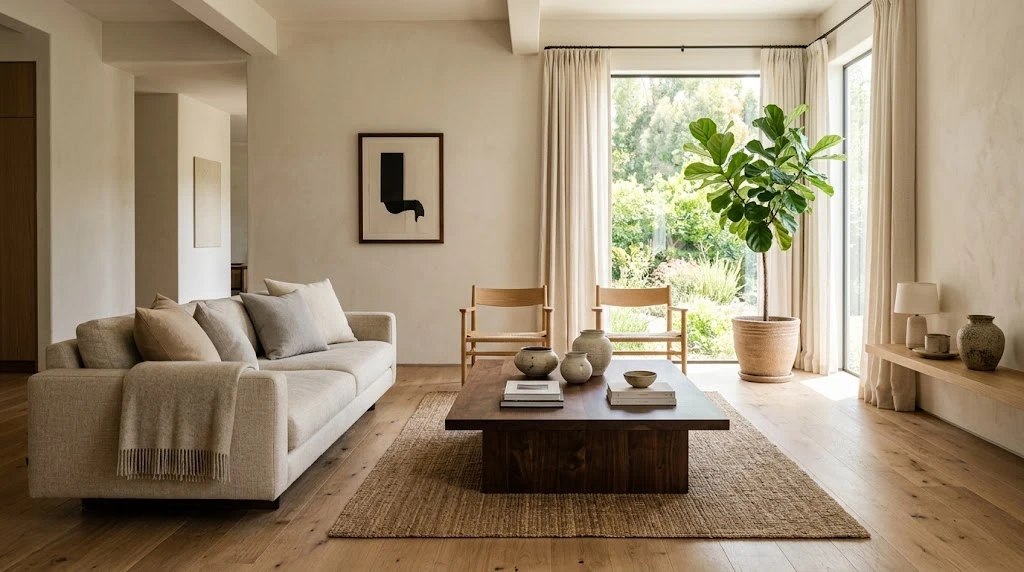
A Japandi living room mixes Japanese simplicity with Scandinavian comfort. It uses warm neutral colors, natural wood, low furniture, soft textures, and very few decorations. The goal is a calm, useful space where every item has a purpose and nothing feels crowded.
Picture walking into your living room after a long day and feeling your shoulders drop. There are no piles of stuff and no harsh light. You see warm wood, soft fabric, and plenty of space to sit down and rest. That is the promise of a Japandi living room, and you can build one without a huge budget. This guide walks you through the style step by step. You will learn where it comes from, which colors and materials to pick, and how to avoid the mistakes that make these rooms feel empty instead of calm.
What Is a Japandi Living Room?
Japandi is a mix of Japanese and Scandinavian design. Japanese style brings natural materials, earthy tones, and a link to nature, while Scandinavian style brings simplicity and function. Put them together and you get a room that looks simple but feels warm.
Designers describe Japandi as sitting between two kinds of minimalism. It feels warmer and more textured than a pure Japanese Zen room, and quieter than a typical Scandinavian one. Furniture sits low to the floor. Colors run deeper and earthier. You can see the craftsmanship in each piece, like the grain in a wooden table or the shape of a hand-made bowl.
Your living room is the best place to try this style. You relax, talk, read, and watch TV there, so a calm setup helps you every single day.
Where Japandi Comes From

The name combines Japan and Scandinavia. The style is based on two ideas. From Japan comes wabi-sabi, which finds beauty in things that are imperfect and never quite finished. From Denmark comes hygge, the feeling of being cozy and content. Together, these ideas built a style around minimalism, nature, comfort, and neutral colors.
The two cultures have traded ideas for a long time. Danish furniture makers studied Japanese joinery as far back as the 1950s, and the word Japandi reached mainstream design media around 2017. So this is no quick trend. It grew from decades of designers learning from each other.
Both ideas point the same way. Own fewer things. Choose things that last. Let a scratch or a worn edge tell the story of how you live.
Start With the Right Color Palette

Color sets the mood, so begin there. Japandi uses soft, muted shades. Beige, taupe, oatmeal, and stone work well for walls and for large pieces like the sofa. Warm off-white, mushroom, clay brown, and charcoal fit the style too. Matte black, deep forest green, and rust make good accents, while primary colors, pastels, and cool grays clash with the look.
Keep your main palette to three or four colors, then add one or two accents. Matte black works best in small doses, like a lamp base or a picture frame. Deep green and rust add life without taking over the room.
If you don’t know where to start, paint the walls a warm off-white and pick a sofa in oatmeal or stone. You can build everything else from those two choices.
Choose Low, Simple Furniture
Furniture is where Japandi looks different from other styles. Pieces sit closer to the floor than usual. Designers call this a low horizon, meaning the sofa, side tables, and shelves all sit lower than in a typical Western room. Low furniture makes the ceiling look higher and the room feel bigger.
Pick a sofa with clean lines and a low back. Linen or cotton in a neutral shade works best. A simple wooden coffee table, a low sideboard, and one lounge chair are often enough. Skip bulky recliners and heavy carved pieces.
Measure your room before you buy anything. One UK budget guide points out that Japandi rooms go wrong quickly when furniture is too big for the space. Leave room to walk around each piece. Empty floor is part of the design, so don’t treat it as wasted space.
Use Natural Materials and Two Wood Tones
Natural materials give a Japandi room its warmth, and wood matters most. Wood brings warmth and softness to an interior. Good choices include walnut, ash, white oak, smoked oak, and bamboo. Red oak, cherry, and pine are best avoided.
Use two wood tones together. A pale wood like oak or ash works for floors and shelves, while darker walnut or black-stained wood suits accent pieces. A light oak floor with a dark walnut coffee table is an easy example. The contrast adds depth without adding clutter.
Bring in other natural materials as well. Stone, rattan, jute, linen, and clay all fit the style. Washi paper lanterns, raw linen curtains, and shoji-style screens spread light softly across the room. A wooden room divider can also separate zones. It adds visual interest and creates a sense of separation without closing off the space.
Layer Soft Textures
Simple rooms can feel cold when every surface is smooth. Texture fixes that problem. Try a chunky knit throw on the sofa or a jute rug on the floor. Choose a rug in a plain color with a light texture. Skip shaggy piles and any pattern beyond a subtle texture.
Add cushions in linen, cotton, or wool, and stay within two or three shades from your palette. Hang raw linen curtains so daylight can pass through. The goal is variety in how things feel to the touch, not variety in color. Your eyes stay calm while your hands and feet get something interesting.
Light the Room Well
Natural light comes first. Keep windows clear of heavy drapes and let the sun reach the whole room. Ignoring natural light makes even well-chosen furniture look dull. Sheer linen curtains protect your privacy and still let the light in.
For the evening, use several small lights instead of one bright ceiling fixture. Designers suggest extra lighting to give the room a cozy feel. A floor lamp beside the sofa, a paper lantern in a corner, and a small table lamp on the sideboard make a good mix.
Bulb choice matters. A warm-white LED bulb around 2,700 to 3,000K changes a room completely, and a rattan or linen shade looks right where a pleated or fringed shade does not. You can make this change in one afternoon for very little money.
Add Plants and One Craft Object
Plants bring a natural feel to the room. Pick easy types so you don’t fight with them. Low-maintenance varieties like succulents and snake plants grow well indoors. One large plant in a corner or a trailing plant on a shelf is enough. Dried branches in a simple vase also work well.
Next, choose one craft object and build the room around it. That could be a washi paper lantern, a hand-thrown stoneware vase, or a raw-edge wooden bench. Ceramics suit Japandi especially well, and small flaws in the glaze are welcome. That is wabi-sabi at work.
Group a few items on a tray on the coffee table and leave the rest of the surface clear. Three well-chosen objects look better than ten random ones.
Keep the Space Clear
Japandi depends on empty space. When you own fewer things, each one gets noticed. Start by clearing your surfaces. Keep only what you use or truly love.
Closed storage helps a lot. A low sideboard with doors can hide remotes, cables, board games, and kids’ toys. Open shelves can hold a few chosen items, with gaps between them so nothing looks crowded.
Try a simple rule: when something new comes home, something old leaves. Every few months, look at your shelves and tables and remove anything you no longer need. A Japandi room stays calm only if you keep editing it.
Common Mistakes to Avoid
Clutter is the biggest mistake. Too many decorations or furniture pieces create visual noise and ruin the calm look. Choose fewer items and make sure each one has a job or a meaning.
The second mistake is too little warmth. White walls, a gray sofa, and bare floors feel cold, and that is not the same as calm. When the balance is off, a budget room can look empty instead of peaceful. Add wood, texture, and warm light to fix it.
The third mistake is mixing too many woods and colors. Stick to two wood tones and a tight palette. The fourth is buying everything at once. Live in the room for a few weeks, then add only what feels missing. Your first plan is rarely your best plan.
Japandi Trends to Know in 2026
The style keeps changing. Early Japandi leaned on stark white, concrete gray, and pale wood, which sometimes felt distant. The 2026 update favors warm base tones like oat and toasted almond, with moss green and terracotta as accents.
Shapes are softer now. Modular sofas take rounded forms, and tables and cabinets get curved corners. Textures are rougher and more natural, with raw timber and heavy shearling. The mood has moved from strict minimalism toward a cozy, wellness-focused retreat.
You can try these ideas without replacing your furniture. Swap a cool gray throw for a warm oat one. Add a rounded side table. Bring in a rust-colored cushion. Small changes like these update the room fast.
Build Your Room on a Budget
You don’t need a large budget. The style is built on restraint, and restraint costs less than filling a room with furniture. One Singapore guide says a condo living area of about 90 square meters can be furnished for under $5,000 if you set priorities and resist filling every gap.
A UK guide puts a full setup at £1,200 to £2,000. It suggests oak veneer over solid oak to cut furniture costs by 30 to 40 percent, and buying the sofa new while choosing replicas for the rest.
Spend your money where you touch the room most. A good sofa and a solid rug come first. Save on side tables, shelves, and small decor, which are easy to find secondhand. Thrift shops and local craft markets often sell simple ceramics with just the right kind of imperfection.
Final Thoughts
A Japandi living room comes down to a few clear choices. Pick warm neutral colors. Use low furniture. Mix two wood tones. Add texture, soft light, and a few plants. Then keep the space clear.
Start small. This weekend, clear your coffee table, swap in a warm-white bulb, and add one plant. Notice how the room feels. Then make the next change. Over a few weeks, you will build a living room that feels calm every time you walk in.


Comments are closed.