
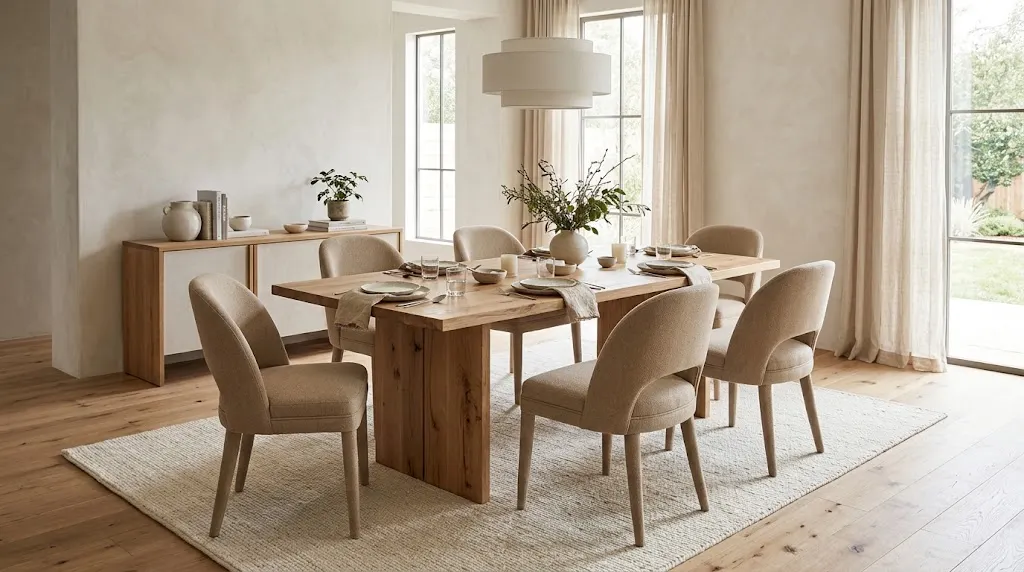
To choose the best dining table and chairs, measure your room first and leave 36 inches of clearance around the table. Pick a shape that fits your space, allow 24 inches per person, match seat height to table height, and choose durable materials that suit your daily life and budget.
Picture a couple who orders a beautiful oak table online. It looks perfect in the photos. When it arrives, it fills the room so much that nobody can walk past without turning sideways. They pay for return shipping and eat dinner on the couch for three weeks.
That story is common, and you can avoid it. A dining table and chairs set is one of the biggest buys you will make for your home. You will use it for breakfasts, homework, bills, holiday meals, and late-night talks. A smart choice takes a tape measure, a few honest questions, and some patience.
This guide walks you through each step in plain language. You will learn how to measure your room, pick a shape, choose a material, and match your chairs to your table. You will also learn where to spend money and where to save it.
Start With Your Room, Not the Showroom
Grab a tape measure before you open a single store website. Measure the length and width of your dining area. Write the numbers down, and note where doors, windows, vents, and cabinets sit. A table that fits on paper can still block a door swing.
Here is the most important rule: leave at least 36 inches between the table edge and the nearest wall or furniture. That gap lets a person pull out a chair and stand up comfortably. If people will walk behind the chairs, aim for 44 to 48 inches. Tight rooms can work with less, but you will hear chairs scrape the wall every night.
Try this simple test. Cut sheets of paper or lay painter’s tape on the floor in the size of the table you like. Walk around that shape for a day. You will know fast if the space feels right or feels cramped. Also measure your doorways, stairwells, and hallways. A table top that is 42 inches wide will not fit through a 30-inch door.
Think About How You Live

Before you pick a style, think about who sits at this table. A couple who eats together twice a week needs something different from a family of five. Count the people in your home today, then add the guests you host a few times a year. Do not size the table for one huge holiday dinner. Plan for daily life, and use an extension for the big days.
Ask yourself what else happens here. Do your kids do homework at the table? Do you work from it, craft on it, or play board games? A table that doubles as a desk needs a tough surface and chairs you can sit in for hours. Pets and toddlers change the picture too. Sharp corners, delicate finishes, and pale fabrics wear out fast in a busy home.
Write down your top three needs, such as seats six, easy to clean, fits a small room. When a pretty table tempts you, check it against that list.
Pick the Right Table Shape

Each shape has strengths. Rectangular tables are the most common because they fit most rooms and seat the most people. They work well in long, narrow spaces. A rectangle usually seats four people at 48 to 60 inches long, six at about 72 inches, and eight at 84 to 96 inches.
Round tables help conversation because everyone can see everyone. They fit small, square rooms nicely and have no sharp corners, which parents like. A 36- to 44-inch round table seats four. A 48-inch table seats four to six, and a 60-inch table seats six to eight. The downside is that large rounds make it hard to reach dishes in the middle.
Oval tables give you the soft edges of a round table with the length of a rectangle. Square tables suit small dining nooks and small households, though they get awkward past 48 inches. Consider a pedestal base for any round or oval table. With one center base, no legs get in anyone’s way, and you can fit in an extra guest.
Get the Table Size Right
Use the 24-inch rule. Each person needs about 24 inches of table edge to eat without bumping elbows. Give yourself 30 inches if you want a roomy feel. Multiply that number by the people on the long sides, and you have the minimum length.
Width matters too. A table should be at least 36 inches wide so people can set down plates and a few serving dishes. Between 36 and 40 inches works for most homes. Once a table goes wider than 44 inches, passing food across it gets hard.
Height is easy, since most dining tables stand 28 to 30 inches tall. Counter-height tables run about 36 inches, and bar-height tables run about 42 inches. Those taller styles need matching stools, and many older adults and small children find them hard to use.
If your space is small or your needs change, look at extendable tables. Most have a leaf or two that adds 12 to 18 inches each. Drop-leaf tables fold down to a narrow strip when you need floor space. Test the extension in person if you can. It should slide smoothly and sit level, with no wobble.
Choose a Material That Fits Your Life
Solid wood is the classic choice. Oak, maple, and walnut hold up well, and you can sand and refinish them when they scratch. Softer woods like pine dent easily. Solid wood costs more and weighs a lot, but a good table can last for decades.
Wood veneer uses a thin layer of real wood over an engineered core. It costs less, resists warping, and looks great when made well. The catch is that deep damage is harder to repair. Check the edges and corners for peeling before you buy.
Glass tops make small rooms feel bigger because light passes through them. They also show every fingerprint and crumb, and a hard bump can chip the edge. Marble looks elegant, but lemon juice, wine, and vinegar can stain and etch it. Seal it and wipe spills right away. Quartz resists stains better and needs less care. Laminate and metal surfaces cost less and handle spills well, and many modern versions look good.
Match the material to your habits. A busy family with young kids does well with a matte wood stain or laminate. Textured or lightly distressed finishes hide scratches better than glossy ones. If you host formal dinners often, solid wood or stone may suit you.
Get Chair Comfort and Height Right
People often forget this part. A table is only as good as the chairs around it, and guests may sit in them for an hour or more.
Start with height. Most dining chair seats sit 17 to 19 inches off the floor. You want about 10 to 12 inches between the seat and the underside of the table top. Less than that, and your thighs press against the table. More than that, and you reach up to eat. If your table has a thick apron, the wood frame under the top, measure the space beneath it.
Next, check the seat size. A seat about 16 to 20 inches deep and 17 to 20 inches wide suits most adults. Look at the back, too. A slightly curved back supports your spine better than a flat board. Padded seats help during long meals, though a well-shaped wood seat can feel fine.
Armchairs look good at the head of the table. Make sure the arms slide under the table, or they will scratch the top. Heavy chairs are harder for kids and older adults to move, so lift one before you buy. Sit in every chair you can try, and stay seated for at least five minutes.
Pick Chair Materials and Fabrics
Wood chairs are sturdy and easy to wipe. Metal chairs have a lighter look and often stack. Molded plastic chairs clean easily and cost less. Upholstered chairs feel the best, though they need more care.
If you choose fabric, check the durability rating. Many makers list double rubs from the Wyzenbeek test. A rating of 15,000 or more suits regular home use, and 30,000 or more handles heavy use. Performance fabrics resist stains and clean with soap and water. Leather and faux leather wipe clean in seconds, which helps with kids and messy eaters. Skip pale, fuzzy fabrics if you have pets or toddlers.
Mixing is fine. Many people use upholstered chairs on the long sides and two armchairs at the ends. A bench tucks fully under the table and seats an extra person in a squeeze. Benches lack back support, so they work best for short meals or with cushions. Whatever you mix, keep all seat heights the same.
Set a Budget and Spend Wisely
Prices vary widely. You can find small sets for a few hundred dollars and handmade tables that cost several thousand. Decide your total before you shop, and include chairs, delivery, and assembly in that number. Many buyers spend most of their budget on the table and then feel surprised by the cost of six or eight chairs.
Spend more on the parts that take the most wear. Joints and bases matter most. Look for solid joinery, such as mortise-and-tenon or dowel joints, instead of staples and glue. Grab the table and give it a gentle shake. It should feel steady. On chairs, check the frame, because loose legs fail first.
Save money on things you can change later. Cushion covers, chair pads, and table runners swap out easily. You can also buy secondhand. Used solid wood tables from estate sales and online marketplaces often cost far less than new ones, and you can refinish them. Always sit on used chairs and check for cracks near the legs and seat. Read warranty terms and return policies before you order anything large.
Match Your Style and Setting
Look at your room’s colors, flooring, and light. A dark wood table makes a bright room feel grounded. A pale table makes a dim room feel lighter. If you have wood floors, avoid a table in nearly the same tone, since the two will look like one block. A little contrast makes both look better.
Pick one main style and stay close to it. Modern homes pair well with clean lines and metal legs. Farmhouse style leans on chunky wood and benches. Traditional rooms often use carved details and rich finishes. If you cannot decide, a simple wood table with neutral chairs fits almost any home.
Think about the space around the table too. A rug under it should extend at least 24 inches past the edge on every side, so chairs stay on the rug when people pull them out. Hang a light fixture 30 to 36 inches above the table top. These small choices make the room feel finished.
Test Before You Buy
If you can, visit a store and try everything. Sit in the chairs. Slide them in and out. Rest your forearms on the table. Look underneath for braces or legs that would hit your knees. Run your hand across the finish. It should feel smooth, with no bubbles or rough spots.
When you shop online, read verified reviews and look for photos from real buyers. Pay attention to comments about color, since screens can change how a finish looks. Order fabric or finish samples when stores offer them. Confirm the dimensions, assembly time, and return policy before you pay.
Mistakes to Avoid
Buying a table that is too big is the most common error. Measure twice and use the 36-inch clearance rule. The next mistake is picking looks over comfort. A stylish chair that hurts after ten minutes will sit empty.
Also watch the leg placement. Legs at the corners can block seats at the ends, and trestle bases can get in the way of feet. Skipping the doorway measurements causes delivery headaches. Finally, think about the next five years. If your family may grow, choose a table with an extension leaf.
Your Next Step
Choosing a dining table and chairs gets easier when you take it one step at a time. Measure your room, list your needs, and pick a shape and size that fit. Then check the material, test the chairs, and set a budget you can stick to.
Take your tape measure and your top three needs to the store or the website. Use the numbers in this guide to filter your choices. You will end up with a table your family enjoys for years, and dinner will stay at the table where it belongs.

Comments are closed.