
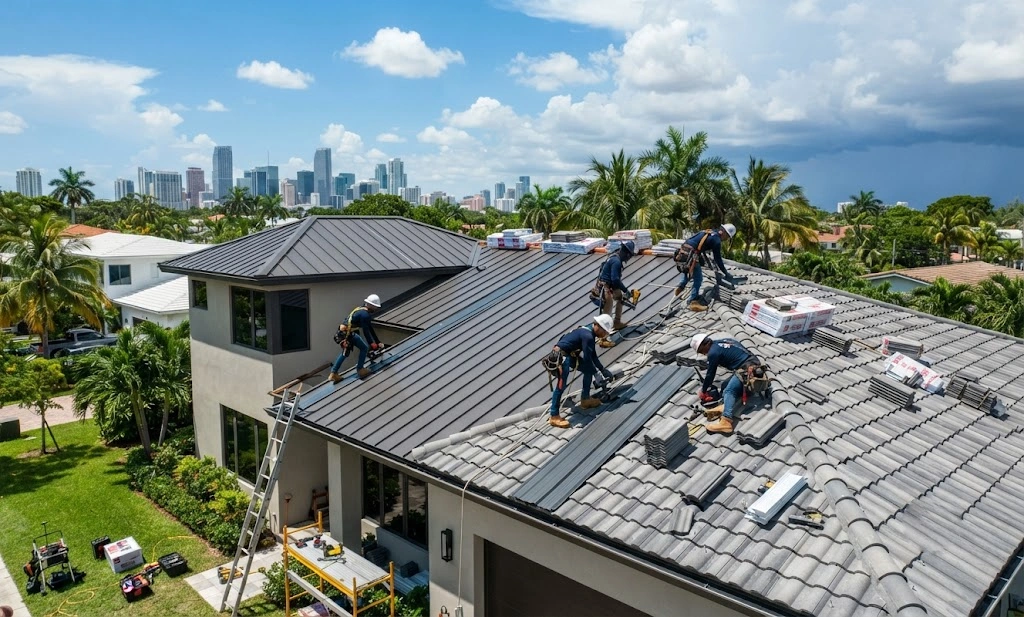
Miami roofs face intense sun, heavy rain, and hurricane-force winds year-round. Because Miami-Dade sits in Florida’s High-Velocity Hurricane Zone, roofing work must meet the strictest wind codes in the country. Regular inspections, code-compliant materials, and a licensed local roofer are the best ways to keep your home safe and your insurance costs down.
Why Miami Roofs Take More Punishment Than Most
Your roof works harder in Miami than it would almost anywhere else in the country. The sun beats down for most of the year, breaking down shingles and sealants faster than in cooler climates. Add heavy summer rain and the constant threat of hurricanes, and you have a roof that faces real stress every single season.
Salt air adds another layer of wear if you live near the coast. It corrodes metal fasteners and flashing over time, which weakens the roof’s overall structure. None of this means your roof is doomed. It just means Miami homeowners need to pay closer attention to roof health than someone living in a milder climate.
Miami-Dade’s Strict Building Codes Exist for a Reason
Miami-Dade and Broward counties sit inside what’s called the High-Velocity Hurricane Zone, or HVHZ. This is the toughest roofing code zone in the entire United States. Roofs here must handle design wind speeds of 175 miles per hour or more, and every product used must carry a Miami-Dade Notice of Acceptance rather than a standard statewide approval.
This strict code isn’t random. It traces back to Hurricane Andrew in 1992, which tore through South Florida and exposed serious weaknesses in how homes were built at the time. The state rewrote its building code in response, and Miami-Dade adopted even tougher rules than the rest of Florida.
Because of this, almost any real roof work in Miami-Dade requires a permit, HVHZ-rated materials, and paperwork proving the products meet county standards. A roofer who skips this process, even to save you time or money, is putting your home at risk. Ask any contractor for the Florida Product Approval or Miami-Dade NOA numbers for every material they plan to use. If they can’t provide them, treat that as a warning sign.
One recent change worth knowing about: the latest edition of the Florida Building Code now allows peel-and-stick underlayment in Miami-Dade and Broward, a method that was previously restricted. This gives homeowners another proven option for keeping water out during a storm.
Common Roofing Materials for Miami Homes
Not every roofing material handles Miami’s climate equally well. Concrete and clay tile remain popular because they resist heat, salt air, and wind when installed correctly. They last decades, though they cost more upfront and require a roof structure strong enough to support the extra weight.
Metal roofing has grown in popularity across South Florida. It handles high winds well, reflects heat instead of absorbing it, and often qualifies for strong insurance credits. Asphalt shingles remain the most affordable option and still work fine in Miami as long as they carry the right wind rating and are installed by someone who understands HVHZ requirements.
Flat and low-slope roofs are common on Miami homes too, especially older ones. These roofs often need self-adhering or enhanced underlayment systems to reduce the risk of wind-driven rain forcing its way underneath the surface. Whatever material you choose, the installation matters just as much as the product itself.
What Roof Replacement Actually Costs in Miami
Roof replacement costs vary based on your home’s size, roof pitch, material choice, and how much of the existing structure needs repair. Tile and metal roofs sit at the higher end of the price range because of material and labor costs. Asphalt shingle roofs tend to be the most budget-friendly option for most single-family homes.
Homes in South Florida’s HVHZ counties often see higher installation costs than homes elsewhere in the state. This comes down to the extra materials and labor required to meet code, including sealed roof decks, secondary water barriers, and ring-shank nailing patterns. It costs more upfront, but a properly built roof holds up far better when a storm hits, which protects your biggest investment.
Get quotes from at least two or three licensed contractors before committing to a project. Compare not just the price, but the materials listed, the permit process each company follows, and their experience working specifically in Miami-Dade’s HVHZ.
Roof Inspections and Regular Maintenance
Waiting for a leak to show up inside your house is the most expensive way to find a roofing problem. Regular inspections catch small issues, like a cracked tile or lifted shingle, before they turn into major water damage. Most roofers recommend a full inspection at least once a year, plus a check after any major storm.
A typical roof inspection in Florida costs somewhere between $100 and $275, depending on your home’s size and the scope of the inspection. That’s a small price compared to the cost of repairing water-damaged drywall, insulation, or framing.
Keep gutters and downspouts clear so water can drain properly instead of pooling on your roof. Trim back tree branches that hang over your house, since falling limbs are a common cause of roof damage during storms. Small habits like these add years to your roof’s lifespan.
How a New Roof Lowers Your Insurance Costs
Here’s something many Miami homeowners don’t realize: your roof directly affects your insurance premium. Florida law requires insurers to offer discounts for homes with wind-resistant features, and a wind mitigation inspection is how you document those features.
A wind mitigation inspection can lower the wind portion of your homeowners insurance premium by 10% to 45%, depending on your home’s construction. On average, Florida homeowners who make wind mitigation improvements save close to $981 a year on their premiums. The inspection itself is quick and affordable. It typically costs between $75 and $200 and takes about an hour to complete.
If you’ve recently replaced your roof, don’t skip this step. Schedule a wind mitigation inspection within 60 days of your permit closing out so your insurer has the paperwork needed to apply any credits you’ve earned. An old roof with no inspection on file could be costing you hundreds of dollars a year without you ever knowing it.
Choosing the Right Roofing Contractor in Miami
Not every roofing company understands the demands of Miami-Dade’s building code. Look for a contractor who is licensed in Florida, carries proper insurance, and has real experience working within the HVHZ specifically. A company based outside South Florida may not know the local permit process or product requirements.
Ask how long they’ve been in business and request references from recent Miami-area projects. A trustworthy roofer will walk you through the permit process, explain which materials meet code for your home, and give you a written estimate that spells out exactly what’s included. Be cautious of anyone who pressures you to sign quickly, especially right after a storm, when scam contractors tend to target homeowners.
Get everything in writing, including the warranty on both materials and labor. A solid warranty tells you the contractor stands behind their work long after the job is finished.
Repair or Replace: How to Decide
A roof under ten years old with isolated damage, like a few missing shingles or a small leak, usually just needs a repair. Roofs approaching 15 to 20 years old, especially asphalt shingle roofs, often make more financial sense to replace rather than patch repeatedly. Multiple leaks, widespread granule loss, or sagging areas are signs your roof is nearing the end of its useful life.
A licensed roofer can give you an honest assessment during an inspection. They’ll look at the age of your roof, the extent of any damage, and whether repairs would actually solve the problem or just delay a bigger expense down the road.
Protecting Your Home Starts With Your Roof
Your roof is your home’s first line of defense against everything Miami’s weather throws at it. Staying on top of inspections, choosing code-compliant materials, and working with an experienced local contractor keeps your home safer and your insurance costs lower. It’s one of the most important investments you’ll make as a homeowner in South Florida, and it pays off every single hurricane season.


Comments are closed.