
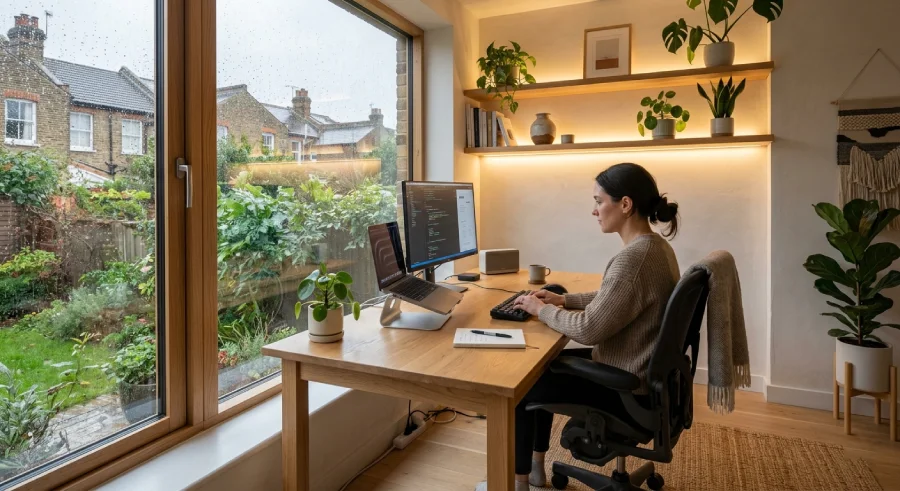
The best home office design ideas UK workers are using in 2026 combine smart space planning, ergonomic furniture, and intentional interiors to build workspaces that genuinely support productivity. Remote and hybrid work is now a permanent fixture in British life, with over 44% of UK employees spending at least part of their week working from home. That shift has changed how we think about and use domestic space entirely.
A well-designed home office does more than look polished on a Teams call. It protects your mental health, draws a clear line between work and rest, and makes long working days physically sustainable. This guide covers every element you need to build a productive and stylish workspace in 2026, no matter your budget or floor plan.
Assessing Your Space Before You Design
Before buying a single piece of furniture, take an honest look at what you actually have. The right setup depends on your floor plan, lifestyle, and how many hours a day you spend at your desk.
The Dedicated Room
Converting a spare bedroom or attic into a proper home office is the most effective option available. You get a door that closes, acoustic separation from the rest of the house, and a genuine psychological boundary between work and personal life. Loft conversions in the UK can add between 10% and 20% to a property’s value, making this one of the smartest home improvements you can invest in.
The “Cloffice” Trend
In smaller UK flats, the cloffice (closet converted to office) has become enormously popular. A fold-down desk, a few wall-mounted shelves, and a sliding door transform a wardrobe into a functional workspace that disappears entirely after hours. This approach works particularly well in studio and one-bedroom flats across cities like London, Manchester, and Edinburgh.
Garden Offices
Insulated garden pods have become one of the most in-demand home improvements in the UK. A well-built garden office separates your work environment from the main house entirely, which is ideal for deep focus, client calls, and creative work. Property experts suggest a quality garden room can add between 5% and 15% to a home’s resale value.
Multi-functional Zones
Not everyone has a spare room or garden. Wall-mounted fold-down desks and compact floating shelves can carve a proper working zone out of a living room corner or hallway without permanently disrupting the room. The key is choosing furniture that feels intentional rather than improvised.
Lighting Strategies for the UK Climate

Lighting is one of the most underestimated elements of any home office design. The UK’s grey winters create long stretches of low natural light, which directly affects mood, focus, and energy levels during the working day.
Position your desk as close to a window as possible. North-facing windows provide consistent, glare-free daylight that suits screen-based work throughout the day. If your desk placement faces away from windows, a large mirror placed on the opposite wall effectively reflects natural light back into the space.
A single overhead ceiling bulb is never enough for a full working day. A layered lighting system combines ambient ceiling or wall lights for general brightness, a dedicated desk lamp for close task work, and accent lighting under shelves or behind screens to ease contrast and reduce eye strain.
Smart bulbs from brands like Philips Hue and LIFX can shift colour temperature automatically, moving from cool, energising white in the morning to warm amber by evening. This circadian lighting approach supports your natural sleep-wake rhythm, which matters most during dark UK winter months when natural light disappears by 4pm.
Ergonomics and Furniture Selection
Furniture choices define how comfortable and physically sustainable your working day feels. Many people overspend on aesthetics and underinvest in the ergonomic support that prevents long-term injury.
The Desk
Standing desks from brands like Flexispot and Autonomous have moved from luxury to mainstream in UK home offices. The ability to alternate between sitting and standing reduces fatigue and back discomfort across long working days. Ladder desks work well in narrow rooms by using vertical wall space efficiently. Bespoke built-in units offer the best storage result in dedicated rooms with awkward alcoves.
The Chair
This is the single most important purchase in any home office. A proper ergonomic chair with lumbar support, adjustable armrests, and a seat height that keeps your feet flat on the floor will protect your posture over years of daily use. Herman Miller, HAG, and Secretlab all offer respected options across different price points.
Storage Solutions
| Storage Type | Best For | Approx. UK Cost |
|---|---|---|
| Floating Shelves | Small rooms, light visual footprint | £30 to £150 |
| Fitted Cabinetry | Maximum capacity, seamless look | £500 to £3,000+ |
| Freestanding Units | Rental properties, flexibility | £80 to £400 |
| Pedestal Drawers | Under-desk document storage | £60 to £200 |
Keeping surfaces clear is non-negotiable. Visual clutter competes directly for your attention and has been shown to raise cortisol levels throughout the working day. Built-in storage along one wall delivers the most efficient result if your budget allows.
Interior Design Styles and Colour Psychology
Exploring the right aesthetic is a core part of developing strong home office design ideas UK professionals return to for inspiration every year. The space you work in daily should feel energising, not sterile.
Biophilic Design
Biophilic design brings natural elements indoors to reduce stress and sharpen focus. Snake plants, peace lilies, and pothos are low-maintenance choices that improve air quality in enclosed spaces. Pairing them with natural materials such as oak desks, stone accessories, and linen curtains creates a calm, grounded atmosphere that supports sustained concentration across full working days.
The Japandi Aesthetic
Japandi blends Japanese minimalism with Scandinavian functionality to produce spaces that feel clean, warm, and deliberate. It works exceptionally well in small UK homes because it avoids heavy furniture, ornamental clutter, and visual noise. Natural wood finishes, neutral tones, and functional simplicity define this style.
Colour Psychology Guide
| Colour | Psychological Effect | Best Suited To |
|---|---|---|
| Sage Green | Reduces stress, supports calm focus | Writers, creatives |
| Navy Blue | Conveys authority and professionalism | Client-facing video roles |
| Terracotta | Adds warmth, prevents sterility | Freelancers, designers |
| Off-White or Cream | Brightens low-light rooms | Compact north-facing spaces |
| Charcoal Grey | Reduces distraction, signals seriousness | Finance, legal, analytical work |
Avoid saturated reds or intense oranges on main walls. These colours raise alertness sharply but cause fatigue and anxiety when you are exposed to them over extended working sessions.
Technical Setup and Connectivity
A beautifully designed office falls apart quickly if cables sprawl across the desk and video calls sound as though they were recorded in a corridor.
Cable Management
Route all cables through adhesive clips, cable channels, or under-desk management trays to keep surfaces clean. A single cable box beneath the desk hides your power strip entirely and eliminates the visual clutter that makes even expensive setups look cheap. This one change makes any desk look more professional instantly.
Acoustic Solutions
The UK’s older housing stock was not designed with acoustic performance in mind. Hard plaster walls, wooden floors, and sash windows create echo that undermines video call quality and increases mental fatigue over time.
Key acoustic improvements to consider for your home office:
- Wall-mounted fabric or foam acoustic panels to absorb ambient sound
- A large, thick rug placed under or beside the desk
- Ceiling-to-floor velvet or heavy linen curtains on windows
- A fully loaded bookshelf positioned behind or beside your desk
- Soft furnishings such as a small armchair or thick seat cushions
Smart Home Integration
Voice-controlled systems like Amazon Alexa or Google Home allow you to manage lighting, heating, and audio without leaving your desk. Setting up named lighting scenes for focus mode and video calls takes minutes but saves genuine decision-making energy across a full working week.
Maximising Small UK Spaces

When square footage is limited, the most effective home office design ideas UK flat dwellers use focus on vertical space, multifunctional furniture, and the optical illusion of depth.
Wall-mounted fold-away desks are among the most practical investments for tight spaces. They provide a solid, full-size working surface during the day and fold completely flat against the wall in seconds. Pair them with a lightweight, stackable chair that stores under a nearby shelf.
Mirrors do significant visual work in compact rooms. A large mirror placed opposite your primary light source reflects daylight deeper into the space and makes the room feel substantially larger. Vertical shelving units draw the eye upward and deliver far more storage per square metre than wide, low furniture without eating into your floor area.
Personal Touches and Finishing Details
A workspace that reflects your personality is far more motivating to return to each morning than a sterile corporate-style room. Small, deliberate finishing touches make the difference between a room you tolerate and one you genuinely enjoy.
Think carefully about your Zoom or Teams video background. A curated shelf with books, a plant, and a neutral wall behind you communicates professionalism and personality simultaneously. Avoid placing bright windows directly behind you, which create difficult backlighting and wash out your face on camera.
Scent is a genuinely useful productivity tool that most people overlook. Research suggests peppermint and citrus scents sharpen alertness and support cognitive performance during focused work. Lavender and sandalwood support calm concentration during high-pressure tasks. A simple reed diffuser costs very little and shifts the atmosphere of a room in minutes.
Conclusion
A great home office finds the right balance between aesthetics and genuine utility. The most effective home office design ideas UK homeowners can implement in 2026 start with good light, proper ergonomic support, and intentional storage. From there, colour psychology, biophilic elements, acoustic treatment, and personal finishing touches turn a functional room into one that actively supports your best work.
Whether you are converting a spare bedroom, building a garden pod, or working from a corner of your flat, the principles remain the same: design with purpose, invest in what you sit on, and make the space feel like yours. Start with the fundamentals and build from there.
FAQs: Home Office Design Ideas UK
Q1. What is the most important element of a home office?
Ergonomics comes first. A good chair and properly positioned desk prevent long-term physical problems. After that, lighting is the single most impactful design element, particularly in the UK where natural light is limited for several months of the year.
Q2. How much does a garden office cost in the UK?
A basic insulated garden office starts at around £5,000 to £8,000 for a simple pod. A fully fitted garden room with double glazing, electrics, and heating typically costs between £15,000 and £30,000 depending on size and specification.
Q3. What colours work best in a home office?
Sage green, navy blue, and off-white are the most widely recommended choices. Sage green supports calm focus, navy builds authority during video calls, and off-white works well in rooms with limited natural light.
Q4. How do I soundproof a home office in an older UK property?
The most effective combination is acoustic wall panels, a thick rug, heavy curtains, and a bookshelf filled with books. Full soundproofing is expensive, but these four changes significantly improve the acoustic quality of any room without major construction work.
Q5. Do I need planning permission for a garden office in the UK?
Most garden offices fall under permitted development rights and do not require planning permission, provided they meet size limits and placement rules. Properties in conservation areas or those attached to listed buildings should always check with their local planning authority before building.
Q6. What desk is best for a small UK flat?
A wall-mounted fold-away desk is the best option for very tight spaces. For slightly larger rooms, a corner desk or compact ladder desk provides more surface area without dominating the layout.
Q7. Is a standing desk worth the investment for home working?
Yes, particularly for anyone working six or more hours a day at a screen. Alternating between sitting and standing reduces lower back strain, improves circulation, and helps sustain energy levels through long working days more effectively than sitting alone.


Comments are closed.