
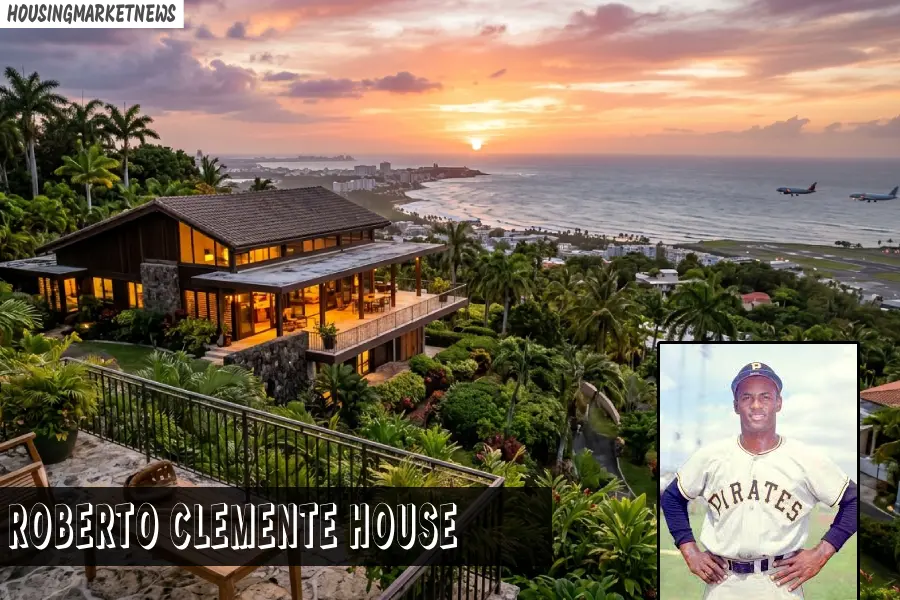
A Comprehensive Guide to the Roberto Clemente House and Property Legacy
The Roberto Clemente house is one of the most emotionally significant properties in all of Puerto Rico. Perched on a sun-drenched hill in Río Piedras, overlooking the shimmering Atlantic Ocean, the estate served as the private heart of one of baseball’s greatest legends. For a man who lived his career in the public spotlight, this home was where Roberto Clemente found peace between batting titles and World Series rings.
From a cramped wooden house in the San Antón barrio of Carolina to a hilltop family estate in San Juan, the story of where Clemente lived tells the full arc of his remarkable life. It is a story of humble beginnings, hard-earned success, and a legacy that never forgot its roots.
From Carolina to San Juan: How It All Began
Roberto Clemente Walker was born on August 18, 1934, in Barrio San Antón, Carolina, Puerto Rico. He was the youngest of seven children born to Luisa Walker, a laundress, and Melchor Clemente, a sugarcane plantation foreman. The Clemente family lived in a large but crowded wooden house that reflected the modest economic realities of rural Puerto Rico during the Great Depression era.
“I always wore clothing and I always had food at the table at home. They made ends meet.”
That quote, shared by Clemente himself with his lifelong friend and journalist Luis Mayoral, captures everything about his early home life. The family was not wealthy, but they were dignified. Melchor worked long hours overseeing sugarcane cutters, while Luisa supplemented the family’s income by taking in laundry. Young Roberto and his brothers worked alongside their father, loading and unloading trucks in the fields.
In a neighborhood where kids played baseball with sticks from guava trees and knotted balls of rags, Roberto spent his earliest years building the foundation of one of the greatest careers in sports history. That wooden house in Carolina was not just a home — it was the starting point of an extraordinary journey.
The Roberto Clemente House in Río Piedras, San Juan
As Roberto’s career with the Pittsburgh Pirates flourished through the 1950s and 1960s, so did his ability to provide for his family. His success on the field allowed him to build a permanent family estate in Río Piedras, a neighborhood in San Juan, Puerto Rico. This is the property most widely known as the Roberto Clemente house.
The home sits on a hilltop with sweeping views of the Atlantic Ocean, and on a clear day, residents can even spot the planes approaching Luis Muñoz Marín International Airport. The property reflects the Caribbean Modern architectural style of mid-century Puerto Rico — open, airy, and built to take full advantage of the island’s natural beauty.
Vera Cristina Zabala, the woman Roberto married on November 14, 1964, at San Fernando Church in Carolina, was the true steward of this home. Vera was a former local television personality from the same area as Roberto, and she brought warmth and order to a household that also had to manage the challenges of having a global sports star for a husband.
| Feature | Details |
| Primary Location | Río Piedras, San Juan, Puerto Rico |
| Notable Views | Atlantic Ocean and Luis Muñoz Marín International Airport |
| Architectural Style | Hilltop Mid-Century / Caribbean Modern |
| Family Residents | Vera Clemente and three sons — Roberto Jr., Luis, and Enrique |
| Historical Status | Private Family Estate / Legacy Site |
| Nearest City Landmark | University of Puerto Rico, Río Piedras Campus |
Inside the Home: Family Life Behind Closed Doors
Life inside the Roberto Clemente house was intentionally ordinary. Roberto and Vera raised three sons within those walls: Roberto Clemente Jr. (born 1965), Luis Roberto Clemente (born 1966), and Roberto Enrique Clemente (born 1969). Despite the family’s fame, Vera maintained strict boundaries around the home’s atmosphere.
One of the most telling details about the household is the rule Vera enforced: no baseball talk inside the house. After spending the baseball season in Pittsburgh, Roberto came home to Puerto Rico for rest and family time — not to relive game highlights. The house was a genuine retreat, not an extension of his public persona.
The interior reflected a balance between comfort and humility. While Roberto’s Pittsburgh success meant the family enjoyed amenities that were considered luxurious in Puerto Rico at the time — spacious rooms, quality materials — the spirit of the home remained deeply rooted in the Clemente family’s values. The living room was where the family gathered most often, echoing the same simple family evenings Roberto had known growing up, when his own parents told stories and jokes by lamplight.
Roberto Clemente’s Real Estate Portfolio: The Full Picture
When people search for information about the Roberto Clemente house, they often discover that his connection to property was more layered than a single address. Here is a clear breakdown of the key properties in his life:
| Property | Location | Significance |
| Childhood Home | Barrio San Antón, Carolina, PR | Wooden family house; birthplace of a legend |
| Primary Family Estate | Río Piedras, San Juan, PR | Hilltop home; Atlantic Ocean views |
| Final Residence | Near Piñones, Loíza, PR | Home at time of his death, Dec 31, 1972 |
| Seasonal Lodging | Pittsburgh, Pennsylvania | Housing during the 18-year Pirates career |
| Legacy Dream Project | Puerto Rico (Ciudad Deportiva) | Sports City complex for youth — his greatest off-field dream |
According to historical records, at the time of his death on December 31, 1972, Roberto Clemente was living near Piñones in the municipality of Loíza, Puerto Rico. This coastal area was where he had settled with his family in his later years, and it is the location that members of the U.S. Congress later sought to honor when introducing a bill to add Clemente’s crash site to the National Register of Historic Places.
The Dream Beyond the Home: Ciudad Deportiva
No discussion of Roberto Clemente’s relationship with property is complete without mentioning Ciudad Deportiva — the Sports City complex he dreamed of building for Puerto Rican youth. While not a personal home, this project consumed a significant portion of Roberto’s time, energy, and resources in the final years of his life.
Clemente envisioned a massive sports and recreation complex where children from across Puerto Rico could train, learn, and grow through athletics — regardless of their economic background. He fundraised, planned, and lobbied tirelessly for the project. The Ciudad Deportiva was his answer to his own childhood, where access to proper sports facilities was a luxury many families could not afford.
The tragedy of December 31, 1972, cut this dream short. Roberto boarded a plane headed for Nicaragua, where he was personally accompanying a shipment of disaster relief supplies to earthquake victims. The aircraft crashed off the coast of Isla Verde, Puerto Rico, just moments after takeoff. He was 38 years old.
“On the greatest day of my life, to my children I give my blessing, and I ask that my parents in Puerto Rico give me their blessing.”
Those words, spoken in Spanish during a live television broadcast after the 1971 World Series, captured what mattered most to Roberto Clemente — not the trophies, not the fame, but his family and his island.
The Clemente Museum: Where Artifacts Find a Home
In Pittsburgh, the legacy of Roberto Clemente found a permanent physical address inside Engine House 25, a historic firehouse built in 1897 in the Lawrenceville neighborhood. Today, it is home to the Roberto Clemente Museum — the world’s largest publicly exhibited collection of Clemente memorabilia and artifacts.
What You’ll Find at the Museum
- His 1960 and 1971 World Series rings
- Twelve consecutive Gold Glove Awards
- The Silver Bat award from his four National League batting titles
- Cleats and home base from the iconic 1971 World Series
- The last jersey he ever wore and the last bat he ever swung — both from the San Juan Senadores
- A handmade vase Roberto crafted for Vera with her name scratched into it
- Photographs, documents, and personal correspondence spanning his entire life
In a remarkable historical coincidence, Engine House 25 was officially decommissioned on the very same day Roberto Clemente’s plane crashed into the Atlantic. The firehouse, once saved from demolition, was renovated by curator and executive director Duane Rieder, who transformed it into a multi-level museum and event space. It now stands as one of Pittsburgh’s most meaningful cultural sites.
Roberto Clemente’s Lasting Presence in Puerto Rico
Though Roberto Clemente left this world on December 31, 1972, his presence in Puerto Rico has never faded. His hometown of Carolina, located just minutes from Luis Muñoz Marín International Airport, is known across the island as Tierra de Gigantes — the Land of Giants — partly in honor of its most famous son.
Sites and Honors Named in His Memory:
- Coliseo Roberto Clemente — Opened in 1973 in San Juan, Puerto Rico
- Estadio Roberto Clemente — Opened in 2000 in Carolina, Puerto Rico
- Liga de Béisbol Profesional Roberto Clemente — Puerto Rico’s professional league renamed in 2012
- His jersey number 21 was permanently retired across Puerto Rican professional baseball
- In 2022, the Puerto Rican government granted Clemente the formal designation of prócer — national hero
- Over 200 parks and 40+ schools across Puerto Rico, the U.S., and Latin America bear his name
The Roberto Clemente Foundation, still active today and guided by Vera and the Clemente family, continues the humanitarian mission Roberto dedicated his life to. The San Juan estate remains in the care of the family, serving as a quiet symbol of private devotion within a very public legacy.
Roberto Clemente: Biographical Quick Facts
| Category | Detail |
| Full Name | Roberto Enrique Clemente Walker |
| Date of Birth | August 18, 1934 |
| Place of Birth | Barrio San Antón, Carolina, Puerto Rico |
| Parents | Melchor Clemente (father) & Luisa Walker (mother) |
| Siblings | Youngest of seven children |
| Spouse | Vera Cristina Zabala (married November 14, 1964) |
| Children | Roberto Jr. (1965), Luis Roberto (1966), Roberto Enrique (1969) |
| Career | Pittsburgh Pirates — 18 seasons (1955–1972) |
| Batting Average | .317 career lifetime batting average |
| Achievements | 4 Batting Titles, 12 Gold Gloves, 2 World Series, NL MVP 1966 |
| Hall of Fame | Inducted 1973 (waived waiting period posthumously) |
| Death | December 31, 1972 — plane crash off coast of Isla Verde, PR |
| Age at Death | 38 years old |
| National Status | Designated prócer (national hero) of Puerto Rico in 2022 |
| Primary Home | Hilltop estate, Río Piedras, San Juan, Puerto Rico |
| Childhood Home | Wooden house, Barrio San Antón, Carolina, Puerto Rico |
| Pittsburgh Legacy | Roberto Clemente Bridge and statue at PNC Park |
| Posthumous Award | Presidential Medal of Freedom, Congressional Gold Medal |
| Foundation | Roberto Clemente Foundation (active today) |
| Nickname | “The Great One” |
Frequently Asked Questions About the Roberto Clemente House
Where was Roberto Clemente’s house located?
Roberto Clemente’s primary family home was located in Río Piedras, San Juan, Puerto Rico. The property sits on a hilltop with views of the Atlantic Ocean and the nearby Luis Muñoz Marín International Airport. His childhood home was in Barrio San Antón, Carolina, Puerto Rico.
Did Roberto Clemente grow up poor?
By today’s standards, the Clemente family was below middle income, but Clemente himself was proud to say they always had food on the table and clothing to wear. His father worked as a sugarcane plantation foreman and his mother took in laundry. They lived in a large but crowded wooden house in Carolina, Puerto Rico.
What was Roberto Clemente’s house like inside?
The family home in Río Piedras was comfortable and well-furnished for its era, with spacious rooms and quality construction. However, the spirit of the house was intentionally humble. Vera Clemente maintained a firm rule — no baseball talk inside. The home was a retreat from public life, not an extension of it.
Can you visit Roberto Clemente’s house today?
The family estate in Puerto Rico remains a private property. Visitors interested in experiencing Clemente’s legacy in person can visit the Roberto Clemente Museum at Engine House 25 in Pittsburgh, or explore his hometown of Carolina, Puerto Rico — located right beside Luis Muñoz Marín International Airport.
What happened to Roberto Clemente’s family home after his death?
The Clemente family estate in Puerto Rico has remained in the care of Vera Clemente and the family. Vera has continued to honor Roberto’s legacy through the Roberto Clemente Foundation. U.S. lawmakers have also introduced bills to add related Clemente sites to the National Register of Historic Places.
What is the Roberto Clemente Museum and where is it?
The Roberto Clemente Museum is located in Engine House 25, a renovated 1897 firehouse at 3339 Penn Avenue in the Lawrenceville neighborhood of Pittsburgh, Pennsylvania. Curated by Duane Rieder, it holds the world’s largest public collection of Clemente memorabilia, including his World Series rings, Gold Gloves, final jersey, and a handmade vase he crafted for Vera.
Why is Roberto Clemente considered a national hero in Puerto Rico?
Roberto Clemente is revered in Puerto Rico for two reasons. On the field, he was the first Caribbean and Latin American player inducted into the Baseball Hall of Fame. Off the field, he died while personally delivering earthquake relief supplies to Nicaragua — an act of selfless service that defines his legacy far beyond sport. In 2022, Puerto Rico officially designated him a prócer, or national hero.


Comments are closed.