
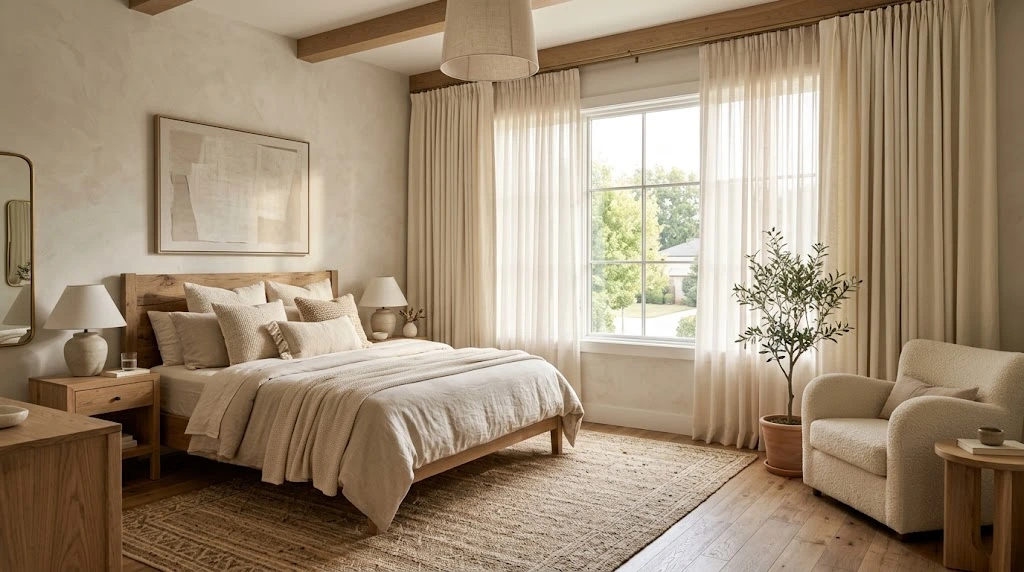
The best bedroom curtains combine blackout lining for sleep quality with a fabric that matches your room’s mood. Linen and cotton suit relaxed spaces, while velvet adds warmth to darker rooms. Hang panels close to the ceiling and let them fall just past the floor for a taller, calmer look.
Your bedroom curtains do more work than most people realize. They control how much light wakes you up, how private your room feels, and how the whole space reads the moment you walk in. Picking the right ones can turn a plain bedroom into a place you actually want to spend time in.
This guide walks through everything you need to know before you buy. You’ll find tips on length, fabric, color, and style, along with a few mistakes worth skipping.
Why Curtains Matter More Than You Think
Curtains shape the entire feel of a bedroom. A heavy fabric in a rich color makes a room feel cozy and grounded. A light, sheer panel makes the same room feel open and airy. The fabric you choose sends a message before anyone even notices the bed or the wall color.
Designers now treat curtains as a design feature on their own, not an afterthought you add once the furniture arrives. They can hide an awkward window, frame a piece of art, or even wrap around a bed frame to create a soft, private nook. Once you start thinking of curtains this way, they stop feeling like a chore and start feeling like an opportunity.
Choosing the Right Curtain Length

Length changes how a room feels more than most people expect. Curtains that stop above the floor make a room look unfinished, almost like the job got cut short. Panels that pool slightly on the floor, on the other hand, add a soft, relaxed touch that feels intentional.
For a cleaner look, aim for curtains that just brush the floor or hover about half an inch above it. If your ceilings are low, hang the rod as close to the ceiling as you can rather than right above the window frame. This trick alone makes a room look taller and the windows more important than they actually are.
Best Fabrics for a Relaxing Bedroom
Fabric decides how a curtain looks, feels, and functions. Linen and cotton blends bring a relaxed, natural texture that suits almost any bedroom style. They let in a soft wash of light during the day and pair well with wood furniture and woven textures.
Velvet works well if you want a warmer, more dramatic bedroom. It blocks more light than lighter fabrics and adds a layer of sound dampening, which helps if your bedroom sits near a busy street. Wool and raw silk fall somewhere in between, offering texture and weight without feeling too heavy for the room.
If you tend to overheat at night or prefer a breezier space, stick with lighter cotton or linen. If your bedroom doubles as a quiet retreat where you want to block out noise and light completely, velvet or a lined wool curtain will serve you better.
Color Choices That Set the Mood
Color is where most of the personality in a bedroom comes through. Warm neutrals like sand, oat, cream, and soft terracotta have become popular because they pair easily with wood tones and stone surfaces. These shades feel calm without looking flat or boring.
If you want your bedroom to feel more dramatic, deeper tones like olive green, rust, or muted navy add character without overwhelming the space. Stick to one dominant color family across your curtains and bedding so the room feels put together rather than cluttered.
White curtains still work, but skip the stark, cool white. A warm white or soft ivory reflects light more gently and keeps the room from feeling clinical.
Blackout vs Sheer: Finding the Right Balance
This is one of the biggest decisions you’ll make. Blackout curtains block outside light almost completely, which helps you fall asleep faster and stay asleep longer. They’re a smart choice if you work night shifts, live somewhere with long summer days, or simply sleep better in a dark room.
Sheer curtains do the opposite. They let in soft, filtered light and keep the room from feeling closed off during the day. Many people install sheers as an inner layer and add a blackout curtain on top, so they can adjust the room’s brightness depending on the time of day.
If you can only pick one, ask yourself how light-sensitive you are when you sleep. Light sleepers should lean toward blackout. Everyone else can usually get away with a medium-weight curtain that blocks glare without turning the room pitch black.
Layering Curtains for Style and Function
Layering has become one of the most practical ideas in bedroom design. You hang a sheer panel closest to the window, then add a heavier curtain over it. During the day, you open the heavy layer and let the sheer filter the sunlight. At night, you close both layers for full privacy and darkness.
This setup gives you more control than a single curtain ever could. It also adds visual depth to your window, since two fabrics working together look richer than one flat panel. If your budget allows for it, layering is worth the extra cost.
Curtain Styles Worth Trying This Year
Curtains have moved beyond the window itself. Wall-to-wall drapery is gaining popularity, where fabric spans an entire wall instead of just the window frame. This creates a soft, cocoon-like feel and works especially well behind a bed as a headboard alternative.
Curtains with skirted details, ruffles, or a fabric pelmet bring a more traditional, characterful look if you want your bedroom to feel less minimal. Canopy-style curtains that hang around the bed itself have also returned, adding a layer of coziness that a standard window treatment can’t match on its own.
If your style leans more toward simple and calm, plain neutral panels with a clean drop still work beautifully. Not every bedroom needs a statement moment. Sometimes the quietest choice is the right one.
Matching Curtains to Your Bedroom Decor
Your curtains should feel connected to the rest of the room, not like they were picked separately. If your bedding has a pattern, keep your curtains solid so the room doesn’t feel too busy. If your walls and furniture are mostly neutral, a curtain with texture or a subtle pattern can add interest without clashing.
Pay attention to the hardware too. A slim metal rod suits a modern bedroom, while a wood or brass rod with decorative finials suits a more traditional space. Small details like this tie the whole look together.
Budget-Friendly Curtain Tips
You don’t need designer fabric to get a great result. Ready-made curtains from most home stores now come in linen-look blends that mimic higher-end fabric at a fraction of the price. Buying slightly longer panels and hemming them yourself, or asking a tailor to do it, often costs less than custom curtains cut to size.
Adding a blackout liner to an existing curtain is another affordable upgrade. You get better light control without replacing the whole curtain. Shopping during seasonal sales at home retailers is also a reliable way to get better fabric for less money.
Common Mistakes to Avoid
Hanging curtains too low, right above the window frame, is one of the most common mistakes people make. It shortens the wall visually and makes the ceiling feel lower than it is. Choosing panels that are too narrow is another issue, since skinny curtains look stingy once they’re closed and rarely block much light.
Mismatched hardware finishes, like a silver rod next to gold light fixtures, can throw off an otherwise well-planned room. Take a few extra minutes to check that your curtain length, width, and hardware all work together before you commit to a purchase.
Small adjustments like these make a noticeable difference. A bedroom with the right curtains feels finished, calm, and genuinely comfortable to spend time in. Start with your priorities, whether that’s darkness for sleep or a specific color mood, and let the rest of your choices follow from there.


Comments are closed.