
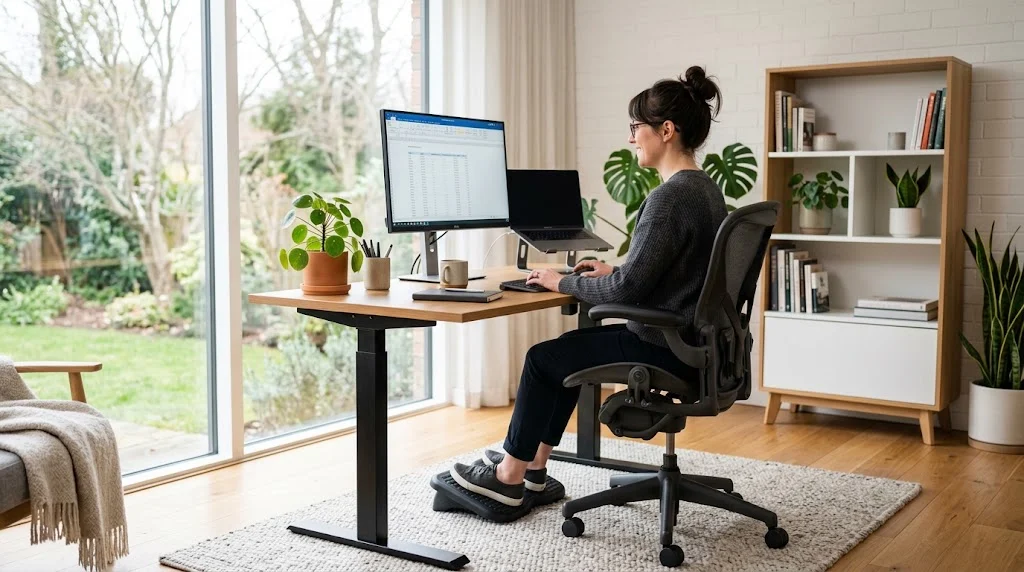
Ergonomic furniture is furniture designed to fit the natural shape and movement of the human body. It supports good posture, reduces strain on joints and muscles, and adjusts to different body types. Common examples include adjustable chairs, standing desks, and keyboard trays built for comfort and long-term health.
What Does Ergonomic Furniture Actually Mean?
Picture the last time you sat at a desk for eight hours straight. Your back probably ached by lunchtime. Your neck felt stiff by 3 p.m. That discomfort is exactly what ergonomic furniture aims to fix.
Ergonomic furniture is built around the way your body actually moves and sits, not the other way around. Instead of forcing you to adjust to a chair or desk, the furniture adjusts to you. It supports your spine’s natural curve, keeps your joints in a neutral position, and lets you shift and move throughout the day instead of staying frozen in one spot.
This idea comes from the science of ergonomics, which studies how people interact with their environment. Furniture designers use this research to create pieces that reduce physical stress on the body. The goal is simple: help you work comfortably for longer without paying for it later with back pain or stiff shoulders.
Why Ergonomic Furniture Matters for Your Health

Sitting for long stretches puts real pressure on your spine, hips, and neck. Over time, that pressure adds up. It can lead to chronic back pain, poor circulation, and repetitive strain injuries like carpal tunnel syndrome.
Ergonomic furniture works to prevent this damage before it starts. A chair with proper lumbar support keeps your lower back in its natural position instead of letting it slump. A desk set at the right height keeps your wrists straight while you type, which lowers your risk of nerve compression in the hands.
Doctors and physical therapists often recommend ergonomic setups for people who sit at a desk most of the day. Small adjustments, like raising your monitor to eye level or supporting your feet with a footrest, make a real difference over months and years. Your body wasn’t built to sit still for eight hours. Ergonomic furniture helps close that gap.
The Productivity Payoff
Comfort and focus go hand in hand. When your back hurts or your neck is stiff, part of your attention drifts to that discomfort instead of the task in front of you. Ergonomic furniture removes that distraction.
Employees who use ergonomic chairs and desks report fewer aches by the end of the workday. That means fewer breaks to stretch out pain, fewer sick days from strain injuries, and more sustained focus during work hours. Companies that invest in ergonomic setups often see this reflected in output and morale.
There’s also a mental side to this. A workspace that feels supportive sends a signal that your wellbeing matters. That builds trust and satisfaction, which keeps people engaged in their work rather than counting down the hours.
Ergonomic Chairs: The Foundation of Any Setup
If you upgrade one piece of furniture, make it your chair. You likely spend more hours in it than in your bed. A well-designed ergonomic chair adjusts in several ways to match your body.
Look for adjustable seat height so your knees sit at roughly a 90-degree angle with your feet flat on the floor. Lumbar support should push gently into the curve of your lower back. Armrests need to move up, down, and sideways so your shoulders can relax instead of hunching. Many ergonomic chairs also include seat depth adjustment, which lets you customize how much support your thighs get.
A five-point base with wheels adds stability and lets you move around your desk without straining to reach things. Some higher-end chairs even offer a recline tension feature, letting you lean back and take pressure off your spine during breaks.
Standing Desks and Height-Adjustable Workstations
Sitting all day isn’t good for anyone, no matter how supportive the chair is. Standing desks give you the option to switch positions throughout the day, which keeps blood flowing and reduces stiffness.
A proper ergonomic standing desk lets you adjust the height so your computer screen sits at eye level. Your forearms should stay parallel to the floor, forming close to a 90-degree angle at your elbows when you type. Many modern desks use an electric motor so you can switch between sitting and standing with the push of a button.
Alternating between sitting and standing every 30 to 60 minutes tends to work best. Standing all day brings its own strain, especially on your feet and lower back, so balance is the real goal here.
Ergonomic Sofas and Home Furniture
Ergonomics isn’t just for the office. Your living room furniture affects your posture too, especially if you work from a couch or spend evenings relaxing after a long day.
An ergonomic sofa supports your body the same way an ergonomic chair does. Seat height matters here as well. Your hips shouldn’t sit lower than your knees when you’re seated, and your knees should bend at close to 90 degrees. Sofas come in several styles that can still meet these standards, including sectional sofas, sofa beds, and chaise longues.
Good cushioning also plays a role. Firm support under the surface with a softer top layer helps distribute your weight evenly, which prevents pressure points from building up during long periods of sitting.
Key Features to Look for in Ergonomic Furniture
Not every chair or desk labeled “ergonomic” actually delivers on that promise. A few features separate the real thing from marketing hype.
Adjustability comes first. True ergonomic furniture lets you customize height, angle, and support to fit your specific body, not a generic average. Lumbar support should be a built-in feature, not an afterthought you add later with a cushion. Materials matter too. Breathable fabrics and quality cushioning reduce heat buildup and pressure over long sitting sessions.
Stability is another marker. A wide, sturdy base prevents tipping and wobbling, especially on chairs with wheels. Swivel functionality lets you turn and reach things around your desk without twisting your spine awkwardly. And smooth mobility, like rolling casters, helps you move without straining your legs or back to scoot your chair.
If a piece of furniture checks these boxes, it’s likely doing its job. If it just looks sleek but offers no adjustment options, it’s probably ergonomic in name only.
Common Types of Ergonomic Furniture
Beyond chairs and desks, ergonomic design shows up in several other pieces you might not think about right away.
Keyboard trays position your hands and wrists at a natural angle while typing, which reduces strain on your forearms. Monitor stands raise your screen to eye level so you’re not craning your neck downward for hours. Footrests support your legs when your feet don’t comfortably reach the floor, improving circulation in your lower body.
Even accessories like adjustable mouse pads with wrist support and anti-fatigue floor mats fall under the ergonomic furniture umbrella. Each piece targets a specific stress point on your body, and together they create a workspace that actually works with you instead of against you.
Is Ergonomic Furniture Worth the Investment?
Ergonomic furniture usually costs more upfront than standard options. That price difference stops people from making the switch. But look at it as a long-term investment rather than a one-time expense.
Fewer health complaints mean fewer sick days and lower medical costs down the road. Quality ergonomic furniture also tends to last longer than cheaper alternatives, since manufacturers build it with durable materials meant to withstand daily adjustment and use. Over several years, the cost per day of use often works out lower than furniture you’ll need to replace sooner.
For businesses, this investment shows employees their health matters, which builds loyalty and reduces turnover. For individuals working from home, it protects your body from problems that are much harder to fix once they set in.
Final Thoughts
Ergonomic furniture isn’t a luxury add-on. It’s a practical response to how much time we spend sitting, typing, and working at desks every single day. Whether it’s a chair that supports your spine, a desk that adjusts to your height, or a sofa that keeps your hips and knees aligned, each piece plays a role in protecting your body over time.
Start with the furniture you use most, likely your chair or desk, and build from there. Your back, neck, and wrists will thank you years down the line.


Comments are closed.