
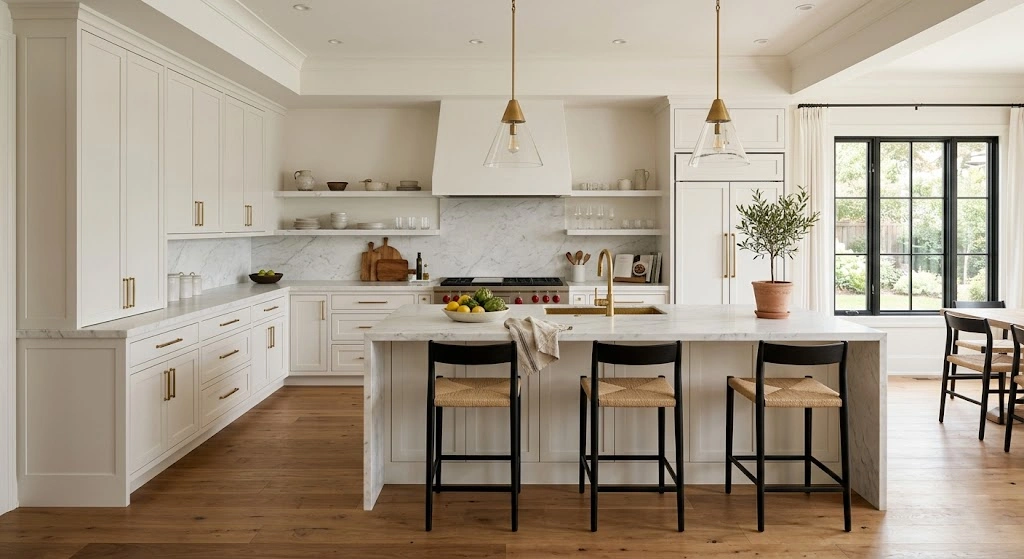
Timeless kitchen design combines classic cabinet styles, durable natural materials, and neutral color palettes to create a space that stays beautiful across decades. It avoids trendy choices in favor of quality craftsmanship, functional layouts, and simple details that work with any decor style.
Your kitchen is one of the most-used rooms in your home. You cook in it every day, gather in it with family, and show it off to guests. It also costs a lot of money to renovate — so getting it wrong hurts twice. That’s exactly why timeless kitchen design matters so much.
A timeless kitchen doesn’t follow whatever’s trending on social media this month. It’s built on smart decisions, quality materials, and a clear sense of function. Done right, it looks just as good ten years from now as it does the day you finish the renovation.
This guide walks you through every key element you need to know — from cabinet styles to color palettes to hardware choices — so you can build a kitchen that truly lasts.
Why Timeless Design Beats Trendy Every Single Time
Trends come fast and fade faster. Remember open shelving everywhere? Or all-white kitchens with bright subway tile? Those looks felt fresh once. Now they’re the first thing many homeowners want to replace.
The problem with trendy design choices is that kitchens are expensive to redo. According to the National Kitchen and Bath Association, a mid-range kitchen renovation costs between $25,000 and $50,000. Choosing a look based on what’s popular today means you might be looking at another renovation sooner than you’d like.
Timeless design avoids that trap. It keeps the permanent, expensive elements classic and neutral, then lets you update smaller accessories — bar stools, artwork, dish towels — as your taste shifts. The bones of the kitchen stay strong, and the personality can evolve.
Start With a Layout That Works for Real Life

Before you pick a single cabinet door style or countertop color, get the layout right. A beautiful kitchen that doesn’t function well will frustrate you every single day.
The classic “work triangle” is still a great starting point. It connects your refrigerator, sink, and cooktop in a triangular path that keeps movement efficient. The National Kitchen and Bath Association recommends that no single leg of this triangle should exceed 9 feet. That keeps you from walking too far between key work zones.
Beyond the triangle, think about landing space. You need counter room next to your oven for hot pans, next to your refrigerator for groceries, and next to your sink for dishes. Kitchens that skip these zones feel cramped and hard to use, no matter how good they look.
A timeless layout also keeps traffic out of the work zone. If you regularly host people while you cook, design a path around the kitchen — not through it. An island with seating on one side solves this perfectly and has stayed popular for decades for exactly that reason.
Choose Cabinet Styles That Age Gracefully

Cabinetry is the backbone of your kitchen. It covers more visual square footage than anything else in the room, and it’s the most expensive thing to replace. Choose wisely here and you’re set for life.
Two cabinet styles consistently stand the test of time: Shaker and inset. Shaker doors feature a flat center panel with a simple frame — clean, slightly traditional, and flexible enough to work in both modern and classic kitchens. Inset cabinetry, where the door sits flush inside the frame, has a more refined look and works beautifully in traditional or transitional spaces.
What you want to avoid are highly decorative profiles with lots of curves, carvings, or ornate details. These feel very specific to a time period and tend to date a kitchen quickly. Simpler profiles let the materials and proportions do the work instead.
For cabinet color, neutral tones are your safest bet for long-term appeal. Warm whites, soft off-whites, and natural wood stains have stayed popular across generations. If you want some contrast, consider darker lower cabinets with lighter uppers — this layered approach adds visual depth without betting everything on one bold statement color.
Invest in Natural Materials for Countertops and Flooring
Natural materials age well. That’s the short version. The longer version is that stone, hardwood, and solid wood get better with time — they develop character, patina, and texture that manufactured materials simply can’t replicate.
For countertops, marble, granite, quartzite, and soapstone are all excellent long-term choices. Each one is unique, durable, and carries a warmth that engineered surfaces struggle to match. If natural stone feels out of budget, high-quality quartz is a solid alternative — just make sure you buy from a reputable manufacturer, because quality varies significantly across brands.
Hardwood floors and stone tile are the top choices for kitchen flooring that stays classic. Wide-plank white oak has become one of the most popular choices in recent years, and it works beautifully in both modern and traditional spaces. For tile, large-format neutral stone tile or simple subway tile in a classic running bond or grid pattern rarely feels dated.
The key principle with natural materials is restraint. One primary wood tone, one main stone, and one or two metal finishes are all you need. Mixing too many materials makes a kitchen feel busy rather than layered.
Pick a Neutral Color Palette You’ll Still Love in a Decade
Color is where many homeowners get into trouble. A bold cobalt blue cabinet feels exciting at the showroom, but after five years of looking at it every morning, it might be a different story.
Neutral palettes — warm whites, soft grays, greige tones, and natural wood stains — stay fresh because they don’t demand your attention. They create a calm backdrop that lets you bring personality in through smaller, easier-to-change items. Think bar stools in an interesting fabric, a colorful pendant light, or a patterned rug.
If you absolutely love color and want it in your kitchen, use it thoughtfully. A single accent wall, a painted island in a deep navy or forest green, or a colorful backsplash tile can all add personality without locking you into a full color commitment. These elements are far easier to update than an entire cabinet run.
White kitchens have stayed popular for generations for one simple reason: they work with everything. White reflects light, makes a space feel larger, and serves as a neutral base for almost any decor style. Just make sure you invest in quality paint and application — painted cabinetry that chips or peels will undermine the entire look.
Select Hardware and Fixtures That Don’t Scream a Specific Era
Hardware is the jewelry of your kitchen. It’s also one of the easiest things to swap out later, so you have a little more room to experiment here. But even so, some choices age better than others.
Classic metal finishes — polished nickel, antique brass, brushed bronze, and unlacquered brass — have been used in kitchens for decades and show no signs of going away. Matte black has been popular recently and still feels fresh, though it’s slightly more trend-dependent than the others.
For hardware style, simple bar pulls and minimal knobs hold up better than heavily stylized options with lots of detail. Straight lines and clean geometry tend to feel current across different design periods, while elaborate or novelty shapes tie too closely to a specific moment in time.
The same logic applies to plumbing fixtures. A classic bridge faucet or simple arc faucet in polished nickel or brushed brass will still look refined twenty years from now. Avoid ultra-modern shapes that feel very particular to today’s aesthetic — they age faster than you’d expect.
Light Your Kitchen the Right Way
Lighting in a timeless kitchen does two things: it works hard and it looks good doing it. That means layering your light sources rather than relying on a single overhead fixture.
Start with recessed lighting for even, functional coverage across the whole space. Add under-cabinet lighting to illuminate your countertops — this is one of the most practical upgrades you can make, and it’s consistently popular across every design era. Then bring in a statement pendant or two over the island or peninsula for atmosphere and visual interest.
For fixture style, simple shapes in classic finishes work best. A clean lantern pendant, a simple dome, or a minimal cylinder look at home in both traditional and modern kitchens. Overly sculptural or design-forward fixtures can date a space quickly, so save those for rooms you’re more willing to update.
How to Add Personality Without Sacrificing Longevity
A timeless kitchen doesn’t mean a boring one. It means you keep the permanent, expensive elements classic, then express your personality through the details you can change.
Open shelving is one example. A small section of open shelves, styled with ceramic dishes, cookbooks, and a few plants, adds warmth and character without committing the whole kitchen to a trend. You can restyle those shelves any time.
Backsplash is another area where you have a bit more creative freedom. A handmade ceramic tile in a soft neutral, a classic marble slab, or a simple brick pattern all read as classic. Just avoid very specific patterns or bold color combinations that scream a particular trend.
Personal touches — artwork on the wall, a collection of vintage pottery, an antique light fixture — bring life and individuality to any kitchen without changing the core design. These pieces tell your story without compromising the kitchen’s long-term appeal.
Final Thoughts on Building a Kitchen That Lasts
A timeless kitchen is the product of intentional choices, not expensive ones. You don’t need the most luxurious materials or the most complex layout. You need quality where it counts, simplicity in the permanent elements, and enough restraint to avoid decisions you’ll regret in five years.
Focus on a functional layout, classic cabinet profiles, natural materials, neutral colors, and simple hardware. Get those right, and you’ll have a kitchen you love today and still appreciate a decade from now. That’s the whole point — and it’s entirely within reach.
Comments are closed.