
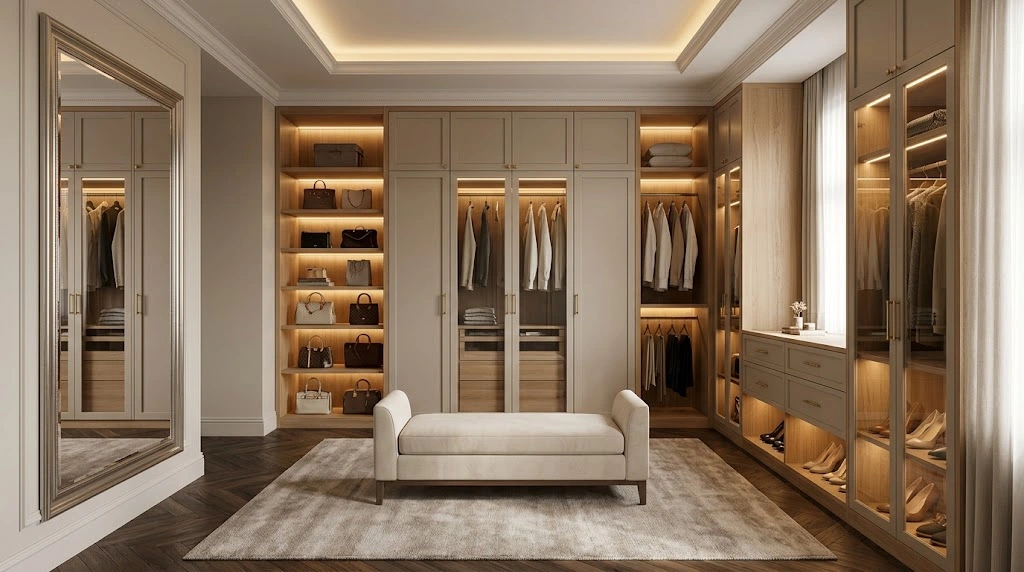
Luxury wardrobe design is the process of planning a closet or dressing room that looks beautiful and works well every day. It combines quality materials, smart storage zones, layered lighting, and custom details. A good design fits your clothes, your habits, and your space, so getting dressed feels easy and calm.
Think about a typical weekday morning. You are late, your favorite blazer is buried behind three other jackets, and the light in your closet makes navy look black. You grab something else and leave annoyed. A well-designed wardrobe fixes that problem for good.
Luxury wardrobe design isn’t about spending the most money. It’s about making smart choices on layout, materials, lighting, and storage so your clothes are easy to find and a pleasure to use. This guide walks you through each choice, with real numbers and practical tips along the way.
What Luxury Wardrobe Design Really Means
Many people picture marble floors and chandeliers. Those can be part of it, but they aren’t the point. A luxury wardrobe gives every item a place, shows your clothes clearly, and feels calm to step into.
Design trends point the same way. Recent wardrobe design coverage describes a move toward soft matte finishes and nature-inspired textures that bring warmth into the bedroom. Fashion is heading in a similar direction. Writers covering 2026 luxury fashion say flashy logos are going out of style, and quiet, well-made pieces signal confidence instead.
The same idea applies to your closet. Quality and order matter more than show. If you buy fewer, better pieces, your wardrobe should treat them well.
Start With Your Space and Layout

Every good design begins with measurements. Before you pick a single finish, measure the room, the ceiling height, and the doors and windows. Note where outlets and vents sit. These details decide what is possible.
You don’t need a huge room. One source says a walk-in closet can start at about 5 feet by 5 feet, with one side for storage and the rest for changing. A space that small works, but it won’t hold an island or a seating area. For those, plan on something closer to 8 by 10 feet or larger.
Pick a layout that fits the room’s shape. Here are the three most common options:
- Galley layout: Storage runs along two parallel walls. It suits narrow rooms.
- L-shaped layout: Storage wraps two walls. It works well in corner spaces.
- U-shaped layout: Storage covers three walls. It gives you the most hanging and shelf space.
Leave at least 36 inches of walking space between storage runs. Anything tighter feels cramped, and drawers won’t open fully.
Choose Materials and Finishes With Care

Materials set the tone of the room, and they affect how long your wardrobe lasts. Solid wood and quality veneers look rich and hold up for decades. Laminate costs less and has improved a lot, though it won’t age the same way. Many people mix the two, using wood on visible fronts and laminate inside.
Finish matters just as much. Matte lacquer is a popular pick right now. It offers a velvety, fingerprint-resistant alternative to high gloss. That’s a real benefit in a room where you touch the doors every day.
Texture is also getting attention in fashion. Luxury retailers describe 2026 as a season where texture leads the story in luxury dressing. In a wardrobe, you can echo that with fluted panels, woven fronts, suede-lined drawers, or leather pulls. Pick two or three textures and repeat them. Too many will make the room feel busy.
Pick Doors That Fit Your Style

Doors shape how the wardrobe looks from the bedroom. You have three popular choices.
Mirrored doors are a long-time favorite. They solve two design challenges at once: storage and light. A mirror bounces daylight around the room and saves you from hanging a separate one. The downside is fingerprints and a more traditional look.
Glass doors suit modern bedrooms. Frosted, tinted, or reeded glass lets you see a hint of what’s inside without showing every shelf. Add interior lighting behind the glass, and the wardrobe becomes a display.
Shaker-style doors bring a softer, classic feel. Designers now pair Shaker doors with soft matte finishes for an elegant but understated look. You can also mix finishes within one wardrobe. For example, use solid doors on the lower half and glass on the upper half.
Get the Lighting Right First

Lighting makes or breaks a luxury closet. One home renovation guide puts it bluntly: closet lighting is where most renovations underdeliver. Another source calls the lighting system a vital aspect, both for seeing yourself and for seeing inside the closet.
Plan three layers:
- Ambient light: A ceiling fixture or soft cove light fills the room evenly.
- Task light: LED strips inside shelves and along rods let you see colors and textures clearly.
- Accent light: Small spotlights highlight shoes, bags, or a favorite piece.
Choose LEDs with a color temperature of about 2700K to 3000K. That range looks warm and flatters skin tones. It also shows fabric colors close to how they look in daylight. Add door-activated or motion sensors so lights turn on when you walk in. You’ll use them every day, and your hands are often full.
Build Storage Zones for How You Live

A big closet with poor organization still frustrates you. Divide the space into zones, and give each type of clothing its own home. Think of how you dress each day, then match the storage to it.
Here’s a simple zone plan:
- Long hanging: Dresses, coats, and robes need about 64 to 70 inches of height.
- Double hanging: Shirts, blouses, and folded trousers fit in two rows, with about 40 inches per rod.
- Shelves: Knitwear and denim stay shaped when folded on shelves 12 to 14 inches deep.
- Drawers: Underwear, socks, and belts need shallow, divided drawers.
- Shoes and bags: Angled shelves show shoes clearly, and deep cubbies protect handbags.
A central island adds a lot. It gives you a flat surface for packing, folding, or laying out outfits. Many islands include shallow drawers for watches, jewelry, and sunglasses. Velvet-lined trays keep small items from scratching.
Build in room for change. Adjustable shelves and rods let you reconfigure the space as your wardrobe grows. People rarely wear the same mix of clothes at 30 and at 50.
Add Smart Features Without Clutter

Technology should make your wardrobe easier to use and stay mostly out of sight. A few features are worth the money.
Motorized lift rods bring high-hung clothes down to eye level. One design guide lists touch-button mechanisms that lower hanging rods or shelves effortlessly as a hallmark of modern luxury wardrobes. They help a lot in rooms with tall ceilings, where the top rail is hard to reach.
Soft-close hinges and drawer slides prevent slamming and extend the life of the hardware. Built-in outlets inside drawers let you charge a watch or run a steamer. Some owners add a small humidity monitor for leather goods and fine knitwear. Keep the controls simple. If you need an app to open a drawer, the design has gone too far.
Use Color to Set the Mood

Color changes how the room feels more than almost any other choice. Soft neutrals like greige, warm white, and sand keep the space light and let your clothes provide the color. Deep tones like forest green, navy, and chocolate brown feel rich and cozy. Fashion is leaning that way too, with writers noting rich chocolate shades are set to show up everywhere in 2026.
Use a simple rule for balance. Pick one main color for large surfaces, one supporting tone for shelves and drawers, and one accent in metal. Brushed brass, matte black, and soft nickel all work well. Keep the hardware finish the same across the room so it feels planned.
Add a rug, a small bench, and a full-length mirror to finish the look. These items make the space feel like a dressing room instead of a storage unit. A bench is also useful when you put on shoes.
Think About Sustainability
Sustainable choices are becoming a normal request. One design house says that in current wardrobe trends, sustainability is no longer considered an add-on; it is expected.
You can act on this in simple ways. Ask your cabinet maker about FSC-certified wood, which comes from responsibly managed forests. Look for low-VOC paints and water-based finishes, which release fewer fumes. Choose LED lights, which use far less energy than older bulbs. Pick hardware made to last, so you don’t replace it in five years.
The most sustainable choice is a closet built well the first time. Cheap fixtures that sag or peel end up in landfills. Solid construction costs more upfront and saves money over time.
What a Luxury Wardrobe Costs
Prices vary a lot by region, size, and materials. In the United States, one renovation guide says custom designs for a primary bedroom range from $5,000 to $20,000 or more, depending on size, materials, and features like built-in lighting or glass doors. Truly high-end projects with exotic wood, automated systems, and large islands can go well beyond that.
Here’s where the money usually goes:
- Cabinetry and shelving: The largest share, often 40 to 50 percent of the budget.
- Labor and installation: Roughly 20 to 30 percent.
- Lighting and electrical: Often 10 percent or more.
- Hardware and accessories: Pulls, rods, drawer inserts, and mirrors make up the rest.
There are smart ways to save. Use standard cabinet sizes and add custom fronts. Choose LED tape lighting instead of costly fixtures. Spend more on the parts you touch daily, such as drawer slides and hinges, and less on areas you rarely see.
A good closet can also help when you sell. The same guide notes that a walk-in closet off the primary bedroom is one of the features buyers actually notice during a showing.
Common Mistakes to Avoid
Most regrets come from the same few errors. Avoid these, and your project will go much more smoothly.
First, don’t skip the clothing audit. Count what you own before you design. Measure how many feet of hanging space you need, then add 20 percent for growth. Second, don’t treat lighting as an afterthought. Wiring is far cheaper before the walls are closed.
Third, don’t ignore ventilation. Closed closets trap moisture, which can lead to musty smells and mold on leather and wool. A small vent or a gap behind the shelves helps air move. Fourth, don’t chase every trend. Matte finishes and warm tones are popular now, but a timeless layout will outlast any color. Finally, don’t forget the floor. A soft, durable surface like wood, luxury vinyl, or low-pile carpet feels good underfoot and protects shoes.
How to Work With a Designer
A designer saves time and catches problems early. Come prepared. Bring photos of closets you like, a rough budget, and a list of your clothing categories. Share your daily routine, too. If you dress in the dark at 5 a.m., the designer should plan for that.
Ask to see past projects and talk to a few past clients. Get a written quote that lists materials, hardware brands, and the timeline. Most mid-range projects take a few weeks from design to install, though custom work can run longer.
Review the 3D renderings carefully. Check door swings, drawer clearances, and lighting positions. Small changes are easy on screen and expensive on site.
Your Next Step
You now have the main pieces: measure your space, choose a layout, pick materials, plan the lighting, and build zones around how you live. Start small if you need to. Sketch your room, list your clothing by category, and collect ten photos you love.
Those three steps will make every conversation with a designer faster and more useful. A great wardrobe doesn’t happen by accident. It comes from clear choices made one at a time, and you can start making them today.

Comments are closed.