
Editor’s note: This article was fully re-reported and updated on October 24, 2026. Details from the previous version that could not be verified from public records or reputable reporting have been removed.
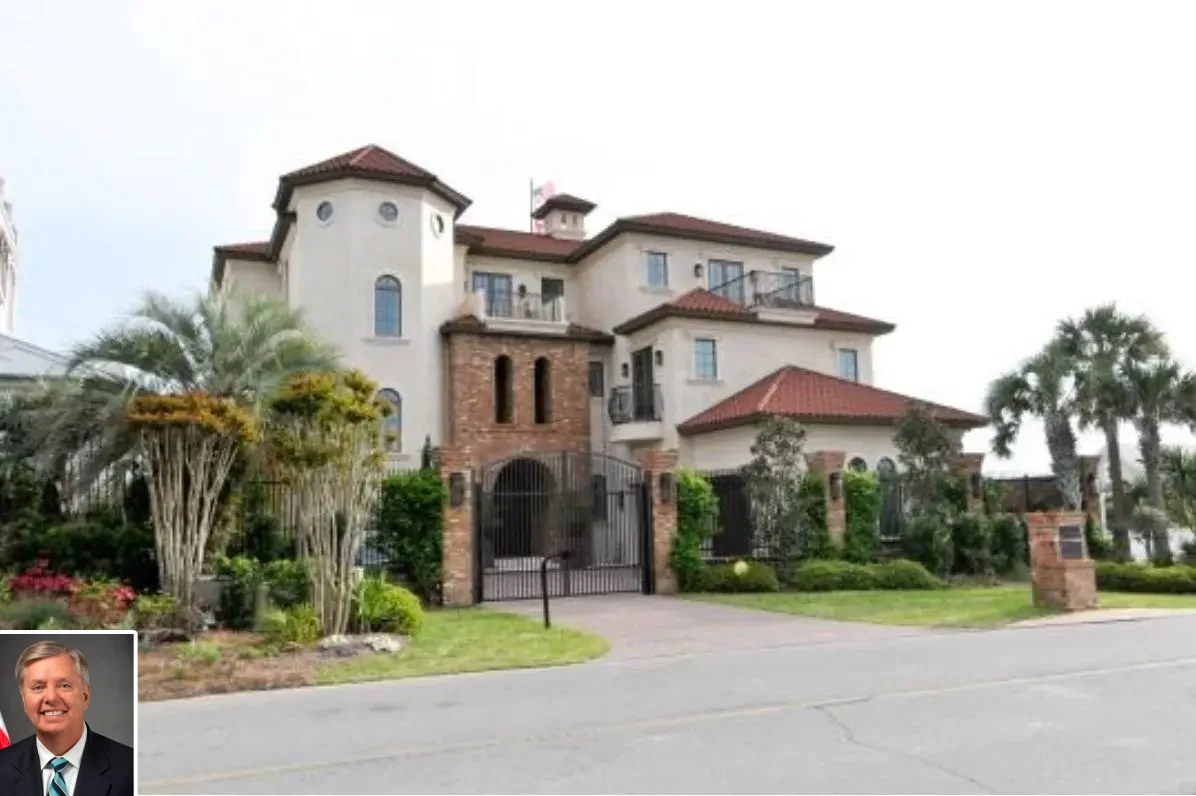
Lindsey Graham’s house in Seneca, South Carolina, has drawn fresh attention since the senator’s death on July 11, 2026. For more than two decades, this modest ranch-style home was where he went when the Senate wasn’t in session. It wasn’t flashy. It wasn’t massive. But it said a lot about the man who represented South Carolina for over 23 years. Here’s what’s verified about the Lindsey Graham house, the neighborhood it sat in, and the small real estate footprint he left behind.
Who Was Lindsey Graham?
Lindsey Olin Graham was a Republican senator from South Carolina who served in Washington from 2003 until his death in 2026. Before that, he spent eight years in the U.S. House of Representatives and one term in the South Carolina House. Graham grew up in Central, South Carolina, where his family ran a small restaurant and pool hall, and he lived above the business as a boy. After his parents died, he became the legal guardian of his younger sister while he was still a college student. He never married and had no children, and he often described his life as pretty simple compared to most people at his level of power.
Graham died on July 11, 2026, at age 71, shortly after returning to Washington from Kyiv, Ukraine, where he had spent July 10 meeting President Volodymyr Zelenskyy and touring a Ukrainian military drone factory on his 10th wartime trip to the country. The District of Columbia’s chief medical examiner determined the cause of death was an aortic dissection caused by arteriosclerotic cardiovascular disease.
His finances matched his lifestyle. Graham was consistently ranked among the least wealthy members of Congress, with a net worth of less than $1.5 million at the time of his death. He owned no yacht, no private jet, and no private island.
| Detail | Information |
|---|---|
| Full Name | Lindsey Olin Graham |
| Date of Birth | July 9, 1955 |
| Date of Death | July 11, 2026 |
| Birthplace | Central, South Carolina |
| Occupation | U.S. Senator, Attorney, Air Force Veteran |
| Political Party | Republican |
| Years in Senate | 2003–2026 |
| Estimated Net Worth | Less than $1.5 million |
| Primary Residence | Seneca, South Carolina |
| Secondary Residence | Washington, D.C. |
| Marital Status | Never married, no children |
Where Did Lindsey Graham Live?
For most of his political career, Graham split his time between two homes. His primary residence was in Seneca, South Carolina, in Oconee County near Lake Keowee and the Blue Ridge foothills. His second home was a small brick townhouse in Washington, D.C., close to the Capitol. Even though he spent a huge chunk of his adult life in Washington, Seneca was always described as home.

Lindsey Graham House: A Detailed Overview
1. Where Was Lindsey Graham’s House?
The Lindsey Graham house sat in Seneca, South Carolina, a quiet city in Oconee County near the foothills of the Blue Ridge Mountains and not far from Lake Keowee. The house wasn’t in a gated community or a high-end subdivision. It sat in an ordinary residential neighborhood, and its exact street address was never made public.
2. Features of the Lindsey Graham House
The home was a single-family ranch-style house, built in a style that’s common throughout the Upstate region. According to property reporting, it measured 1,901 square feet, with three bedrooms and two bathrooms. Graham bought the house in 1993 for $164,000 and owned it for more than 30 years. Oconee County tax records assessed it at $213,230 in 2013.
There was nothing showy about the architecture. No columns out front, no grand entryway, no tennis court. It was a straightforward, modest home — the kind of place that matched Graham’s reputation for living simply despite decades in Washington.
The house became a point of public attention in 2024, when it was the site of a political protest tied to the war in Gaza. On July 4, 2024, pro-Palestinian protesters demonstrated outside Graham’s Seneca home over his support for Israel in the Israel-Hamas war.
Lindsey Graham’s Washington, D.C. Townhouse
While Congress was in session, Graham lived in a small brick townhouse in Washington, D.C. The two-bedroom, two-bathroom townhouse measured 1,254 square feet, and its estimated value was put at $890,000 in reporting at the time of his death. Like the Seneca house, it was well under 2,000 square feet — modest by the standards of senior Washington figures.
Lindsey Graham’s Real Estate Portfolio
Graham’s real estate holdings were small compared to most senators. He wasn’t a property investor, and his portfolio came down to two homes:
Seneca, South Carolina (Primary Residence): The main Lindsey Graham house, a roughly 1,901-square-foot ranch he bought in 1993 for $164,000.
Washington, D.C. (Townhouse): A small brick townhouse of about 1,254 square feet, with two bedrooms and two bathrooms.
Childhood Home in Central, South Carolina: Graham grew up above his family’s restaurant and pool hall in Central. He did not own that property as an adult, but it remained central to his life story.
Compared to many of his colleagues in Congress, Graham’s real estate footprint stayed small his entire life.
Final Thoughts
The Lindsey Graham house in Seneca wasn’t built to impress anyone. It was a straightforward, three-bedroom ranch that a senator bought in 1993 and kept for more than three decades — a home that matched a career built on staying close to his South Carolina roots. After his death, his legacy continued in Washington: in September 2026, President Donald Trump signed the Lindsey O. Graham Sanctioning Russia Act into law, and Graham’s sister Darline later entered the race for his Senate seat. But the house itself tells the simpler story — of a senator who, for all his years in power, chose to live modestly.

Comments are closed.