
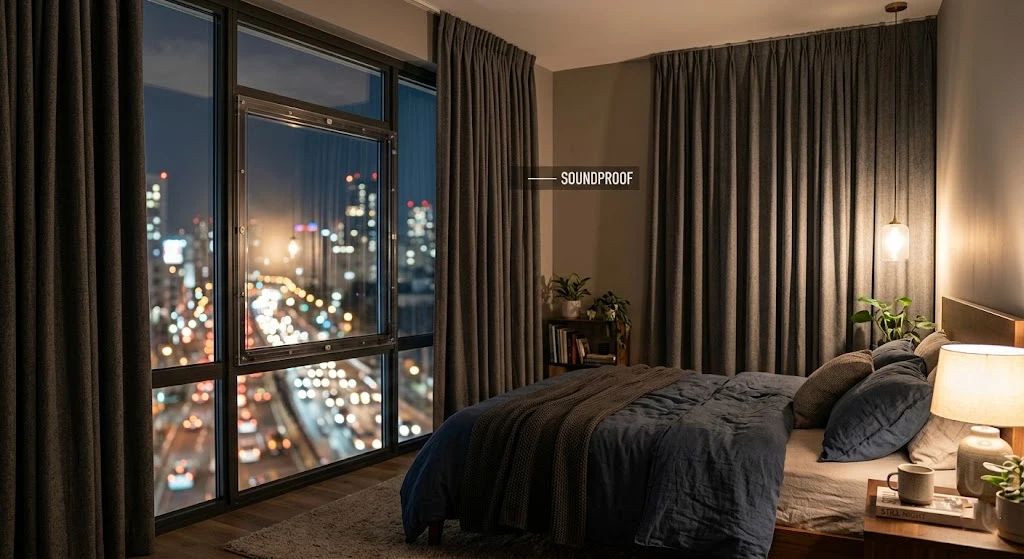
To soundproof windows, seal gaps with acoustic caulk and weatherstripping, then add heavy soundproof curtains or window inserts for extra noise blocking. Layering two or three of these methods gives the best results. You can cut outside noise by up to 50% without replacing your windows.
Street noise is exhausting. Cars, barking dogs, construction, noisy neighbors — it all bleeds through your windows and disrupts your sleep, your work, and your peace. The good news? You don’t have to replace your windows or spend thousands to fix it.
Soundproofing windows is a lot simpler than most people think. Some methods take less than an hour. Others take a weekend but deliver serious results. This guide walks you through every option, from the cheapest DIY fixes to the best long-term solutions, so you can choose what fits your budget and your noise problem.
Why Windows Let So Much Noise In

Before you start blocking noise, it helps to understand how it’s getting in. Sound travels in two ways — through air gaps and through vibrations in the glass. Most people focus on the glass, but the truth is that tiny gaps around the frame are often the bigger problem.
Sound travels like air: if air can get through, noise will follow. Even a hairline crack around your window frame lets in a surprising amount of street noise. So the first step in soundproofing isn’t buying anything fancy — it’s finding and sealing those gaps.
A standard single-pane window has an STC (Sound Transmission Class) rating of around 26. Soundproof windows on the higher end of the scale can reach STC 45 to 54 — meaning a 98-decibel noise outside, like a motorcycle engine, might only reach 44 decibels inside. That’s the difference between a roaring engine and a quiet conversation.
Step One: Seal Every Gap Around the Frame

This is where you should always start. If you live in an older home or one with poorly installed windows, soundproofing may simply be a matter of sealing cracks and crevices around your windows — because other methods won’t work if gaps are letting sound in freely.
Regular caulk hardens and cracks over time. Acoustic caulk is different — it stays flexible after curing, which means it keeps absorbing vibrations instead of breaking apart. Look for an acoustical caulk that remains flexible for years, and apply it along the window frame wherever you find cracks or gaps. The cost is minimal — usually $10 to $20 — and the results are immediate.
Weatherstripping works alongside caulk. You press it around the edges of the window sash to create a tight seal when the window is closed. Combine weatherstripping with acoustic caulk, and you’ve already eliminated the majority of air leaks. For renters who can’t make permanent changes, self-adhesive foam strips are a solid budget option — just test them in a hidden spot first, since they can sometimes peel paint on removal.
Add Soundproof Curtains for an Easy Upgrade
If sealing alone isn’t cutting it, soundproof curtains are your next move. They’re affordable, easy to hang, and make a noticeable difference — especially against higher-pitched sounds like voices and traffic.
The key is coverage. The curtain needs to be wide enough to cover at least 6 inches past the frame on all sides, and long enough to touch the floor or a deep windowsill. A regular heavy blanket is better than nothing, but a purpose-built acoustic curtain with a mass-loaded vinyl (MLV) core performs significantly better.
Sound-reducing curtains won’t give you a recording studio, but they take the edge off everyday noise. Pair them with sealed gaps and you’ll notice a real improvement in how quiet your room feels. Prices start at around $20 per window, making this one of the most accessible steps you can take.
Install Window Inserts for Serious Noise Reduction
Window inserts are one of the most effective solutions short of a full window replacement. These inserts sit inside your existing window frame and use the air space between the insert and the window to keep most sound vibrations from passing through the glass, resulting in greater noise reduction than double-pane windows alone.
The best inserts use laminated glass — two layers of glass bonded with a layer of plastic in between. This structure absorbs vibrations instead of letting them pass through. On the STC scale, soundproof window inserts typically measure between 48 and 54. Brands like Indow, CitiQuiet, and Soundproof Windows are well-known for this type of product.
The downside is cost. Window inserts run from $300 to $800 per insert — more than a DIY fix, but far less than a full window replacement. They’re removable, so renters can use them too. If traffic noise or airplane sound is seriously affecting your life, inserts are worth the investment.
Try a Window Plug for a Temporary Fix
A window plug is exactly what it sounds like. You build or buy a panel that fits snugly inside the window opening and blocks both light and sound. It’s not the most elegant solution, but it works surprisingly well.
Window plugs combine inexpensive wood, acoustic foam, and soundproofing material. They fill the opening of a window, effectively blocking out both light and sound. You can plug the window when you want quiet and remove it whenever you don’t.
This works well in a home recording setup, a bedroom where you sleep during the day, or any space where you need serious quiet for specific periods. Since you take it out when you don’t need it, you keep your access to natural light and ventilation. Measure carefully — the fit needs to be snug for the plug to work properly.
Upgrade to Double or Triple-Pane Windows
If your home still has single-pane windows, you’re working with the least effective noise barrier available. Replacing single-pane windows with double panes is effective — and many window professionals recommend it as the best long-term soundproofing solution, while others say window inserts are even more effective for noise specifically.
Double-pane windows have two layers of glass with air (or argon gas) in between. Triple-pane windows add a third layer. The multiple panes and gas insulation slow down sound as it tries to pass through.
You can expect to pay anywhere from $300 to $2,100 per window depending on the style and size. It’s a real investment, but it pays off in noise reduction, energy savings, and home value. If your windows are old and drafty anyway, this upgrade solves multiple problems at once.
Consider Acoustic Foam Panels Near Windows
Acoustic foam panels are the material you see lining recording studios. They absorb sound waves and reduce echo rather than blocking sound entirely. Placing them near or around a window adds another layer of noise control.
Acoustic foam panels typically cost between $30 and $200 depending on quantity and quality, and most have adhesive backs for easy DIY installation. They’re not a complete fix on their own — they work best as part of a layered approach. Think of them as a supplement to your curtains and sealed gaps, not a replacement for them.
These panels are especially useful if you’re setting up a home office or bedroom where you need to reduce both incoming noise and the echo inside the room.
Use Cellular Shades for Light Noise Issues
If your noise problem is on the lighter side — office chatter coming through, soft traffic sounds, or mild neighborhood activity — cellular shades can help. These honeycomb-structured blinds trap air in their cells, which provides some sound dampening.
Double-cell or triple-cell shades offer the best acoustic performance because the more cells present, the more air gets trapped. This method won’t stand up to heavy traffic or construction noise, but it’s a clean, attractive option for spaces with mild sound issues. It also helps with energy efficiency, so you get two benefits from one purchase.
Layer Your Methods for the Best Results
No single fix will turn a noisy room into a quiet one. The real results come from combining methods. Seal the gaps first — that’s non-negotiable. Then add curtains, inserts, or upgraded glass depending on how bad the noise is and what your budget allows.
Soundproofing works best when methods are layered. Sealing gaps reduces leaks, but adding curtains or inserts tackles the remaining sound that passes through the glass itself. Think of it like building a wall: each layer adds a little more resistance, and together they add up to real quiet.
Start with the cheapest fixes and work your way up. Sealing gaps costs almost nothing and makes an immediate difference. Curtains are the next affordable step. From there, inserts or new windows give you professional-grade results. Most people find that two or three layered methods solve the problem without needing a full window replacement.
Which Method Is Right for You?
The best approach depends on your noise level, your budget, and whether you own or rent.
For renters or anyone on a tight budget, acoustic caulk, weatherstripping, and heavy curtains are the place to start. You can get solid results for under $100 per window. For homeowners dealing with heavy traffic or airport noise, window inserts or double-pane replacement windows are worth the higher cost. They solve the problem properly and add lasting value to your home.
Whatever route you take, start today. Every quiet night of sleep you miss is one you can’t get back.


Comments are closed.