
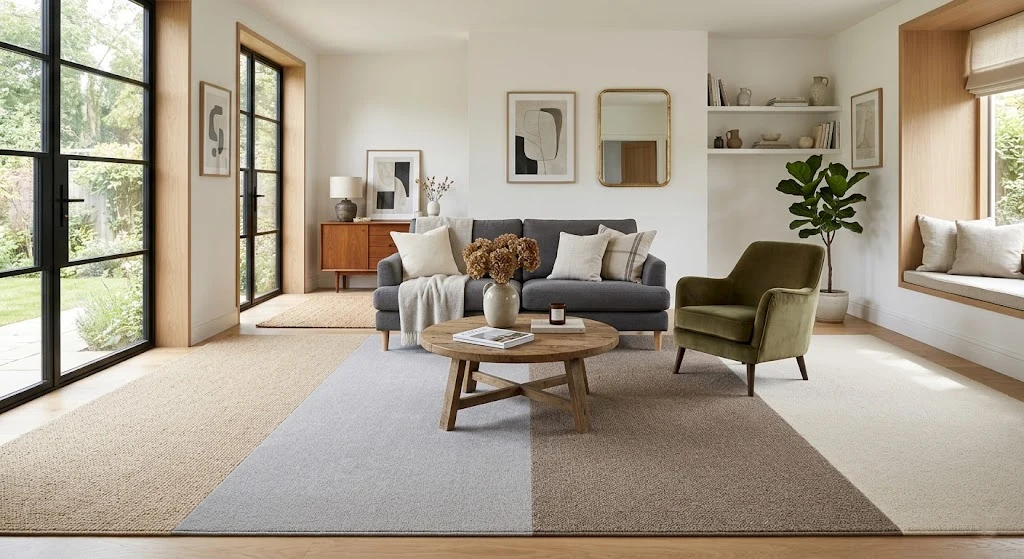
The best carpet colors depend on your room’s lighting, furniture, and lifestyle. Neutral shades like beige, gray, and taupe work in almost any space. Warm earth tones such as terracotta and olive add coziness, while jewel tones like emerald and navy bring drama to formal rooms.
Picking a carpet color feels like a small decision until you’re standing in a showroom surrounded by a hundred shades of beige. Suddenly it doesn’t feel small at all. Your carpet sets the tone for an entire room, and getting it wrong means living with that mistake for years.
The good news? You don’t need a design degree to make a smart choice. You just need to understand a few basics about color, light, and how carpets actually work in real homes.
Why Carpet Color Matters More Than You Think
Your floor covers more square footage than almost anything else in a room. Walls get broken up by windows, doors, and furniture. Floors don’t. That makes carpet color one of the biggest visual elements in any space.
A carpet color can make a room feel bigger or smaller. It can make ceilings feel higher or lower. It can warm up a cold room or cool down one that gets too much sun. Carpets do so much more than cover a floor — they bring softness, texture, and comfort while helping pull a room together.
Think about how your carpet works with everything else. The walls, furniture, curtains, and even your lighting all interact with that color every single day.
Neutral Carpet Colors Still Win for Most Homes
If you’re stuck on what to pick, neutrals are almost always a safe bet. Neutral colors remain one of the most popular choices because they go with nearly every decor style.
Beige, gray, taupe, and cream all fall into this category. They don’t compete with your furniture or wall colors. Instead, they create a calm backdrop that lets everything else shine.
Neutral carpets also let other elements like wallpaper, artwork, and lighting stay the focal point, while the floor simply blends into the background. This is huge if you like to redecorate often. You can swap throw pillows, art, and accent pieces without ever touching the floor.
Gray has been popular for over a decade now, and it’s not going anywhere. It pairs well with almost any wall color, from crisp white to deep navy. Taupe splits the difference between warm and cool, making it one of the most flexible shades on the market.
Cream and ivory bring brightness to a room. They work especially well in spaces that don’t get much natural light, since lighter colors reflect more light around the room.
Warm Earth Tones Bring Cozy Energy
If neutral feels too safe, warm earth tones are the next step up. Shades like sienna, umber, and terracotta bring natural warmth to a space while still being easy to live with.
These colors work because they connect to nature. Think rust, clay, camel, and warm brown. Terracotta, olive green, and rust have become popular choices for homeowners who want their space to feel connected to the outdoors.
Terracotta carpet sounds bold on paper, but in practice, it reads as warm and grounding. It pairs beautifully with wood furniture, green plants, and cream walls. These warm tones can work well with almost any other shade of furnishing, which makes them more flexible than people expect.
Camel and warm beige carpets fit perfectly in farmhouse and rustic homes. Warm beige, camel, or soft brown carpets pair naturally with Berber or loop pile styles, which add texture and complement natural wood finishes.
If your living room feels cold or sterile, a warm earth-toned carpet might be exactly the fix you need.
Bold and Jewel-Toned Carpets for Statement Rooms
Sometimes neutral just doesn’t cut it. Maybe you want your dining room or home office to feel a little more dramatic. That’s where jewel tones come in.
Deep, vibrant colors like emerald, royal blue, and ruby red are showing up in carpet designs that create a sense of luxury and drama. These shades work best in formal spaces, entryways, or rooms where you want to make a memorable first impression.
Emerald greens, navy blue, and maroon are appearing more frequently in interiors, often paired with warm neutral tones for balance.
The trick with bold colors is balance. You don’t want every element in the room competing for attention. Pair a jewel-toned carpet with neutral walls and simple furniture. Let the floor be the star.
Navy carpet, for example, looks stunning in a home office or library. It feels serious without being boring. Emerald green works wonders in a powder room or formal dining area, especially with brass or gold accents.
Light vs. Dark Carpet: Which Should You Choose?
This question comes up constantly, and the honest answer is: it depends on your space and your lifestyle.
Light carpets make small rooms feel bigger and brighter. They reflect light, which helps rooms that don’t get much natural sunlight. Light-colored carpets have been gaining traction and are becoming one of the most popular flooring options.
But light carpets show dirt, stains, and pet hair more easily. If you have kids, pets, or just a busy household, you’ll be vacuuming more often.
Dark carpets hide stains and wear better. They also add a sense of coziness and intimacy to larger rooms. The downside is they can make small spaces feel cramped, and they show lint, dust, and pet hair in a different way — light-colored fuzz stands out against dark fibers just as much as dirt stands out against light ones.
A good middle ground is a medium-toned carpet with some texture or pattern. A cut and loop design adds texture without creating visual clutter, which helps hide everyday wear and tear.
How Room Lighting Changes Carpet Color
Here’s something a lot of people miss: the carpet sample you see in the store will look different in your home. Lighting changes everything.
Natural light brings out the true color of a carpet. Warm artificial lighting, like incandescent bulbs, can make cool colors look warmer and warm colors look even richer. Cool LED lighting can wash out warm tones and make grays look almost blue.
Before you commit to a color, bring home a sample. Look at it in the morning, afternoon, and evening. Check it under your actual light bulbs, not just store lighting.
North-facing rooms tend to get cooler, bluish light throughout the day. These rooms often benefit from warm carpet colors to balance things out. South-facing rooms get warmer light, so cooler carpet tones can help keep the space from feeling too hot or intense.
Matching Carpet Color to Room Function
Different rooms call for different approaches when it comes to carpet color.
Bedrooms are personal spaces, so this is where you can take more risks. Soft, high-pile carpets work especially well in bedrooms, offering comfort and a cozy feeling underfoot. Soft grays, warm taupes, or even deeper colors can create a relaxing retreat.
Living rooms see the most traffic and need to balance style with practicality. High-traffic areas benefit from patterns or textures that help disguise everyday wear. Medium-toned neutrals or earth tones tend to work best here.
Home offices and formal areas are where bolder colors shine. Jewel tones work particularly well in formal dining rooms and entryways, where they create a sense of luxury.
Stairs and hallways need durability above style. Low-pile or looped carpet styles work better in these high-traffic zones. Darker or patterned carpets in these areas hide scuffs and stains far better than light, solid colors.
Texture and Pattern Matter Just as Much as Color
Color isn’t the only thing to think about. Carpets with varying pile heights, sculptural patterns, and tactile surfaces add visual depth and catch light differently throughout the day.
A textured neutral carpet can look far more interesting than a flat, solid-color one, even in the same shade. Looped wool and subtle patterns offer a tactile experience that works well with almost any room style.
Tonal gradient carpets, which fade seamlessly from one shade to another, create a soothing effect and add depth without overwhelming a space. This is a great option if you like the idea of color variation but aren’t ready to commit to one bold shade.
Pattern can also help disguise wear in busy households. Geometric shapes and nature-inspired patterns are popular choices that bring structure and visual interest to living spaces.
Tips for Testing Carpet Colors Before You Buy
Don’t make this decision based on a tiny swatch alone. Here’s how to test colors properly before committing.
Get large samples, at least a square foot if possible. Small chips don’t give you an accurate sense of how a color will look across an entire floor.
Place samples in different spots in the room. Put one near the window, one in a corner, and one under your main light source. Look at all three throughout the day.
Bring your furniture into the equation. Hold the sample up against your sofa, curtains, or any large pieces that will share the space. Colors that look great alone can clash badly once everything is together.
Live with the sample for a few days if you can. Colors that seem perfect on day one sometimes feel different after you’ve looked at them for a week.
Final Thoughts on Choosing Carpet Colors
There’s no single “right” carpet color. The best choice depends on your room’s lighting, your lifestyle, and the look you’re going for.
Neutrals offer flexibility and longevity. Earth tones bring warmth and comfort. Bold and jewel tones create drama and personality. Whatever direction you choose, take your time, test samples in your actual space, and trust what feels right for your home.
Your carpet will be underfoot every single day. Choose a color you’ll still love years from now, not just one that looks trendy today.


Comments are closed.