
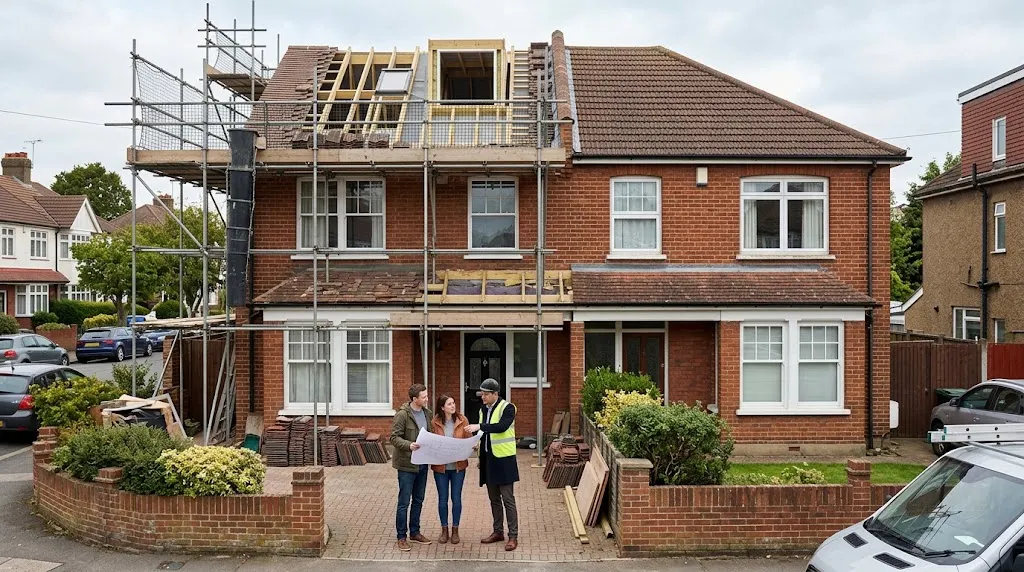
You need a party wall agreement (also called a party wall award) when building work affects a shared wall. You also need one when you dig close to a neighbour’s foundations. You must serve written notice first: two months before work on a party wall, one month before a new boundary wall or deep excavation. Your neighbour has 14 days to reply. If they dissent, surveyors settle the terms. In 2026, expect to pay roughly £700 to £1,800 for one agreed surveyor, and more if each side appoints their own. This applies in England and Wales. Scotland has different rules.
You have the plans. The builder is booked. The loft conversion starts in six weeks.
Then someone mentions the party wall.
Most homeowners hear the term late. Often it comes from a builder, an architect or an angry neighbour. By then the project date is already fixed.
This guide explains the rules in plain English. You’ll see which jobs need a notice and how the process runs. You’ll also see what it costs and what happens if you skip it.
What Is a Party Wall?

A party wall is a wall shared by two properties. Think of the wall between semi-detached or terraced houses. The same goes for a wall between flats.
The law is the Party Wall etc. Act 1996. It covers more than the wall itself. It also covers:
- a new wall built on or at the boundary
- digging near a neighbour’s foundations
- work on a shared structure, such as a floor between flats
The Act is separate from planning permission and building regulations. Having one doesn’t remove the need for the others. You may need all three.
Do I Need a Party Wall Agreement?
It depends on the work. Notice is usually needed if you plan to:
- cut into a party wall, for example to fit a steel beam
- raise, lower or rebuild the wall
- remove a chimney breast on the party wall
- insert a damp proof course in the wall
- underpin the wall
- build a new wall on the boundary line
- dig close to a neighbour’s building
Loft conversions are a common trigger. A steel beam often rests in the party wall. That alone can require notice.
The 3 Metre and 6 Metre Rules

Digging has its own rules. You may need to give notice if you excavate:
- within 3 metres of a neighbour’s building, and deeper than their foundations
- within 6 metres, if your dig cuts a 45-degree line down from the bottom of their foundations
This catches extensions, basements and some deep drainage work. Check with a surveyor if you aren’t sure.
What Usually Doesn’t Need Notice
Small, light jobs normally don’t. Think of putting up a shelf or fitting a socket. Minor surface work is usually fine too.
If in doubt, ask. A short call costs far less than a dispute.
The Three Types of Notice
The Act sets out three main types.
| Notice | When it applies | How early to serve it |
|---|---|---|
| Party structure notice | Work on an existing party wall | At least 2 months before |
| Line of junction notice | Building a new wall at the boundary | At least 1 month before |
| Adjacent excavation notice | Digging within 3 or 6 metres | At least 1 month before |
Serve the notice in writing. Include your name, address and a description of the work. Add the planned start date. Attach drawings if you have them.
Your neighbour can agree to electronic notices. A clear paper copy is safer if they don’t.
How the Party Wall Process Works, Step by Step
- Talk to your neighbour first. A friendly chat helps. Show them the plans. Many disputes start with surprise.
- Serve the notice. Do it in good time. Keep proof of delivery.
- Wait for their reply. They have 14 days to respond.
- If they consent, you can proceed. Get that in writing.
- If they dissent, or don’t reply, a dispute is deemed to exist. This sounds dramatic. It simply means surveyors must settle the terms.
- Appoint a surveyor. You can agree on one surveyor for both sides. Or each owner can appoint their own.
- A schedule of condition is prepared. This records the state of your neighbour’s property before work starts.
- The surveyor issues a party wall award. This sets out what work can happen, when and how. It also sets out who pays.
The award can be appealed to the county court. You have 14 days to do it.
Can My Neighbour Stop My Building Work?
No. The Act doesn’t give neighbours a veto. It exists to let work go ahead fairly.
But your neighbour can ask for a surveyor. They can also ask for protective conditions. The award can set working hours, protective measures and repair duties.
That is why a good relationship still matters. A calm neighbour often agrees to one shared surveyor. That saves everyone money.
How Much Does a Party Wall Agreement Cost in the UK?
Costs vary by region and project. Published 2026 guides give broadly similar ranges. Treat the figures below as a guide.
| Item | Typical cost |
|---|---|
| Notice prepared for you | £50 to £200 per notice |
| Agreed surveyor (one for both sides) | £700 to £1,800 |
| Two surveyors (one each) | £1,500 to £3,500 |
| Schedule of condition | £200 to £700 |
| Third surveyor, if needed | £300 to £2,000 |
| Complex basement or London job | £3,000 to £6,000 or more |
London and the South East usually cost 10 to 25 per cent more.
Who Pays?
The building owner normally pays. That includes your own surveyor and the neighbour’s reasonable surveyor fees. You also pay for repairing any damage the work causes.
This surprises many people. But it is the usual rule when the work only benefits you.
How to Keep the Cost Down
- Talk to your neighbour before you serve notice.
- Propose a single agreed surveyor.
- Give clear drawings with the notice.
- Serve notice early so there is no rush.
- Get two or three surveyor quotes.
How Long Does It Take?
Plan for weeks, not days.
- Notice period: one or two months
- Neighbour response: 14 days
- Surveyor appointment: one to three weeks
- Award drafting: two to four weeks for simple jobs
A simple loft job can run close to four weeks after notice. A basement can take eight weeks or more.
Serve notice as early as you can. Don’t book builders for a date that depends on a fast reply.
What Happens If You Skip the Notice?
It is a risky shortcut.
Your neighbour can ask a court for an injunction to stop the work. They can ask you to undo work already done. You may also face a claim for damages.
It can also cause trouble when you sell. A buyer’s solicitor may ask for the paperwork. Missing documents can delay the sale.
A party wall agreement isn’t glamorous. But it protects you as much as your neighbour. The schedule of condition proves what the wall looked like before you started.
Party Wall vs Planning Permission vs Building Regulations
People mix these up. They are three separate systems.
| What it covers | Who decides | |
|---|---|---|
| Planning permission | Whether the project is allowed | Local planning authority |
| Building regulations | Whether the work is safe and built well | Building control |
| Party wall agreement | How the work affects your neighbour’s property | You, your neighbour and surveyors |
A neighbour’s consent to the plans is not a party wall agreement. And planning approval doesn’t replace one.
Party Wall Checklist Before You Start Building
- Check if your project touches a shared wall or boundary.
- Check if you will dig near your neighbour’s foundations.
- Speak to your neighbour early.
- Get quotes from party wall surveyors.
- Serve notice at least one or two months ahead.
- Keep copies of every notice and reply.
- Get the award in place before the builders arrive.
Good groundwork helps too. Read our guides on how to prepare your site for a strong foundation and why site preparation matters before building a new home.
Still deciding if the project is worth it? See how to decide whether a home renovation is worth the investment.
And if building work goes wrong and damages a home, our piece on when you might need housing disrepair solicitors explains your options.
Frequently Asked Questions
Do I need a party wall agreement for a loft conversion?
Often, yes. If the work cuts into the party wall, such as for a steel beam, notice is usually needed. It also applies if you raise the wall or affect a shared chimney stack.
How long do I have to give notice?
Two months for work on an existing party wall. One month for a new boundary wall or for excavation near a neighbour’s foundations.
What if my neighbour doesn’t reply?
After 14 days, a dispute is deemed to exist for most notices. Surveyors then step in. You can’t simply start work.
Can my neighbour refuse the work?
No. They can’t block it. But they can ask for a surveyor and for protective conditions.
Who pays for the party wall surveyor?
You normally do, as the building owner. That usually includes your neighbour’s reasonable surveyor fees.
Is a party wall agreement the same as planning permission?
No. They are separate. You may need planning permission, building regulations approval and a party wall agreement for one project.
Does this apply in Scotland?
No. The Party Wall etc. Act 1996 covers England and Wales. Scotland follows different rules, so take local advice.
Final Thoughts
A party wall agreement can feel like red tape. In practice, it is a safety net.
It protects your neighbour’s home. It protects your project. And it protects you if a dispute turns up later.
Start early. Talk to your neighbour. Get a surveyor on board. Then let your builder start with a clean slate.
This article is general information, not legal advice. For a specific project, speak to a qualified party wall surveyor.

Comments are closed.