
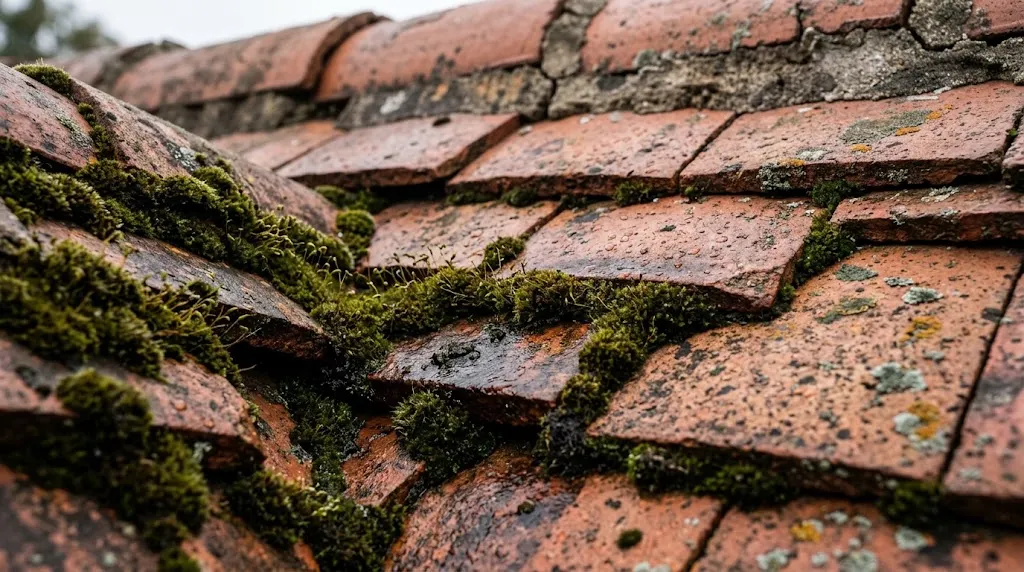
Moss holds water against your roof tiles. In winter, that water can freeze and loosen tiles and mortar. The safest fix is gentle removal. Brush it off by hand or use a soft wash, then treat the roof with a biocide. Avoid high-pressure jets, which can crack tiles. In the UK, professional cleaning costs about £8.50 to £14 per square metre in 2026, before any scaffold. Never climb a wet or mossy roof yourself.
Look up at your roof. Do you see green patches? Or a thick, fuzzy carpet along the north side?
That’s moss. It looks harmless. Some people even find it charming.
But a mossy roof is not a happy roof. Autumn is also when the problem gets worse. Leaves pile up. Rain returns. Frost is only weeks away.
This guide covers roof moss removal in plain terms. You’ll learn if moss really causes damage and which cleaning methods are safe. You’ll see what UK prices look like in 2026 and how to keep moss from coming back.
Is Moss Really Bad for a Roof?
Short answer: it can be.
Moss acts like a sponge. It sits on the surface of tiles and soaks up rain. The tile stays damp for days instead of drying in hours.
That matters in winter. Water trapped in the pores of a tile can freeze. Ice expands. Over time, this can push tiles apart and loosen the mortar around ridge and hip tiles.
Moss roots can also work into the surface of the tile. Some of it will be left behind if you simply blast it off. That’s why it often returns.
There is a second problem. Moss falls. Dead clumps wash down into your gutters and block them. A blocked gutter overflows. Water then runs down your walls or soaks the fascia. Our guide on why gutters make a difference to your home explains how quickly this snowballs.
Is every patch of moss an emergency? No. A few small patches on a shaded corner are not a crisis. But heavy growth deserves attention. Left alone, it gets thicker every year.
Why Does Moss Grow on Roofs?

Moss needs three things. Moisture, shade and a rough surface.
Most UK roofs offer all three. Here is where it tends to show up first:
- The north-facing slope. It gets the least sun and stays wet the longest.
- Shaded areas. Overhanging trees block light and drop leaves.
- Older tiles. Concrete and clay get rougher with age. Moss grips rougher surfaces more easily.
- Low-pitch roofs. Water drains slower, so the surface stays damp.
- Roofs near trees, fields or the coast. More damp air and more spores.
Knowing why it grows helps you stop it later. Trim the trees. Clear the debris. Keep the gutters flowing.
Moss, Lichen and Algae: What’s the Difference?

You may see more than moss. Green or black streaks can be algae. Crusty grey or orange spots are often lichen.
They’re all organisms that live on damp surfaces. The cleaning approach is similar. A soft wash with a biocide treats all three.
Moss is the one that holds the most water. That’s why it gets most of the attention.
Safety First: Do Not Climb a Mossy Roof
This section matters more than any other.
Roofs are dangerous. A damp, mossy slope is as slippery as ice. Most accidents happen when people get on or off the roof. Ladders are a big part of that.
Tiles can also crack under your weight. Professionals use roof ladders, crawl boards or scaffold to spread the load.
So keep these rules in mind:
- Don’t walk on wet, frosty or mossy tiles.
- Don’t work alone on a ladder.
- Don’t tackle steep pitches yourself.
- Never reach out sideways from a ladder.
If you can’t reach the roof safely from the ground, hire someone. The cost of a roofer is small next to a fall.
How to Remove Moss From a Roof: 4 Methods Compared
There are four common methods. Each has trade-offs.
1. Hand Removal and Biocide
A roofer scrapes the moss off by hand. They use plastic scrapers and soft brushes. Then they apply a biocide to slow regrowth.
This method is gentle. It suits older or delicate roofs. It takes more time, so it often costs more.
2. Soft Washing
Soft washing uses low pressure. A cleaning solution kills the moss and spores. The roof is then rinsed.
It is safe for most roofs when done well. It costs more than pressure washing, but it is kinder to your tiles.
3. Steam Cleaning
Steam uses heat instead of strong chemicals. It is a greener choice. It isn’t ideal for brittle slate, though.
4. Pressure Washing
This is the fastest and often the cheapest method. It is also the riskiest.
A high-pressure jet can crack tiles. It can strip the surface coating. It can also force water under the tile laps, where it shouldn’t go.
Pressure washing is not ideal for older or delicate roofs. If a contractor uses it, ask how they will control the pressure. And ask what they do about the roots left behind.
| Method | Typical cost per m² (UK, 2026) | Risk to tiles | Best for |
|---|---|---|---|
| Pressure washing | £5 to £12 | Higher | Sturdy, newer roofs |
| Steam cleaning | £9 to £13 | Low | Eco-minded owners |
| Hand removal and biocide | £8 to £15 | Low | Older or delicate roofs |
| Soft washing | £12 to £16 | Low | Most roofs |
Figures are from Checkatrade’s roof cleaning guide, updated April 2026. Scaffold costs extra.
Why You Should Avoid Household Bleach
It sounds like a cheap fix. It isn’t.
Bleach can stain tiles. It can harm plants and lawns below. It runs into your gutters and drains. And it doesn’t always stop regrowth.
Use a product made for roofs instead. Follow the label. Wear gloves and eye protection. Protect any plants near the walls.
How Much Does Roof Moss Removal Cost in the UK?
Prices depend on roof size, access and method. Checkatrade’s April 2026 guide gives these ranges. Scaffold is not included.
| Roof size | Pressure washing | Hand removal and biocide |
|---|---|---|
| Small (terrace or small semi, about 65 m²) | £325 to £780 | £520 to £975 |
| Average (semi or small detached, about 75 m²) | £375 to £900 | £600 to £1,125 |
| Large (detached, about 85 m²) | £425 to £1,020 | £680 to £1,275 |
Scaffold adds a lot. The same guide puts it at roughly £16 to £20 per m² in some cases. A bungalow or low roof may need none. A tall house often will.
Smaller jobs cost less. Some firms quote £350 to £800 for a typical house. Always get at least three written quotes.
What Makes the Price Go Up?
- A steep or complex roof
- Heavy moss that needs extra time
- Poor access, such as a narrow side passage
- Extra work on the ridge, valleys or chimney
- Scaffold hire
- Gutter cleaning added to the job
Can I Do It Myself?
You can treat moss from the ground. A telescopic spray lance lets you apply biocide without climbing. Prices for these start at around £50 to £150. Biocide itself costs roughly £20 to £60 for a 5-litre container.
That said, a spray only kills the moss. It won’t remove it. The dead moss will break down over weeks. It will then wash off with the rain.
For heavy growth, hire a pro. It’s the safer route.
The Best Time of Year for Roof Moss Removal
Most roofers prefer April to September. Mild, dry weather is ideal. You want temperatures above about 10°C and little wind.
Avoid winter. Avoid heavy rain and frost. Treatments don’t work as well in the cold. And icy tiles are dangerous.
Autumn is possible, but leaves can clog your gutters after a clean. If you’re booking now, ask the roofer to clear the gutters at the same time.
Book early. If you wait until the spring rush, you may wait longer.
After the Clean: What to Check
Once the roof is clean, take a few minutes to look it over. A good roofer will do this too.
- Are any tiles cracked, slipped or loose?
- Is there debris in the valleys or gutters?
- Do you see damp patches on the ceiling or in the loft?
- Is the ridge mortar crumbling?
- Is flashing around the chimney lifting?
Moss can hide small faults. Once it is gone, they show up. Our guide to roof flashing repair shows what to do if you find a leak at the joints.
Not sure what you’re seeing? Read these signs your roof needs attention before a small issue becomes a costly one.
If the fascia or soffits look soft or stained, see our breakdown of fascia board and soffit costs in 2026.
How to Stop Moss Coming Back
Cleaning is only half the job. Prevention keeps the roof clear for longer.
Apply a Biocide Treatment
A good biocide leaves a residue that stops spores settling. Some firms say a treatment lasts anywhere from two to five years. That depends on your roof and location. Treat it as a guide, not a promise.
Trim Back Trees
More light means less moss. Cut back branches that hang over the roof. It also means fewer leaves in the gutters.
Keep Gutters Clear
Clean them at least twice a year. Autumn is the key time. Blocked gutters keep the roof edge wet.
Consider Zinc or Copper Strips
Metal strips near the ridge release tiny amounts of metal ions when rain runs over them. This makes the tiles less welcoming to moss. They work best on roofs that get plenty of rain, and they take time to show results. Ask your roofer if they suit your roof.
Plan for Regrowth
Even with good care, moss can return. How soon depends on where you live. Shaded roofs may see regrowth in three to five years. Open, urban roofs often last seven to ten years. These are rough guides, not rules.
A simple yearly check helps. Our piece on roof maintenance practices that protect your property value gives you a routine to follow.
How to Choose a Roof Cleaner You Can Trust
Anyone can say they clean roofs. Not everyone does it well. Here’s what to look for:
- Insurance. Ask for proof of public liability cover.
- Working-at-height training. They should use proper access equipment.
- A clear method. Ask what they will use and why.
- Safe chemicals. They should handle products in line with COSHH rules.
- A written quote. It should state if scaffold is included.
- Recent reviews. Check them on more than one site.
Be wary of anyone who knocks on your door saying they spotted problems on your roof. That’s a common tactic. A real company will give you time to compare quotes.
For more on this, see our list of questions to ask before hiring a roofing contractor.
Frequently Asked Questions
Is it worth removing moss from my roof?
Yes, if the growth is heavy. Moss holds water against the tiles. In frost, that water can loosen tiles and mortar. Light, patchy growth is less urgent. Keep an eye on it.
Does moss damage roof tiles?
It can, over time. Moss keeps tiles damp. Frost then does the harm. The roots can also work into the tile surface. The damage is gradual, not sudden.
Is pressure washing a roof a bad idea?
Often, yes. High pressure can crack tiles and strip their coating. It can also push water under the laps. Soft washing or hand removal with a biocide is gentler.
How much does it cost to remove moss from a roof in the UK?
Expect roughly £8.50 to £14 per square metre in 2026. For an average semi, that’s about £375 to £1,125, depending on the method. Scaffold is extra.
When is the best time to remove roof moss?
April to September is best. The weather is mild and dry. Avoid frost and heavy rain.
Can I use bleach to kill moss on my roof?
It’s best not to. Bleach can stain tiles and harm plants. Use a biocide made for roofs.
How long does it take for moss to grow back?
It varies. Shaded roofs may see it return in three to five years. Open roofs can stay clear for seven to ten. Treatment and tree care help.
Should I clean the roof myself?
Only if you can do it from the ground. A spray lance can apply biocide safely. Don’t climb a slippery roof. For heavy moss, call a professional.
Final Thoughts
Roof moss removal is not glamorous. But it protects one of the biggest assets you own.
Moss traps water. Frost does the rest. Left alone, it can loosen tiles, block gutters and shorten the life of your roof.
The fix is simple. Choose a gentle method. Skip the high-pressure jet. Treat the roof so moss doesn’t return. Clear your gutters. And keep your feet on the ground.
Do that, and your roof will see you through the winter.
Comments are closed.