
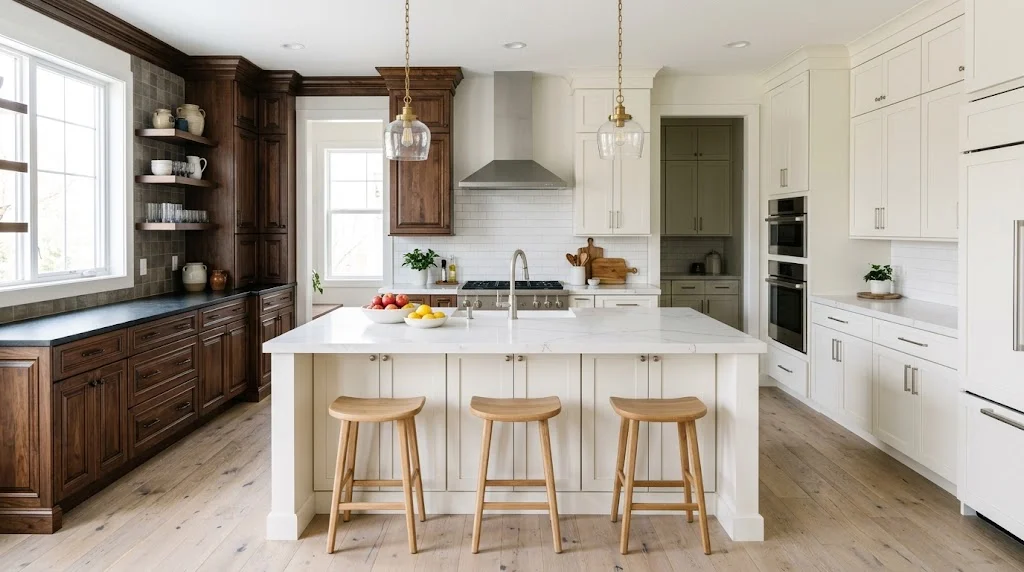
Omega Cabinets use solid hardwood construction and offer deep customization, making them a strong pick for buyers who want a premium, made-to-order look. KraftMaid uses a mix of solid and engineered wood, ships faster, and costs less, making it the better fit for homeowners who want quality on a tighter budget and timeline.
Picking new kitchen cabinets feels like a bigger decision than it should be. You’re not just choosing a color or a door style. You’re choosing something you’ll open and close every single day for the next fifteen to twenty years.
If you’ve narrowed your search down to Omega Cabinets and KraftMaid, you’re already ahead of most people. Both brands have strong reputations, and both belong to MasterBrand, one of the largest cabinet makers in North America. But they’re built for different buyers, different budgets, and different timelines.
Let’s walk through exactly how they compare, so you can figure out which one actually fits your kitchen.
A Quick Look at Both Brands

Omega Cabinets started in a small barn in Iowa back in 1977. A group of craftsmen wanted to build cabinets that lasted, and that focus on craftsmanship stuck around even after Omega became part of MasterBrand in 2002. Today, Omega sits in the premium tier of MasterBrand’s lineup, known for hand-applied finishes and fully custom options.
KraftMaid has been around even longer, founded in 1969. It grew into one of the most widely available cabinet brands in the country, sold through Home Depot, Lowe’s, and more than 1,500 independent dealers. That kind of reach is a big reason KraftMaid feels like a familiar name, even if you’ve never shopped for cabinets before.
Both brands build good products. The real differences show up once you start comparing materials, pricing, and how long you’ll wait for your order.
Materials and Construction Quality
This is where the two brands really split apart. Omega Cabinets are built primarily from solid hardwood. That means the boxes, frames, and doors hold up well over time and can handle years of daily use without warping or sagging. Solid wood also takes stain and paint beautifully, which is part of why Omega’s finishes look so rich.
KraftMaid takes a more practical approach. Their cabinets mix solid wood with engineered wood, which keeps costs down without sacrificing much in the way of durability. You can also upgrade to full plywood construction if you want something closer to Omega’s build quality, though that upgrade adds to the price.
Neither brand makes a flimsy product. The difference comes down to how much solid wood you want throughout the entire cabinet, not just on the visible surfaces.
Design and Style Options
If style is your top priority, you’ll find plenty to love with either brand. Omega Cabinets offers more than 300 door styles across maple, oak, hickory, and laminate. They lean into classic details like raised panels and recessed designs, along with newer options like slab doors and arched wall cabinets. Their finishing process includes distinctive glazes and hand-applied stains that give each piece a slightly custom, artisan feel.
KraftMaid pulls ahead in sheer variety, offering more than 500 door styles and finishes and around 14 different wood species to choose from. Whether you want a traditional shaker door or something more modern, KraftMaid likely has it. Their finishing process runs through a detailed multi-step system designed to keep colors consistent and durable over time.
So if you want the widest possible selection, KraftMaid has the edge. If you want a more artisan, one-of-a-kind look, Omega tends to feel more special.
Customization Levels
Omega is built for people who want control over every detail. Many of their product lines are fully customizable, right down to special request drawings for unique kitchen layouts. If you have an odd-shaped space or a very specific vision, Omega gives you room to make it happen.
KraftMaid operates mainly as a semi-custom brand. You still get a wide range of sizes, finishes, and storage options, but you’re working within a more structured set of choices rather than a blank slate. For most standard kitchen layouts, this isn’t a real limitation. It only becomes noticeable if your space needs a highly unusual configuration.
Pricing: What You’ll Actually Pay
Money matters, and this is often the deciding factor for most homeowners. Omega Cabinets sit in the premium price range. Some estimates put them at roughly 50% more expensive than KraftMaid, largely because of the solid wood construction and the level of customization available.
KraftMaid is priced to be accessible. You still get solid materials and a lifetime warranty, but the cost stays reasonable even as you add upgrades. For a full kitchen remodel, that price gap can mean thousands of dollars in savings.
If your budget is flexible and you see your cabinets as a long-term investment, Omega’s price tag might feel justified. If you want strong quality without stretching your renovation budget, KraftMaid gives you more room to spend on countertops, appliances, or flooring instead.
Lead Times and Availability
Renovation timelines matter more than people expect going in. Omega Cabinets typically take 6 to 9 weeks to arrive, and that window can stretch further depending on material availability and shipping conditions. Because so much of their product is made to order, patience becomes part of the deal.
KraftMaid moves faster, with lead times usually between 4 to 7 weeks. Combined with their wide retail presence, this makes KraftMaid a smart choice if you’re working around a moving date, a tenant turnover, or any kind of deadline you can’t push back.
If timing is tight, this alone might settle the decision for you.
Warranty and Long-Term Support
Both brands stand behind their products with a limited lifetime warranty, which covers manufacturing defects in materials and workmanship for as long as you own your home. This gives you peace of mind either way, since you’re not choosing between “protected” and “unprotected.”
Where they differ slightly is in how claims get handled. Because KraftMaid is sold through major retailers like Home Depot and Lowe’s, you may have more locations to turn to for support. Omega tends to work through dealer networks and specialty retailers, so your point of contact might be a smaller local business rather than a big-box store.
Storage and Functionality
Kitchens live and die by how well your storage actually works, not just how it looks. KraftMaid has built a strong reputation for durable drawers with real weight capacity, which matters if you’re storing heavy pots, small appliances, or bulk pantry items. Their storage accessories, like pull-out organizers and specialty inserts, are widely available and easy to add.
Omega also offers strong storage solutions, but their focus leans more toward custom configurations that fit unique spaces rather than off-the-shelf capacity. If you need cabinets that can hold heavier, bulkier items without hesitation, KraftMaid’s drawer systems tend to get more praise for pure durability under weight.
Which Brand Fits Your Kitchen?
There’s no universal winner here, and that’s actually good news. It means the right choice depends on what you’re solving for.
Choose Omega Cabinets if you want solid hardwood construction, a high level of customization, and a more artisan look, and you’re comfortable paying a premium price with a longer wait.
Choose KraftMaid if you want strong quality at a more affordable price, a faster turnaround, and one of the widest selections of styles and finishes available anywhere.
Whichever direction you go, both brands come from a company with decades of cabinet-making experience behind them. You’re not taking a risk with either one. You’re simply deciding how much customization, budget flexibility, and time you have to work with.
Take a hard look at your renovation timeline and your budget ceiling before you fall in love with a specific door style. Once those two numbers are locked in, the choice between Omega and KraftMaid usually becomes a lot clearer.

Comments are closed.