
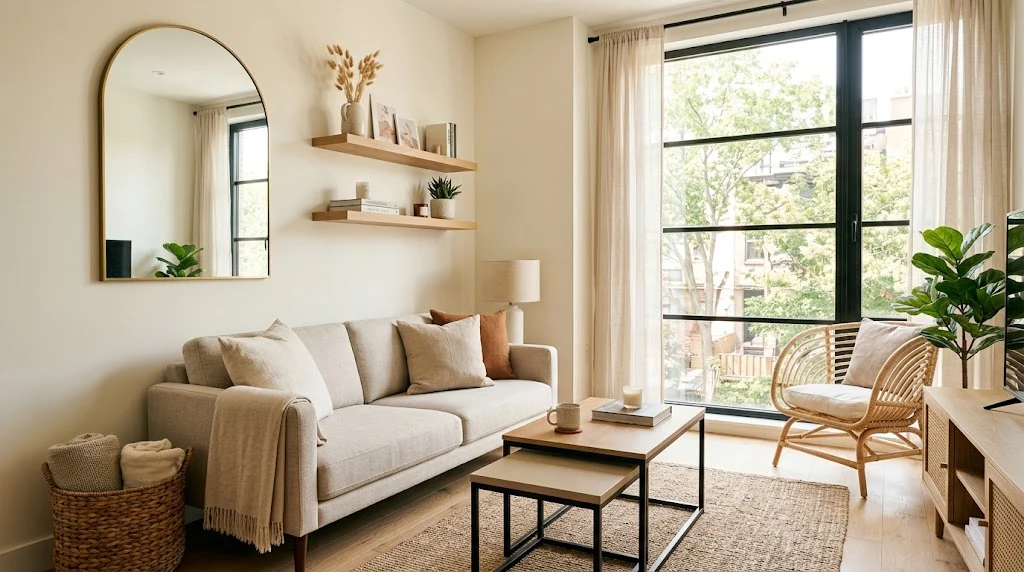
Small apartment interior design works best when you use multi-purpose furniture, light colors, vertical storage, and mirrors to open up the room. Keep clutter low, pick a simple color scheme, and let natural light do the heavy lifting. These small changes make any tight space feel bigger and more comfortable.
Living in a small apartment doesn’t mean you have to give up on style or comfort. A lot of people think tight square footage limits their options. It doesn’t. With the right choices, even a 400-square-foot studio can feel open, warm, and put together.
The trick is knowing which moves actually make a difference. Some design choices just look nice in photos but do nothing for your daily life. Others quietly transform how a room feels the second you walk in. This guide covers what really works, based on how small spaces function day to day.
Start With a Clear Layout Plan

Before you buy a single piece of furniture, figure out how you actually use your space. Walk through your daily routine. Where do you eat? Where do you work? Where do guests sit when they visit?
Small apartments often have overlapping zones. Your living room might double as your office. Your bedroom might need to fit a reading nook. Map this out on paper first. It sounds simple, but skipping this step is the number one reason small spaces end up cluttered and awkward.
Measure your rooms before shopping. Bring a tape measure with you or keep the dimensions saved on your phone. A sofa that looks compact in a showroom can swallow your entire living room once it’s home.
Choose Furniture That Does Double Duty

Multi-purpose furniture is the single best investment for a small apartment. A coffee table with storage underneath. An ottoman that opens up to hold blankets. A daybed that works as seating during the day and a bed for guests at night.
Look for dining tables that fold down when not in use. A drop-leaf table can seat four people for dinner and shrink back to a narrow console the rest of the time. Nesting tables are another smart pick. Stack three small tables together, and pull them apart only when you need extra surface space.
Beds with built-in drawers underneath solve a storage problem most renters face. Instead of buying a separate dresser, your bed frame handles seasonal clothes, extra linens, or shoes. This alone can free up several square feet of floor space.
Use Light Colors to Open Up the Room
Color affects how big or small a room feels more than most people realize. Light, soft tones bounce light around and make walls feel farther away. White, cream, light gray, and pale beige are safe, reliable choices for small spaces.
That doesn’t mean your apartment has to look plain. Add color through pillows, artwork, rugs, or a single accent wall. This gives you personality without shrinking the room visually. Deep, saturated colors on every wall can make a small room feel like a box, so save the bold shades for accents.
If you rent and can’t paint, use removable wallpaper or fabric wall hangings instead. Both options add character without violating your lease.
Let Natural Light Do the Work
Natural light makes any room feel bigger, brighter, and more welcoming. Keep your windows as unobstructed as possible. Skip heavy drapes and go with sheer curtains or simple blinds instead.
Position your furniture so it doesn’t block window light from reaching the rest of the room. A tall bookshelf placed right in front of a window cuts off light that could otherwise spread across your whole apartment.
If your space doesn’t get much natural light, layer in artificial lighting instead. Use a mix of ceiling lights, floor lamps, and table lamps rather than relying on one overhead fixture. Warm-toned bulbs make small rooms feel cozy rather than cold.
Add Mirrors to Create the Illusion of Space
Mirrors are one of the oldest tricks in small-space design, and they still work. A large mirror placed across from a window reflects light and doubles the sense of openness in a room.
You don’t need to spend a lot on this. A single oversized mirror leaning against a wall can transform a hallway or living room. Mirrored closet doors do the same job in a bedroom while also serving a practical purpose.
Avoid scattering too many small mirrors around the room. One or two well-placed large mirrors work better than a handful of tiny ones.
Go Vertical With Storage
Floor space is limited in a small apartment, but wall space usually isn’t. Tall bookshelves, floating shelves, and wall-mounted cabinets all use vertical space that would otherwise go to waste.
Install shelves above doorways or in corners that usually sit empty. Hooks near the entryway keep coats, bags, and keys off counters and chairs. In the kitchen, a wall-mounted rack for pots and pans frees up cabinet space for everything else.
Over-the-door organizers work well in closets, bathrooms, and pantries. They’re cheap, easy to install, and don’t require any permanent changes to your walls.
Keep Clutter Under Control
Clutter shrinks a room faster than anything else. A small apartment with too many items on display feels chaotic no matter how nice the furniture is. This doesn’t mean you need to live like a minimalist, but it does mean you need a place for everything.
Go through your belongings every few months and get rid of what you don’t use. Storage bins, baskets, and drawer organizers keep smaller items contained and out of sight. Closed storage, like cabinets with doors, tends to feel calmer than open shelving packed with objects.
Countertops and tables should stay mostly clear. A few personal touches are fine, but piles of mail, random papers, and loose items add visual noise that makes the whole room feel smaller.
Define Zones Without Walls
Open floor plans are common in small apartments, and while they offer flexibility, they can also feel messy without clear boundaries. You can define separate zones without adding a single wall.
A rug is one of the easiest tools for this. Place a rug under your seating area to signal “living room,” and use a different rug or flooring under your dining table to mark that as a separate zone. Furniture placement works the same way. A sofa with a low back can act as a divider between your living space and a small home office behind it.
Lighting also helps separate areas. A pendant light over your dining table draws attention to that spot as its own distinct zone, even in an open room.
Pick a Simple, Cohesive Color Palette
Jumping between too many colors and patterns makes a small space feel busy and cramped. Stick to a simple palette of two or three main colors throughout your apartment. This creates flow from room to room, which makes the whole space feel larger and more connected.
Carry the same color through curtains, bedding, and accent pieces. Consistency doesn’t mean everything has to match exactly, but keeping a common thread running through your décor makes a small apartment feel intentional rather than thrown together.
Scale Furniture to Fit the Room
Oversized furniture is one of the most common mistakes in small apartments. A giant sectional might be comfortable, but it can dominate an entire living room and leave no space to walk around it.
Choose furniture with a smaller footprint and raised legs. Pieces that sit off the floor, rather than furniture with a solid base touching the ground, let light pass underneath and make the room feel more open. Armless chairs and slim-profile sofas take up less visual space than bulky, overstuffed pieces.
When shopping, always compare the furniture’s dimensions to your room’s actual measurements. It’s easy to underestimate how much space a piece will take up once it’s inside your home.
Final Thoughts
Designing a small apartment comes down to intention. Every piece of furniture, every color choice, and every storage solution should earn its place in your home. When you focus on function first and layer in style around it, your small apartment stops feeling like a limitation and starts feeling like exactly the right size for you.
Comments are closed.