
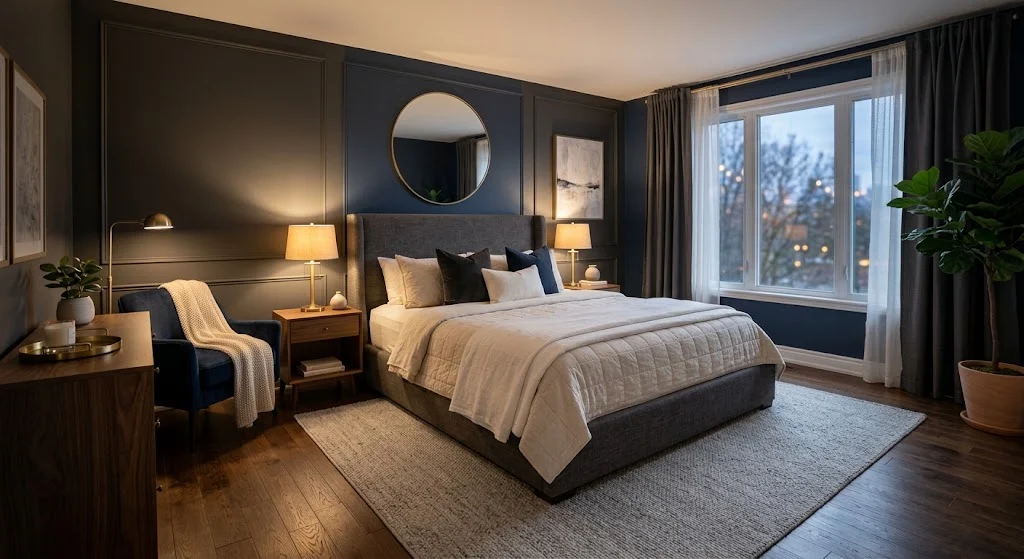
Dark and elegant bedroom decor pairs deep wall colors like charcoal, navy, or forest green with soft textures, warm lighting, and rich wood or metal accents. The goal is balance — dark tones set the mood, while layered fabrics and gentle light keep the room cozy instead of cold.
Why Dark Bedrooms Are Having a Moment
Dark bedrooms used to scare people off. They worried a deep wall color would make a small room feel like a cave. That fear doesn’t hold up anymore.
Designers keep proving that dark walls can make a bedroom feel calmer, not smaller. A deep color pulls the walls back visually at night, and it hides small imperfections that bright white never could. The trick is knowing which shades work and how to soften them with the right textures and light.
A dark bedroom also gives you an excuse to slow down. It sets a mood the second you walk in. You’re not fighting bright light or busy patterns. You’re stepping into a space built for rest.
Pick the Right Dark Color for Your Walls

Not every dark color reads as elegant. Some feel heavy. Some feel cheap. The difference usually comes down to undertone.
Charcoal gray works well in almost any room because it has a neutral base. It pairs easily with warm wood, brass, or cool silver. Deep navy blue brings drama without feeling harsh, and it looks especially rich under warm lamp light. Forest green and deep plum both add personality while still feeling grounded.
Avoid pure black on all four walls unless the room gets strong natural light. Black can work beautifully as an accent wall or on trim, but covering every surface often makes a small bedroom feel closed in. If you’re unsure, test a sample patch on the wall and look at it in the morning and at night before you commit.
Balance Dark Walls With Light and Texture

This is the part most people get wrong. A dark bedroom needs contrast, or it starts to feel flat and heavy instead of cozy.
Bring in lighter bedding, like cream, ivory, or soft gray sheets and a duvet. This single choice does more to soften a dark room than almost anything else. Add a chunky knit throw or a few textured pillows so the bed doesn’t look stiff against the wall color.
Texture matters just as much as color here. A velvet headboard, a woven rug, or linen curtains all catch light differently than a flat painted wall. That mix of surfaces is what makes a dark room feel layered and expensive instead of one-note. Mirrors help too, since they bounce light around and keep the space from feeling shut off.
Choose Furniture That Feels Warm, Not Cold
Furniture sets the tone just as much as paint does. In a dark bedroom, wood tones do a lot of heavy lifting.
Warm walnut or oak nightstands soften the room and keep it from feeling too formal. If you prefer a sleeker look, black metal bed frames paired with warm wood accents strike a nice balance between modern and cozy. Avoid pairing dark walls with cold, glossy black furniture across the board, since that combination can tip the room into feeling stark.
Upholstered pieces help too. A tufted headboard or a small bench at the foot of the bed adds softness and a bit of quiet luxury. These pieces don’t need to be expensive. They just need to feel inviting to the touch.
Get the Lighting Right
Lighting makes or breaks a dark bedroom. Skip harsh overhead lights entirely if you can, since they wash out the color and kill the mood you’re going for.
Layer your light sources instead. Use a warm bedside lamp on each nightstand, and consider a small chandelier or pendant light for a touch of drama overhead. Candles or flameless candle alternatives add a soft flicker that makes deep colors feel inviting rather than dim.
Dimmer switches are worth the small investment. They let you shift the room from bright and functional in the morning to soft and moody at night, all with the same fixtures. Warm bulbs, around 2700K to 3000K, will always read better in a dark room than cool white ones.
Add Personality Without Overdoing It
A dark bedroom gives you a strong backdrop, so you don’t need many decor pieces to make a statement. A few well-placed items go further here than a room full of clutter.
Artwork with muted tones or gold framing tends to stand out beautifully against deep walls. A single statement mirror, a woven wall hanging, or even a small collection of candles on a tray can add character without competing with the wall color. Plants bring in life and a bit of contrast, especially varieties with dark green leaves that echo the room’s palette.
Keep surfaces mostly clear. A cluttered nightstand or dresser fights against the calm feeling a dark bedroom is supposed to create. Choose a few pieces you genuinely love, and let them breathe.
Mixing Styles Within a Dark Palette
Dark and elegant doesn’t mean one single look. You can take this palette in several directions depending on your taste.
If you like a romantic feel, lean into velvet, gold accents, and soft pink or blush touches against a deep plum or navy wall. If you prefer something more relaxed, a boho approach works well with dark walls, woven textures, wood accents, and warm string lighting. For a more traditional and refined feel, stick with classic furniture lines, brass fixtures, and rich rugs layered over a hardwood floor.
Whatever direction you choose, the underlying rule stays the same. Dark tones need warmth and texture to feel elegant instead of cold.
Common Mistakes to Avoid
A few missteps show up again and again in dark bedroom makeovers. Knowing them ahead of time saves you a repaint down the road.
The biggest one is skipping contrast entirely. A room with dark walls, dark bedding, and dark furniture starts to feel like a closed box, no matter how nice the individual pieces are. Another common mistake is relying only on overhead lighting, which flattens the color and removes the coziness you’re after. Finally, people sometimes forget about scale. Small rooms with low ceilings can still go dark, but they need lighter ceilings and plenty of layered lighting to keep from feeling cramped.
Bringing It All Together
A dark and elegant bedroom comes down to contrast and warmth. Pick a rich wall color you actually love, then soften it with light bedding, warm wood, and layered lighting. Add a few personal touches instead of a room full of clutter, and let texture do the work that color alone can’t.
This kind of bedroom rewards a little patience. Test your paint color, try a few lamp placements, and swap textures until the room feels right. Once it clicks, you’ll have a space that feels less like a trend and more like your own quiet retreat.

Comments are closed.