
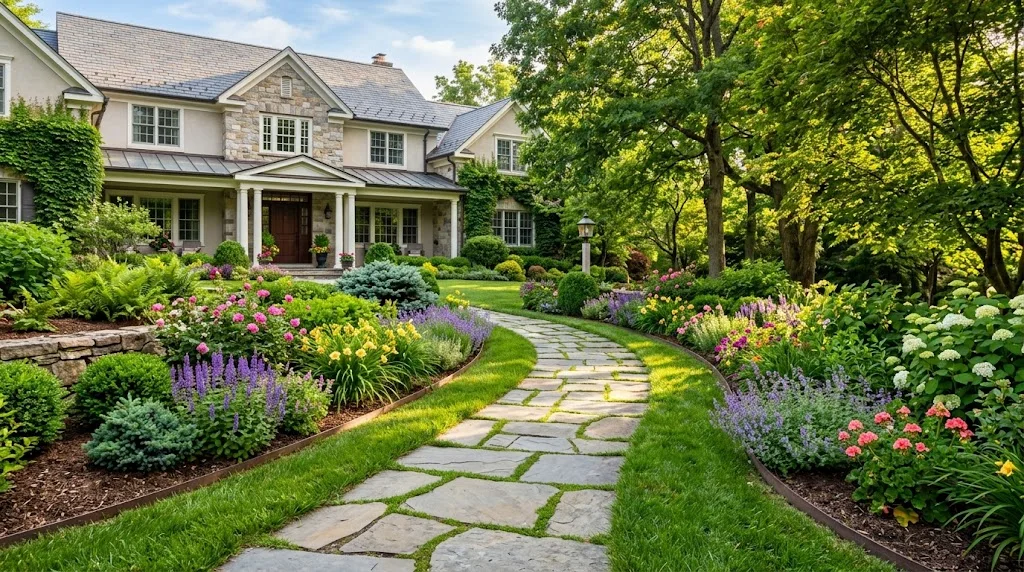
Flagstone walkway ideas range from irregular natural stone paths with grass-filled joints to formal geometric layouts with clean grout lines. Popular options include stepping stone designs, curved garden paths, and mortared walkways bordered by brick or steel edging for a polished, lasting finish.
A flagstone walkway can change the whole feel of your yard. It guides guests to your front door, connects a patio to a garden, or simply gives your lawn a finished look. Flagstone works because it looks like it belongs outdoors. No two pieces are exactly alike, so every path ends up with its own personality.
If you’re planning one for your home, you have more options than you might think. The stone you pick, the pattern you lay it in, and even the material between the joints all change the final look. Here’s what you need to know before you start.
Why Flagstone Works So Well for Walkways
Flagstone is a flat, naturally split stone that comes in types like bluestone, sandstone, limestone, and slate. Each type brings its own color and texture, so you can match your walkway to your home’s style.
The surface has a texture that grips your feet, which matters when the stone gets wet. That’s one reason flagstone shows up so often near pools, gardens, and entryways. It also holds up well against weather, so it won’t crack or fade after one hard winter.
Cost and maintenance depend on the stone you pick and how it’s installed. A dry-laid path costs less and lets water soak into the ground instead of pooling on top. A mortared path costs more but gives you a smoother, more even surface.
Picking the Right Stone Before You Start
Before you buy anything, think about how the walkway will get used. A path leading to your front door sees heavy foot traffic every day. A quiet garden trail doesn’t need the same level of durability.
Bluestone gives you a cool gray-blue tone that fits modern and traditional homes alike. Sandstone leans warmer, with tans, browns, and reds that stand out against green lawns. Limestone offers a softer gray or cream shade that works well with light-colored homes. Slate has a slightly rougher texture and often comes in deep grays and blacks.
Thickness matters too. Most experts recommend flagstone at least an inch and a half thick so it won’t crack under regular use. Thinner stone might look nice, but it won’t last as long once people start walking on it every day.
Irregular Flagstone Paths for a Natural Look

An irregular layout, sometimes called crazy paving, uses stones in their natural shapes instead of cutting them into uniform pieces. The stones fit together like puzzle pieces, with gaps left open for grass, moss, or gravel.
This style suits gardens, backyard trails, and paths that wind through trees or flower beds. It feels relaxed and doesn’t fight against the natural shape of your yard. Larger stones usually go at the edges and turns to hold the layout steady, while smaller pieces fill in the straight stretches.
If you want a soft, established look right away, let low-growing plants like creeping thyme or moss fill the joints. Over time, they spread and make the path look like it’s always been part of the yard.
Geometric Patterns for a Formal Entrance

If your home has clean architectural lines, a geometric flagstone layout might suit it better. This style uses stone cut into squares or rectangles, laid in even rows with consistent joint spacing.
The result feels structured and intentional, which works well near a formal entryway or a courtyard. Light-colored grout between the stones adds contrast and makes the pattern easier to see. Pair this look with matching planters or low hedges along the border, and the whole space reads as designed rather than accidental.
Formal layouts do take more planning up front. Every stone needs to line up correctly, so this style usually calls for cutting stone to size rather than working with whatever shapes you find at the yard.
Stepping Stone Walkways for an Open Feel
A stepping stone walkway spaces large, flat stones apart instead of laying them edge to edge. Grass, gravel, or ground cover fills the space between each stone, so the path feels light and open rather than solid.
This style suits casual gardens, lawns, and areas around ponds or water features. Space the stones around eighteen to twenty-four inches apart, matched to a natural walking stride, so the path feels comfortable to use.
Because so much ground shows between the stones, this layout works best in areas that don’t see constant heavy traffic. It’s more about creating a visual path than building a hard, durable surface.
Filling the Gaps Between Stones
What you put between the stones changes the whole character of your walkway. Grass gives a soft, natural look and holds up fine if the joints stay wide enough for roots to grow. Moss and creeping thyme add color and a slightly wild feel, and both spread on their own over a season or two.
Gravel and decomposed granite give a cleaner, more controlled look and drain well after rain. Polymeric sand locks stones in place and resists weeds better than loose gravel, which makes it a good pick for high-traffic paths. Mortar or grout creates the smoothest, most formal surface, though it’s the least forgiving if you ever need to lift and reset a stone.
Joint width usually falls between a half inch and two inches. Wider joints handle drainage better, but narrow joints keep weeds from taking hold as easily.
Bordering and Edging Your Walkway
A border keeps your walkway looking finished and stops the base material from spreading into your lawn or beds. Steel edging gives a thin, almost invisible line that suits modern designs. Brick or cobblestone borders add warmth and work well with irregular flagstone. A soldier course, where cut stone stands on edge along the path, gives a more formal boundary.
Soft plantings along the edge, like ornamental grasses, lavender, or dwarf shrubs, blur the line between the path and the yard. This works especially well with natural, irregular layouts where you want the stone to look like it grew out of the landscape rather than sitting on top of it.
Lighting and Focal Points Along the Path
Low-voltage path lights placed along the edge do two things at once: they make the walkway safer to use at night and they highlight the stone’s texture and color. Even a handful of well-placed fixtures near steps, turns, or your front door adds a welcoming touch after dark.
A focal point along the route gives the eye somewhere to land. A small fountain, a bench, or a cluster of potted plants at a turn in the path breaks up a long, straight run of stone and gives the walkway a sense of arrival rather than just a way to get from one place to another.
Dry-Laid or Mortared: Choosing an Installation Method
A dry-laid walkway sits on a base of compacted gravel and sand, with no cement holding the stones down. This method costs less, lets water drain naturally, and gives you room to adjust or replace stones later. It suits most home walkways and garden paths just fine.
A mortared walkway sets the stones into a concrete base with grouted joints. It costs more and takes longer to install, but it gives you a smooth, even surface that handles heavy traffic well. This method works best for entryways, patios, and areas near a home’s foundation where stability matters most.
Getting the Width and Layout Right
Width depends on how the walkway gets used. A main entry path usually works best between thirty-six and forty-eight inches wide, which lets two people walk side by side comfortably. A garden path can narrow down to twenty-four to thirty-six inches since it usually carries less traffic. A side-yard utility path can go even narrower, as long as the footing stays stable.
Before laying any stone, walk the planned route a few times. Notice where your feet naturally want to go. Many yards already have a worn path in the grass that shows the most comfortable route, and building your walkway along that line usually feels better than forcing a straight path that cuts across it.
Keeping Your Flagstone Walkway Looking Great
Flagstone doesn’t ask for much once it’s installed, but a little care keeps it looking its best for years. Sweep debris off the surface regularly so dirt and leaves don’t build up in the joints. Check for loose or shifting stones a couple of times a year and reset them before they become a tripping hazard.
Top off joint sand or gravel whenever gaps start to show, since exposed joints let weeds take hold faster. A penetrating sealer applied every few years brings out the stone’s natural color and helps it resist stains. A gentle power wash once a year, done at an angle with moderate pressure, clears away grime without stripping out the joint material.
A well-planned flagstone walkway pays off for decades. Whether you go with a winding natural path through the garden or a crisp formal layout leading to your front door, the right stone, pattern, and care turn a simple walkway into one of the best features in your yard.


Comments are closed.