
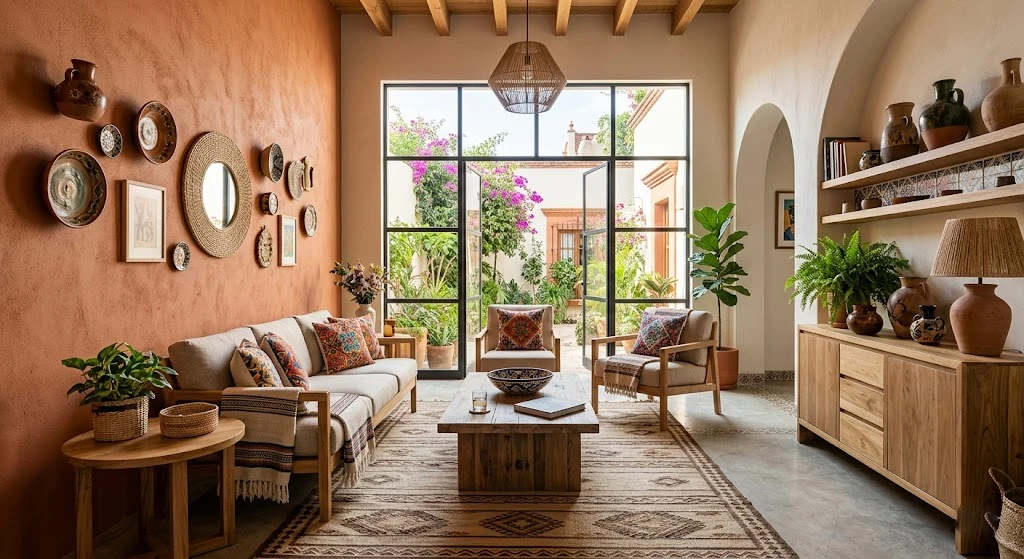
Modern Mexican interior design mixes bold color, natural materials, and handmade details with clean, modern lines. Think terracotta walls, woven textiles, and Talavera tile paired with simple furniture and open layouts. The style balances Mexico’s rich cultural heritage with a calm, uncluttered feel instead of heavy traditional decor.
Walk into a home done in this style, and a few things stand out right away. A wall painted in deep pink or burnt orange. A hand-thrown clay pot sitting next to a clean-lined sofa. Light pouring through a courtyard window onto a plaster wall. Modern Mexican interior design takes generations of craft and color and pairs them with the open, simple layouts people want in their homes today.
This guide walks through what actually makes the style work, from the color rules to the materials to the small details that keep a room feeling put together instead of cluttered.
What Is Modern Mexican Interior Design?

Modern Mexican interior design takes traditional Mexican color, craft, and material, then sets them inside a clean, open layout. You won’t find dark, heavy rooms stacked with pattern from floor to ceiling. Instead, you get one bold wall, a few well-chosen handmade pieces, and plenty of open space around them. The result feels warm and personal without feeling crowded.
This style grew out of Mexico’s mix of cultures. Indigenous building methods, Spanish colonial details, and twentieth-century modernist architecture all left their mark on it. Designers today pull from all three periods, keeping the parts that still feel useful and leaving the rest behind. The goal isn’t to copy an old hacienda room for room. It’s to bring real Mexican character into a home that works for how people live now.
Where the Color Comes From
Color carries most of the weight in modern Mexican design. Walls often appear in terracotta, cobalt blue, deep pink, mustard yellow, or lime green. Designers usually pair these bright tones with neutral colors like white, sand, or pale wood, which keeps the room balanced instead of overwhelming.
The trick is restraint. A whole room painted bright pink looks like a theme park. One pink wall next to white plaster and pale wood looks like design. Most rooms in this style choose one or two bold colors and keep everything else quiet, so the color actually has room to stand out.
The Architecture Behind the Style
A lot of this look traces back to one architect: Luis Barragán. Working out of Guadalajara and Mexico City through the mid-1900s, Barragán built tall exterior walls that opened onto private courtyards, fountains, and reflecting pools, drawing on both Indigenous building traditions and Spanish colonial influence. He painted his walls in saturated color and let natural light change their tone throughout the day, so a hallway could shift from ochre to gold by late afternoon.
Barragán kept his rooms nearly bare. He let the architecture carry the room: one colored wall, a pool of light, a single plain wood bench. That instinct, color and emptiness working together instead of pattern piled on pattern, has shaped Mexican design ever since. When you see a modern room built around one striking wall and almost nothing else competing for attention, you’re looking at his influence.
Materials That Carry the Look
Natural materials are non-negotiable in this style. Think raw wood, hand-troweled plaster, woven palm, clay, stone, and wrought iron. These materials age well, picking up small marks and changes in tone over the years, and that wear only adds to the character of the room.
Plaster walls do a lot of the visual work here. A hand-finished plaster wall catches light differently than a flat, painted drywall surface, so even a plain white room ends up with some texture and depth. Stone floors and exposed wood beams add weight at the bottom and top of a room, while iron light fixtures or door hardware bring in a darker, grounding note.
Lighting That Sets the Mood
Light shapes this style as much as color does. Barragán built his rooms around hidden light sources and narrow window slots, so a beam of sun would hit one wall instead of flooding the whole room. Modern interiors borrow that same idea on a smaller scale, using one strong light source rather than several competing ones.
Wrought iron pendant lights, punched-tin lanterns, and simple wall sconces all fit naturally here. Warm bulbs matter more than bright ones, since the goal is a soft glow that lets the wall color and texture show through rather than washing them out.
Talavera Tile, Used With Restraint
Talavera tile is probably the most recognized material in Mexican design. These hand-painted ceramic tiles carry bright colors and detailed patterns, and they’re showing up well beyond the kitchen backsplash these days, including bathroom walls, fireplace surrounds, and even framed wall art.
The modern version of this style uses tile carefully. One statement tile wall now does the job that an entire patterned room used to do. A tiled backsplash, a tiled stair riser, or a single tiled accent wall in a bathroom gives a space personality without turning every surface into a pattern competition.
Textiles and Handmade Details
Textiles soften all that plaster, tile, and stone. Woven rugs and embroidered cushions bring warmth into a room, especially when the rest of the space leans minimal. A handwoven wool rug, a striped blanket folded over a chair, or an embroidered pillow on a plain linen sofa all do the same job. They add pattern through something soft, instead of something painted on a wall.
Handcrafted pottery and woven baskets work the same way on shelves and counters. A few well-made pieces, with room to breathe around them, look collected and intentional. A shelf packed with souvenirs just looks cluttered.
Furniture That Balances Old and New
Furniture in this style stays simple. Clean-lined sofas, low-profile chairs, and plain wood tables let the color and texture around them do the talking. Heavy, ornately carved colonial furniture has mostly stepped aside in favor of pieces with a more current shape.
That doesn’t mean the furniture has to look generic. A solid wood dining table with visible grain, a leather chair with hand-stitched details, or a bench cut from a single thick slab all fit the style well. One substantial wood piece can anchor an entire room, which works better than filling the space with heavy carved furniture throughout.
Bringing the Style Into Each Room
The living room is usually the easiest place to start. Paint or plaster one wall in a warm, saturated color, then keep the furniture simple and pale. Add a woven rug, a couple of handmade ceramic pieces, and one substantial wood piece, like a coffee table or media console.
In the kitchen, Talavera tile works well as a backsplash or on a range hood, paired with plain cabinets and open wood shelving. A hand-forged iron light fixture over the island adds another layer of character without adding more pattern.
Bathrooms take well to a tiled accent wall or floor, paired with a wood or stone vanity and simple modern fixtures. A few plants, a woven storage basket, and a clay soap dish round out the look without making the space feel busy.
Bedrooms benefit from restraint more than any other room in the house. Keep the walls plain or in one soft, warm tone, then bring in texture through the bedding, a woven wall hanging, or a single handcrafted side table.
Mistakes That Make a Space Feel Themed
The most common mistake is using too much pattern at once. Talavera tile on the floor, a striped rug, an embroidered headboard, and patterned curtains in the same room start to look like a costume rather than a home. Pick one pattern source per room and let it lead.
Another mistake is skipping the modern half of modern Mexican design. Heavy, dark, carved furniture filling an entire room pulls the look back toward an old-fashioned hacienda feel. Mixing in lighter, simpler furniture is what keeps the style current.
Cheap, mass-produced stand-ins for handcrafted pieces are also worth avoiding. A machine-printed pattern trying to pass as hand-painted tile rarely holds up next to the real thing, and it tends to look dated fast. Sourcing even a few authentic, handmade pieces makes a noticeable difference in how the whole room reads.
Making the Style Your Own
Modern Mexican interior design works because it doesn’t ask for perfection. A plain white room with one bold wall, a woven rug, and a single piece of pottery already has the bones of this style. From there, add one material or color at a time, checking that each new piece earns its place instead of competing for attention.
Start small if a painted wall feels like too big a commitment. A few textiles, a hand-thrown vase, and one piece of solid wood furniture can shift the feel of a whole room. Build from there, and the space will end up looking like it belongs to you, not like it came straight out of a catalog.


Comments are closed.