
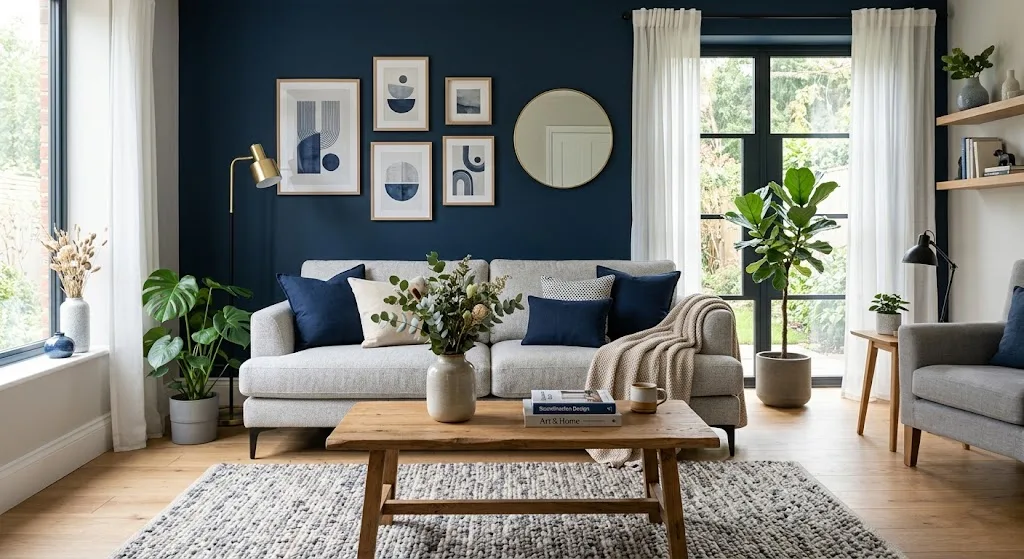
A blue and grey sitting room combines two of the most versatile colors in home design. Blue adds calm and personality, while grey provides a neutral base that ties everything together. Use matching undertones, layered textures, and warm accents like wood or brass to create a space that feels balanced, stylish, and genuinely comfortable.
If you’ve ever walked into a sitting room and immediately felt at ease, there’s a good chance blue and grey had something to do with it. These two colors have a quiet confidence about them. They don’t shout. They don’t try too hard. They just work — and they’ve been doing it for years.
Grey and blue are defining living room style in 2026 — cool, layered, and effortlessly cohesive. When paired thoughtfully, these tones create a space that feels calm without being flat, polished without feeling overly formal. Whether you’re starting from scratch or just want to refresh what you already have, this guide walks you through everything you need to know.
Why Blue and Grey Work So Well Together

Not every color combination makes sense. Some clash. Some feel forced. But blue and grey? They belong together the same way coffee belongs in the morning — it just feels right.
Blue is classic, soothing, and easy to decorate with. Grey is a timeless color that’s been popular for years. Together, these beautiful colors help you create a relaxing and welcoming sitting room that you’ll love for years to come. That’s not a small thing. Most people want a sitting room that they actually want to sit in — not just a space that looks good in photos.
The reason this pairing holds up so well is contrast. Blue brings color and character. Grey acts as the anchor. Grey and blue is such a versatile combo — you can go for a really contrasting scheme with light blue and deep charcoal grey, or create a really cohesive look where your colors blend so seamlessly you barely notice the difference between the two. Both approaches work. It all comes down to the mood you want to create.
How to Choose the Right Shades

Here’s where a lot of people get tripped up. They pick a blue they love, then grab a grey that looks good on its own — and the two colors fight each other in the finished room. The fix is simple once you know it.
The key to getting it right is to always pick shades that have the same undertones. A cool grey works best with a cool blue, and a warm grey with a warm blue. If your grey leans slightly purple, pair it with a blue that has similar cool notes. If your grey pulls toward beige or taupe, a softer powder blue or dusty slate will complement it far better than a stark navy.
Room size matters too. The smaller the room and the lower the ceiling, the lighter shades you should choose, because they will visually expand the space. In a compact sitting room, pale blue walls with a light dove grey sofa will make the space feel open and airy. In a larger room, you have room to go bold — think deep navy walls, charcoal upholstery, and plenty of texture to add life.
Starting Points: Walls, Furniture, or Art?
One of the most common questions people ask is: where do I start? The answer depends on what you already own or what feels easiest to change.
If you’re open to painting, walls are a great starting point. A timeless approach begins with light blue walls, creating a fresh and airy atmosphere. Pair these walls with sleek grey furniture, such as a sofa or armchairs, to add a grounding and sophisticated touch. This approach works especially well in rooms with good natural light.
If painting feels like too much commitment right now, start with art. Artwork is often a good starting point for a room’s color scheme. A blue-grey painting can really set the mood for a sitting room and guide the rest of your design decisions. Find a piece that uses both tones and build your palette from there. It takes the guesswork out of the process.
You can also start with a rug. You can simplify the process of decorating your sitting room by adding a multicolored area rug with a blue-based palette and building your decor around it. A rug anchors the room, ties the colors together, and gives you a clear direction before you spend a cent on paint or new furniture.
The Power of an Accent Wall
Not everyone wants to commit to painting all four walls. A single accent wall can do a lot of the heavy lifting without taking over the whole room.
A single navy blue accent wall paired with light grey furniture creates the perfect balance between bold and subtle. The contrast draws the eye immediately, creating a focal point that anchors the entire room. Add a floor lamp, a few framed prints, and some layered cushions, and the corner becomes the most interesting part of the space.
Navy is a popular color for accent walls. If you use light-colored furniture and items, the space won’t seem dark. The key is balance. Dark wall, light sofa. Bold paint, soft textiles. The contrast is what makes it feel designed rather than accidental.
Adding Warmth So the Room Doesn’t Feel Cold
Blue and grey are cool tones. That’s part of their appeal — they feel calm and composed. But a room that’s only cool tones can start to feel a little flat, like a hotel lobby rather than a home.
The fix is warmth, and it doesn’t have to come from color. Blue and gray can lean cool, so adding natural wood beams or warm leather keeps the space balanced. Smooth painted wood, aged leather, marble, and linen all play together. Even small wooden details — a side table, a picture frame, a set of shelves — can shift the entire feeling of a room.
Adding textured elements like a chunky knit throw or a woven rug enhances the cozy factor while keeping the color palette understated and elegant. Texture is your best friend in a blue and grey sitting room. Velvet cushions, linen drapes, a jute rug — these things add visual warmth even when the colors themselves run cool.
Brass and gold accents are another strong move. Brass accents in the lighting and coffee table add that quiet gleam that feels intentional, not flashy. You don’t need a lot. A brass lamp, some gold picture frames, a set of metallic candle holders — just enough to break up the cool palette and give the eye somewhere interesting to land.
Accent Colors That Actually Work
Blue and grey give you a clean foundation, but a third accent color brings everything to life. The key is choosing something that works with your specific shades rather than fighting against them.
The best accent colors to pair with grey and blue in a sitting room are those on the opposite sides of the color wheel — oranges and yellows. What tones you pick depends on your style. A warm terracotta orange can look lovely for a subtle contrast, or for something bolder, try a pop of vibrant yellow.
White is always a safe addition. Cream softens the palette. If you want something unexpected, a pop of contrast can make the entire space feel curated. A single yellow armchair, a burnt orange cushion, or a terracotta pot holding a plant — one well-placed accent color tells the room’s whole story.
Furniture Choices That Tie It All Together
Your furniture is where the palette really comes to life. The good news is that blue and grey give you flexibility. A grey sofa works with blue walls. A blue sofa works with grey walls. And a sofa that blends the two tones together — like a blue-grey velvet — works with almost anything.
Charcoal and inky blue bring depth and sophistication, especially when paired with textured upholstery rather than flat finishes. Styled with lighter cushions, natural rugs, or subtle pattern, they create a strong but flexible base for a sitting room.
If your room skews toward the lighter end of the palette, consider going deeper with your upholstery. A navy or slate sofa against pale walls creates real contrast. If your walls are already bold, keep the furniture lighter — cream, pale grey, or soft linen — so the room doesn’t feel too heavy.
Small Details That Make a Big Difference
Once the big pieces are in place, the details are what separate a well-decorated room from one that just has nice furniture in it.
Plants are underrated in a blue and grey sitting room. Navy, grey, and green work perfectly together, and potted plants add life and warmth to a space that leans cool. A large leafy plant in the corner or a few smaller pots on a shelf brings in color that feels completely natural rather than forced.
Layered lighting matters more than most people realize. A single overhead light flattens a room. Add a floor lamp, a table lamp, and maybe some candles, and the space suddenly feels lived-in and comfortable. Lighting shapes how colors read — the same blue wall can look completely different under warm versus cool light.
Finally, select accent pieces like throw pillows and blankets that feature both colors, tying the design together. Cushions that mix blue and grey patterns, a throw that pulls from both sides of the palette — these small touches create coherence without any extra effort.
Final Thoughts
A blue and grey sitting room is one of those combinations that looks just as good five years from now as it does today. It’s calm without being boring. It’s put-together without feeling stiff. And it gives you enough flexibility to change small things over time without needing to start over.
Start with what you have, pick shades that share the same undertones, and add warmth through texture and natural materials. Do those three things, and your sitting room will feel like exactly the kind of place you actually want to be in.


Comments are closed.