
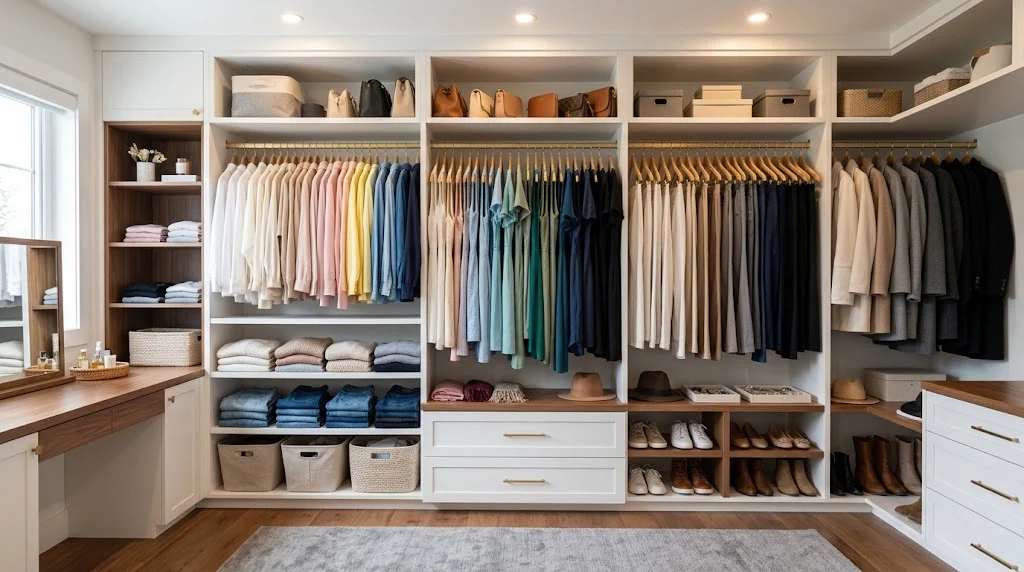
To create a color coordinated closet, empty your closet, sort clothes by category, then arrange each category by color from light to dark or in rainbow order. Use matching hangers, group patterns separately, and keep your most-worn colors within easy reach for a closet that stays organized.
Opening a closet full of jumbled clothes every morning is stressful. You dig through shirts, push aside things you forgot you owned, and somehow still can’t find the one item you actually want to wear. A color coordinated closet fixes that problem. It turns your closet into a space that’s easy to use and honestly kind of fun to look at.
This isn’t just about looks either. When your clothes are grouped by color, you can see what you own at a glance. You stop buying five nearly identical blue shirts because you can actually see the four you already have. Getting dressed becomes faster, and your closet starts working for you instead of against you.
Here’s how to set one up, step by step, without any guesswork.
Start By Emptying Your Closet Completely
You can’t organize a closet with everything still crammed inside it. Take every single item out, including shoes, bags, and accessories shoved in the corners. Pile it all on your bed or the floor so you can see exactly what you’re working with.
This step feels like a lot of work upfront, and it is. But it’s the only way to really understand what you own. Once your closet is bare, wipe down the shelves and rod. A clean space makes the whole project feel like a fresh start rather than just rearranging clutter.
Sort Through Everything and Let Go of What You Don’t Wear

Before you even think about color, go through the pile and make decisions. Pick up each item and ask yourself if you’ve worn it in the last year. If the answer is no, or if it doesn’t fit right anymore, set it aside for donation or resale.
This part can feel tough, especially with items that still have tags or cost a lot. But holding onto clothes you never wear just clutters your new system before it even starts. Be honest with yourself here. A smaller closet full of things you actually love beats a packed one full of maybes.
Once you’ve made your keep pile, you’re ready for the fun part.
Choose How You Want to Sort Your Clothes
There are two main ways people build a color coordinated closet, and neither one is wrong. The first is sorting by category first. You’d group all your tops together, then all your pants, then dresses, jackets, and so on. Within each of those groups, you arrange items by color.
The second method skips categories and goes straight to color. Every red item, no matter if it’s a shirt, dress, or jacket, lives in the same section. Then blues, greens, and so on.
If you like to search by outfit type, like grabbing a top and then a bottom, category-first works better for you. If you tend to think in terms of color first, like wanting to wear something in olive green, the color-only method will suit you more. Try picturing how you actually shop or get dressed in the morning, and pick whichever matches that habit.
Pick a Color Order That Makes Sense to You
Once you know your sorting method, decide on the actual color order. The most popular approach follows the rainbow, starting with reds and oranges, moving through yellows and greens, then blues and purples, and ending with neutrals like black, white, gray, and beige.
You don’t have to follow the rainbow exactly, though. Some people prefer sorting from light to dark within each color family instead, so a section might move from pale pink to deep maroon. Others place their most-worn neutrals, like black and white, at one end where they’re easiest to grab.
Whatever order you choose, keep it consistent across every section of your closet. Consistency is what makes the whole system easy to maintain later. Once you get used to reaching for “third section from the left” without thinking, it becomes second nature.
Handle Patterns and Multicolor Pieces the Simple Way
Patterned clothing and multicolor pieces confuse a lot of people when they start color coding. The easiest fix is to look at the dominant color in the piece. A blue shirt with small white stripes goes in the blue section. A floral dress that’s mostly pink goes with your pinks.
For items where no single color stands out, or for busy prints that don’t fit anywhere cleanly, create one dedicated patterns section. Place it at the end of your solid colors, right before your neutrals. This keeps your color blocks looking clean without forcing you to make a tough call on every printed piece you own.
Put Your Most-Worn Items Within Easy Reach
Once your colors are sorted, think about placement within each section too. The clothes you wear most often should sit at eye level and be easy to grab. Items you rarely wear, like formal pieces or heavy winter coats, can go higher up or toward the back.
This matters because a color coordinated closet isn’t just about looking nice. It needs to actually work for your daily routine. If your favorite black jeans are buried under a stack of sweaters, the system falls apart within a week. Keep your daily go-tos front and center, no matter what color they are.
Use Matching Hangers for a Cleaner Look
Small details make a big difference here. Switching to one style of hanger, whether that’s slim velvet ones or simple wooden ones, instantly makes your closet look more put together. Mismatched wire and plastic hangers create visual noise that fights against your color sorting, even when the colors themselves are perfectly organized.
Velvet hangers are especially popular because they’re thin, which means you can fit more clothes in the same space. They also grip fabric well, so shirts and dresses stay put instead of sliding off. This is a small investment, but it changes how the whole closet feels the moment you open the door.
Store Folded Items and Accessories With the Same System
Not everything hangs. Sweaters, jeans, and t-shirts often get folded and stacked on shelves or in drawers. Apply the same color logic here. Use clear bins or drawer dividers so you can see the colors without having to dig through stacks of fabric.
Accessories deserve the same treatment. Scarves, belts, and jewelry get lost easily in a junk drawer, but a small organizer with sections keeps them visible and sorted by color too. This might seem like a minor detail, but it’s often the last piece people forget, and it can undo the tidy look of the rest of the closet if it’s left messy.
Keep the System Going With a Simple Rule
The hardest part of any organizing project isn’t setting it up. It’s keeping it that way three months later. Set one simple rule for yourself: every item goes back in its color spot the moment you take it off, not at the end of the week.
Also, before buying new clothes, take thirty seconds to check what you already have in that color. This alone can cut down on duplicate purchases and keeps your closet from creeping back into chaos. A color coordinated closet only stays beautiful if putting things back is just as easy as taking them out.
Adjust the System as Your Wardrobe Changes
Your closet won’t look the same forever, and that’s fine. Seasons change, your style shifts, and you’ll add and remove pieces over time. Every few months, take a quick look through each color section and pull anything that no longer fits your life.
This keeps your system from getting stale or overcrowded again. Think of it less as a one-time project and more as a habit you check in on. A color coordinated closet takes a bit of upkeep, but once the habit sticks, it barely feels like work at all.
Getting dressed in the morning shouldn’t be the hardest part of your day. With your closet sorted by color, you’ll spend less time searching and more time actually enjoying what you own. Start with one section if the whole project feels like too much at once, and build from there. Your future self, standing in front of a closet that finally makes sense, will thank you.


Comments are closed.