
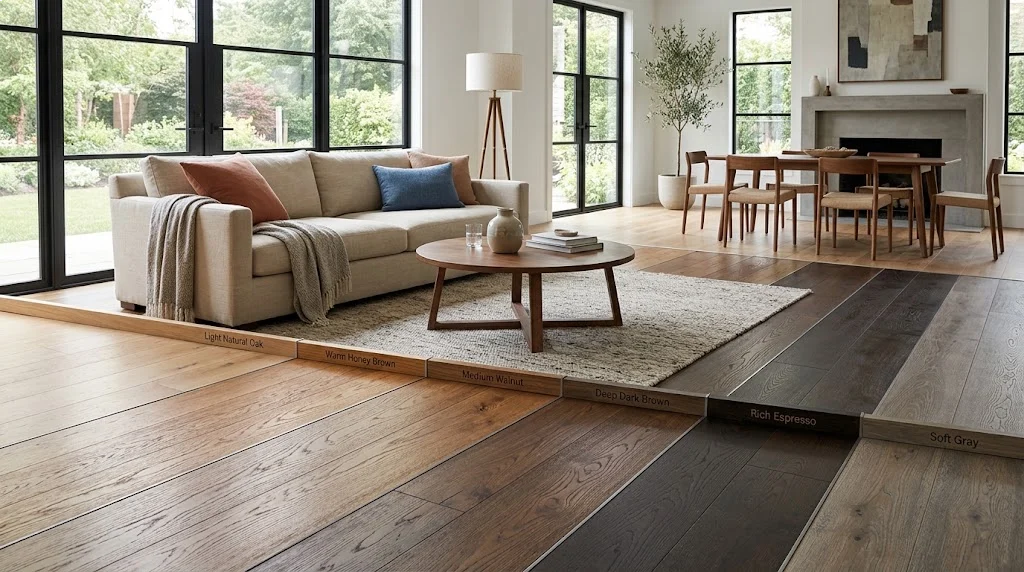
DuraSeal offers over 35 stain colors for hardwood floors, ranging from light tones like Natural and Country White to deep shades like Ebony and True Black. Colors are tested on both White Oak and Red Oak, so you can preview how each one reacts with your specific wood species before you commit.
Picking a stain color for your hardwood floor feels like a big decision. It is a big decision. Your floor sets the tone for every room it touches, and you’ll be looking at it for years. That’s why so many homeowners and flooring pros turn to DuraSeal. The brand has built a name for itself with a huge color range and finishes that hold up over time.
This guide walks you through everything you need to know about DuraSeal stain colors. You’ll learn what makes the lineup so popular, how the shades look on different wood types, and how to pick the one that fits your home.
What Is DuraSeal and Why Flooring Pros Trust It

DuraSeal is a wood stain and finish brand made for hardwood floors. It’s part of the Sherwin-Williams family, which tells you something about the quality control behind it. Flooring contractors reach for DuraSeal because it penetrates wood fibers deeply and dries fast enough to keep a job moving.
The brand makes more than stain. It also produces sealers, finishes, wood fillers, and maintenance products. But the stain line is what most people search for, and for good reason. With dozens of shades to choose from, DuraSeal covers nearly every style you can imagine, from farmhouse gray to rich traditional brown.
Professionals also like that DuraSeal stains can be custom mixed. If none of the standard colors hit the mark, a contractor can blend two or more shades to create something unique. That flexibility is rare in the flooring world.
The Full Range of DuraSeal Stain Colors

DuraSeal’s stain gallery includes color swatches shown on both White Oak and Red Oak, since the same stain can look noticeably different depending on the wood underneath it. The current lineup includes shades like Aged Barrel, Antique Brown, Cherry, Chestnut, Classic Gray, Coffee Brown, Colonial Maple, Country White, Dark Gray, Dark Walnut, Early American, Ebony, English Chestnut, Espresso, Fruitwood, Golden Brown, Golden Oak, Golden Pecan, Gunstock, Heritage Brown, Jacobean, Medium Brown, Neutral, Nutmeg, Provincial, Red Mahogany, Rosewood, Royal Mahogany, Rustic Beige, Sedona Red, Silvered Gray, Special Walnut, Spice Brown, True Black, Warm Gray, and Weathered Oak.
That’s a lot of options. The good news is they group naturally into a few families, which makes the whole thing easier to navigate.
Warm and Traditional Brown Tones
If you want a floor that feels classic and welcoming, the brown family is where most people land. Colors like Golden Oak, Golden Brown, and Golden Pecan lean toward warm honey tones. They work well in homes with a lot of natural light and traditional furniture.
Medium Brown and Special Walnut sit right in the middle of the spectrum. They’re versatile enough to match almost any decor style, which is why contractors recommend them so often to buyers who aren’t sure what they want yet.
Darker browns like Dark Walnut, Coffee Brown, English Chestnut, and Jacobean bring more drama to a room. Jacobean in particular has become a favorite over the past decade because it gives floors an aged, almost antique look without going fully black.
Deep and Dramatic Dark Shades
For homeowners who want serious contrast, DuraSeal’s darkest colors deliver. Espresso and Ebony both push toward near-black, and True Black goes all the way there. These shades pair beautifully with white trim, light walls, and modern furniture.
Dark floors do come with tradeoffs. They show dust and pet hair more easily than lighter shades, and they can make a small room feel tighter. Still, in the right space, a color like Ebony or Espresso creates a striking, high-end look that’s hard to match.
Gray and Neutral Tones for Modern Homes
Gray flooring became a major trend over the last several years, and DuraSeal responded with a solid lineup to match. Classic Gray, Dark Gray, Silvered Gray, and Warm Gray each bring a slightly different mood. Classic Gray reads more neutral and cool, while Warm Gray softens things with a hint of brown underneath.
Neutral and Rustic Beige take things a step further toward the pale end. These work well in coastal homes, Scandinavian-style interiors, or any space where you want the wood grain to stay quiet and let other design elements take center stage.
Weathered Oak deserves a mention here too. It has a driftwood quality that feels a little rustic and a little modern at the same time, which explains why it shows up so often in farmhouse-style renovations.
Red and Reddish-Brown Tones
Some homeowners want their floor to carry a bit of warmth without going fully brown. That’s where Cherry, Sedona Red, Red Mahogany, and Royal Mahogany come in. These shades pull red undertones out of the wood grain, giving the floor a rich, almost furniture-like glow.
Rosewood and Chestnut sit a bit closer to the brown side while still carrying that reddish warmth. They tend to look especially good on Red Oak, since the wood’s natural undertones complement the stain instead of fighting it.
Light and Natural Looking Colors
Not everyone wants their floor to look stained at all. Country White, Colonial Maple, and Fruitwood are built for people who want a barely-there finish that preserves the wood’s original character. These lighter shades brighten a room and make spaces feel larger, which is part of why they’ve become popular in smaller homes and apartments.
Early American and Nutmeg fall into a light-to-medium range that splits the difference. They add a touch of color without hiding the grain pattern underneath.
Why the Same Color Looks Different on Different Wood
Here’s something that trips up a lot of first-time buyers. The exact same can of stain can look completely different depending on what kind of wood it’s going on. White Oak tends to pull colors in a cooler, more subdued direction. Red Oak often shows the same stain as warmer and slightly more vivid.
This happens because wood species differ in grain pattern, porosity, and natural color before any stain touches them. A stain that looks like a soft gray on White Oak might read a bit more brown-gray on Red Oak. Neither result is wrong. It’s just how wood works.
This is exactly why DuraSeal shows every color on both wood types in its official gallery. It gives you a much more honest preview than a single swatch ever could.
How to Test a Color Before Committing
No chart, no matter how good, replaces seeing the stain on your actual floor. Lighting changes everything. A color that looks perfect under bright daylight can shift under warm LED bulbs at night. Your walls, furniture, and even nearby rugs can bounce color back onto the floor and change how you perceive the shade.
Before you commit to a full room or house, ask your flooring contractor to apply small test patches in an inconspicuous area. Look at them in the morning, in the afternoon, and at night under your regular lighting. Walk away and come back the next day with fresh eyes. This one extra step saves people from regret more than almost anything else in the process.
Sanding also plays a role you might not expect. Wood that’s sanded more coarsely tends to absorb stain differently than wood finished with a fine grit. If your contractor changes their sanding approach, your test patch might not perfectly predict your final floor.
Choosing the Right DuraSeal Color for Your Home
Start by thinking about the mood you want. Warm and cozy points you toward browns and reds. Clean and modern points you toward grays and neutrals. Bold and dramatic points you toward the darkest shades in the lineup.
Next, factor in your room’s lighting and size. Small or dim rooms usually benefit from lighter stains, since dark floors can make a space feel smaller and heavier. Large, sunlit rooms can handle darker tones without feeling cramped.
Finally, think about maintenance. Darker colors show dust, scratches, and pet hair more visibly than mid-tone or lighter stains. If you have a busy household with kids or pets, a medium brown or warm gray might save you some cleaning headaches down the road.
Final Thoughts on DuraSeal Stain Colors
DuraSeal’s stain lineup gives you the range to match almost any style, from soft farmhouse neutrals to bold near-black finishes. The key is remembering that a chart is a starting point, not a guarantee. Wood species, lighting, and sanding all shape how a color turns out in your actual home.
Take the time to test a few real samples on your floor before making a final call. It’s a small step that makes a big difference once the project is done and you’re living with the result every day.


Comments are closed.