
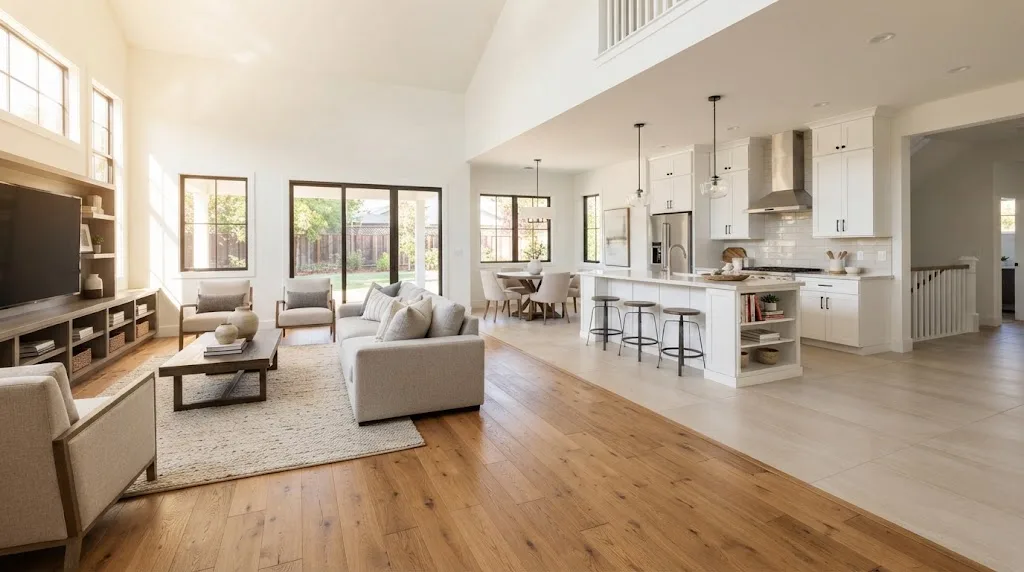
Flooring installation costs $3 to $15 per square foot on average, or $1,500 to $7,500 for a 500-square-foot room. Carpet and vinyl sit at the low end, while hardwood and tile cost more. Your final price depends on material choice, room size, subfloor condition, and labor rates in your area.
New floors change the whole feel of a room. But before you pick a material, you need a clear idea of what the project will cost. Flooring installation runs anywhere from $3 to $15 per square foot, and the type of material you choose makes the biggest difference in your final bill.
This guide breaks down real prices for every major flooring type. You’ll also learn what drives labor costs up or down, and how to avoid surprise charges once the crew shows up.
How Much Does Flooring Installation Cost on Average
Most homeowners pay between $3 and $15 per square foot for flooring installation, including materials and labor. For a typical 500-square-foot room, that works out to roughly $1,500 to $7,500. A whole-home project of 1,000 square feet often lands between $4,000 and $12,000, depending on the material.
Your total price depends on three things. The flooring material itself sets the baseline cost. Labor rates vary by region and by how complex the layout is. And any extra work, like removing old flooring or fixing a damaged subfloor, adds to the total before installation even starts.
Cost by Flooring Type

Material choice has the biggest impact on your budget. Here’s what you can expect to pay for each option, installed.
Hardwood flooring costs $6 to $25 per square foot installed. Most homeowners land between $10 and $16 per square foot once you factor in a standard layout and basic finish work. Solid hardwood costs more than engineered wood, but it can last for generations with proper care and refinishing.
Engineered wood flooring costs $7 to $20 per square foot installed. It uses a plywood core topped with a thin layer of real wood, which makes it more stable in humid rooms than solid hardwood.
Laminate flooring costs $4 to $14 per square foot installed. It mimics the look of wood or stone at a much lower price, and it’s one of the easier materials for a handy homeowner to install without a pro.
Vinyl plank flooring, often called LVP, costs $4.50 to $12 per square foot installed. Material alone runs $2.50 to $7 per square foot, with labor adding the rest. LVP holds up well in kitchens and bathrooms because it resists moisture better than wood or laminate.
Tile flooring costs $10 to $31 per square foot installed, with most homeowners paying around $18 per square foot. Tile costs more because the labor is slower and more detailed, especially with grout work and pattern layouts.
Carpet costs $3 to $12 per square foot installed, with material making up 50% to 70% of that total. Budget carpet using olefin or polyester runs closer to $3 to $5 per square foot, while premium nylon or wool carpet can push past $12.
Labor Costs Explained
Labor is a separate line item from materials, and it varies a lot by flooring type. Flooring labor generally costs $2 to $8 per square foot on its own.
Carpet labor is the cheapest to install, usually running $0.50 to $1.50 per square foot for a simple, open room. Hardwood labor costs more, typically $3 to $8 per square foot, because the planks need precise cutting and fitting. Tile labor costs the most of any common material, since setting tile takes more time and skill than laying planks or rolling out carpet.
Room shape also changes your labor bill. A simple rectangular room costs less to finish than a room full of corners, closets, or curved walls. Stairs add a separate charge, usually $15 to $30 per step for a straight staircase and more for a curved one.
Old Floor Removal and Subfloor Repair Costs
Before new flooring goes in, the old flooring often has to come out. This step adds $1 to $4 per square foot to your project, depending on the material being removed.
Carpet and pad removal is the cheapest option, usually $0.50 to $1.50 per square foot, since most of the work is pulling staples from the subfloor. Laminate and vinyl plank removal costs about the same, because floating floors come apart quickly. Tile and hardwood removal cost more, often $1.50 to $3 per square foot, since these materials are glued or nailed down and take longer to pry up.
Subfloor repairs are a separate cost that many homeowners forget to budget for. Small patches of damaged plywood cost $1 to $3 per square foot to fix. A full plywood subfloor replacement runs $3 to $10 per square foot. If you have a concrete subfloor, leveling it before installation adds another $2 to $5 per square foot.
Factors That Affect Your Total Price
Several things push your flooring cost up or down beyond the material itself. Room size plays a role, since larger projects often get a lower rate per square foot, while small rooms and hallways cost more per square foot due to extra cutting and waste.
Your location matters too. Labor rates in cities with a higher cost of living tend to run higher than in smaller towns. The condition of your existing subfloor also affects price, since a damaged or uneven subfloor needs repair work before new flooring can go down.
The pattern you choose adds cost as well. A simple straight installation costs less than a herringbone or diagonal pattern, which takes more time and generates more waste. And moving furniture out of the room before installation, if you don’t do it yourself, typically adds $25 to $75 per room to your final bill.
Cost by Room Size
Room size changes your total cost in a predictable way, even though the price per square foot may shift slightly with scale.
A small bathroom or closet, around 50 to 100 square feet, usually costs $200 to $1,500 to floor, depending on material. A standard bedroom near 200 square feet runs $600 to $3,000. A living room around 330 square feet typically costs $1,000 to $5,000. A full 1,000-square-foot area, like an open-concept main floor, generally lands between $4,000 and $12,000 once you include materials, labor, and any removal work.
DIY vs Hiring a Professional
Some flooring types are realistic for a homeowner to install without a professional crew. Click-lock vinyl plank and laminate are the most beginner-friendly options, since the planks snap together without glue or nails. Doing this work yourself can save $1,500 to $3,000 in labor on a 1,000-square-foot project.
Carpet, tile, and hardwood are much harder to install correctly on your own. Carpet needs to be stretched tight and seamed without visible lines, which takes practice and the right tools. Tile requires accurate spacing and a level base, or you’ll end up with cracked grout down the road. Hardwood needs precise cuts and a nail gun or adhesive system most homeowners don’t own. For these materials, hiring a pro is usually worth the added cost.
Tips to Save Money on Flooring Installation
You can lower your total bill without cutting corners on quality. Removing your own old flooring is one of the easiest ways to save, since carpet, laminate, and vinyl removal require no special skills, just a utility knife, a pry bar, and some time.
Get quotes from at least three flooring contractors before you commit. Prices for the same job can vary significantly between companies in the same area. Ask each contractor if removal, disposal, and furniture moving are included in the quote, since these extras often show up as surprise charges later.
Buying flooring during off-season sales, typically in late fall and winter, can also cut material costs. And choosing a durable, mid-range material instead of the cheapest option often saves money long-term, since you won’t need to replace it as soon.
Get an Accurate Quote for Your Project
Flooring installation cost depends on more variables than most homeowners expect going in. Material choice sets your baseline, labor and room complexity add to it, and removal or subfloor repair can shift your total by thousands of dollars either way.
The best way to get an accurate number is to have a few local flooring contractors measure your space and give you a written quote. That way you’re budgeting off real numbers for your home, not just averages.

Comments are closed.