
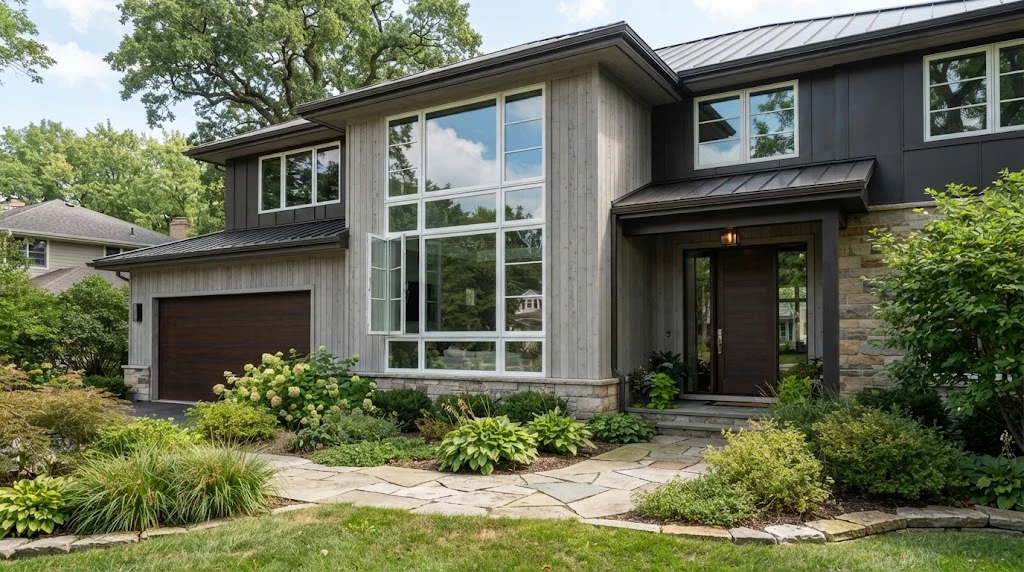
A casement window is a window hinged on the side that opens outward like a door. You turn a crank handle to swing the sash open or closed. This design creates a tight seal against the frame, giving you strong energy efficiency, wide ventilation, and a clear, unobstructed view.
A casement window is a window that hangs on hinges along one side of its frame. Instead of sliding up, down, or side to side, it swings open and shut like a small door. Most casement windows open outward, though some older or European styles swing inward.
You control the window with a crank handle mounted on the frame. Turn the crank one way and the sash pushes out. Turn it the other way and it pulls back in and seals tight against the frame. This crank system gives you precise control over how far the window opens, whether you want a small gap for fresh air or a full opening for a strong breeze.
Casement windows have been around for centuries. Before sash windows became common in Britain and Ireland, casements were the standard choice in most homes. Today they remain popular because they combine a clean, modern look with strong performance in almost any climate.
How Does a Casement Window Work?

The mechanism behind a casement window is simple once you see it in action. A crank handle sits at the base of the window frame. When you turn it, gears inside the handle move an operating arm, and that arm pushes the sash outward on its hinges.
As the window opens, it catches airflow like a small sail. If you angle it correctly, it can actually pull breeze into your room rather than just letting air drift in. This makes casement windows more effective at ventilation than many other styles, since the whole sash opens rather than just half of it.
When you close the window, the crank pulls the sash back until it presses firmly against the frame. A locking handle then clamps it shut. Because the sash presses directly into the frame rather than sliding along a track, casement windows create a tighter seal than sliding or double-hung windows. That tighter seal is a big reason they perform so well for energy efficiency.
Parts of a Casement Window
A casement window has a few parts that work together to make it function. The head jamb forms the top of the frame, while the side jambs run down each side. The sill sits at the bottom and usually tilts slightly outward so rain runs off instead of pooling against the glass.
The sash is the part that actually moves. It holds the glass and swings open on hinges attached to one side jamb. The operating arm connects the sash to the crank handle, and it also holds the window steady once it’s open, so wind doesn’t slam it shut or fling it wide.
The crank handle, sometimes called the operating handle, is what you turn to open and close the window. Most modern casements also include a locking handle that pulls the sash tight against weatherstripping when closed. Many higher-end models add multi-point locks, which clamp the sash at several spots along the frame for extra security and a tighter seal.
Types of Casement Windows
Casement windows come in a few different configurations, so you can match them to the look and function you want. A single casement window has one sash that opens on hinges to the left or right. This is the most common style and works well for smaller openings like bathrooms or hallways.
A double casement window, sometimes called a French casement, pairs two sashes side by side within one frame. Both sashes swing open, usually meeting in the middle when closed, which gives you a wide, unobstructed opening for airflow. This style works great over kitchen sinks or in living rooms where you want a big view along with strong ventilation.
Push-out casements use a simple lever instead of a crank, and they’re common in older homes. Awning windows are close cousins of the casement, hinged at the top instead of the side, so they open outward from the bottom. Hopper windows work the opposite way, hinged at the bottom and opening inward from the top. All three share the same basic idea of a hinged sash that swings rather than slides.
Benefits of Casement Windows
The biggest advantage of a casement window is ventilation. Because the whole sash swings open, you get a much larger opening for airflow compared to a sliding or double-hung window that only opens halfway. Positioned right, an open casement can actually funnel outdoor breeze straight into the room.
Energy efficiency is another strong point. When closed, the sash presses directly against the frame and compresses the weatherstripping, which cuts down on air leaks. Research on window performance shows that casement, awning, and hopper windows generally leak less air than sliding windows, simply because of how the sash seals against the frame instead of resting in a track.
Casement windows also give you a clean, open view. Since the sash is one solid pane rather than being split into two smaller sashes like a double-hung window, there’s no center rail blocking your sightline. This makes them a great match for modern homes that lean on large glass surfaces and minimal framing.
They’re also handy in spots that are tough to reach. Because you open and close them with a crank instead of lifting a sash, they work well above kitchen sinks or countertops where reaching up and pulling isn’t practical.
Drawbacks of Casement Windows
No window style is perfect, and casements come with a few trade-offs worth knowing. They tend to cost more than sliding or double-hung windows, often around 10 to 20 percent more, because of the crank hardware, reinforced hinges, and precision sealing components involved.
The crank mechanism itself needs some upkeep. Over time, the hinges and gears can stiffen or wear down, so lubricating the moving parts once or twice a year helps keep everything working smoothly. If a crank does eventually fail, replacing it is usually straightforward and inexpensive.
Because casement windows swing outward, they need clear space on the exterior side. This can be a problem near walkways, patios, or tight side yards where an open window might get bumped or block a path. Strong wind can also put pressure on an open sash, so in especially gusty locations it’s worth checking manufacturer wind ratings before installing them.
You also can’t fit a standard window air conditioning unit into a casement window, since there’s no horizontal sliding track to hold it. If you rely on window units for cooling, this is worth factoring into your decision.
Best Places to Use Casement Windows
Casement windows fit naturally in kitchens, especially above sinks and counters where a crank is far easier to reach than a sash you’d need to lift. The outward swing stays clear of faucets and dish racks too.
Bathrooms benefit from the tight seal a casement window provides, since it helps keep moisture from creeping into the frame and reduces the risk of mold. Opening the window fully after a shower clears out humid air quickly.
Bedrooms are another great fit, since the wide opening allows strong airflow on warm nights while the multi-point lock keeps things secure once closed. Upper-story rooms also work well with casements, since the outward swing doesn’t compete for interior floor space the way an inward-opening window would.
Casement Windows vs Other Window Styles
Compared to double-hung windows, which have two sashes that slide up and down, casement windows offer a bigger single opening and a tighter seal, though double-hung windows are often easier to clean since both sashes can tilt inward.
Compared to sliding windows, which move horizontally along a track, casement windows swing outward and generally provide better airflow and a more energy-efficient seal, since the sash presses into the frame rather than riding along a track with small gaps.
Compared to picture windows, which are fixed and don’t open at all, casement windows give you both the view and the ventilation. Many homeowners actually pair a large fixed picture window in the center with casement windows on either side, getting the best of both worlds in one wall of glass.
Cost of Casement Windows
Casement windows typically run between $600 and $1,400 per window, depending on size, material, and glass package. That’s a bit more than many double-hung or sliding windows, largely due to the crank hardware and tighter manufacturing tolerances needed for a good seal.
Material choice affects price too. Vinyl casement windows are the most budget-friendly option and resist moisture and pests well. Fiberglass windows cost more but offer excellent strength and insulation. Wood frames bring a classic look and strong insulating value, though they need more upkeep over time, like repainting or resealing every several years to protect against moisture.
Maintenance Tips
Keeping a casement window in good shape doesn’t take much effort. Wipe down the glass and frame a couple of times a year, and check the weatherstripping for gaps or wear that could let air sneak through.
Lubricate the crank mechanism and hinges with a silicone-based lubricant once or twice a year to keep them turning smoothly. If the crank starts feeling stiff or grinding, don’t ignore it. Catching hardware issues early is much cheaper than waiting until the whole mechanism needs replacing.
Is a Casement Window Right for Your Home?
Casement windows work best when you want strong ventilation, a clear view, and a tight seal against the weather. They cost a little more up front and ask for occasional hardware care, but the airflow and energy performance often make up for it over the years you own your home.
If you’re planning a remodel or replacing old windows, think about where you need the most airflow and light. A casement window in the kitchen, bathroom, or bedroom can make a real difference in comfort, and it might be exactly the upgrade your home needs.

Comments are closed.