
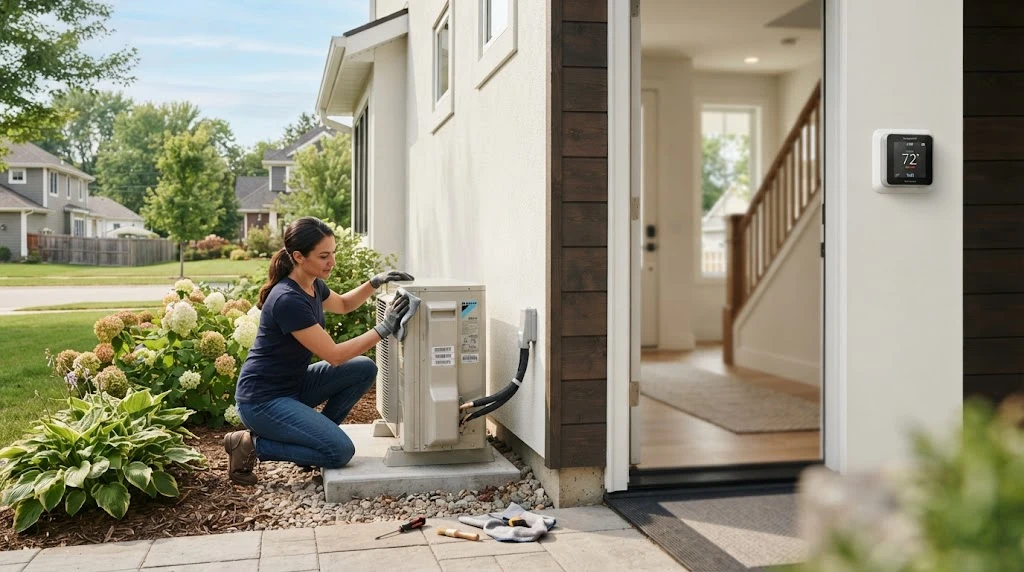
Heat pump maintenance means cleaning or replacing filters every one to three months, clearing debris around the outdoor unit, rinsing the coils each season, and scheduling a professional tune-up once a year. Skipping these steps can cut efficiency by 10 to 25 percent and shorten your system’s lifespan.
Why Heat Pump Maintenance Matters More Than You Think
A heat pump works harder than most home comfort systems. It heats your home in winter and cools it in summer, so it runs almost year-round. That means it racks up nearly double the operating hours of a furnace that sits idle all summer long.
This extra workload makes maintenance a bigger deal, not a smaller one. A well-cared-for heat pump can last 15 to 20 years and hold onto its original efficiency the whole time. Neglect it, and you’ll notice higher energy bills within months. Worse, a dirty filter or clogged coil can cause the compressor to overheat. That’s the most expensive part to replace, so protecting it should be a top priority.
There’s another reason to stay on top of maintenance. Most manufacturers require proof of regular service to honor your warranty. Skip a few tune-ups, and you could lose coverage right when you need it most.
The good news is that most of this work is simple. You don’t need special tools or years of training. A little consistency goes a long way.
Start With the Air Filter

If you only do one thing on this list, make it this one. The air filter is the single most important part of your maintenance routine, and it’s also the easiest to handle yourself.
Think of the filter as your system’s lungs. When it’s clean, air moves freely and your heat pump doesn’t have to strain. When it’s clogged with dust and dirt, airflow drops, and the whole system works overtime just to keep your home comfortable.
Check your filter every month, especially during periods of heavy use. If it looks gray, dusty, or matted down, replace it. Most homes need a new filter every one to three months, though this varies based on pets, allergies, and how often you run your system. A quick glance on a Saturday morning takes less than a minute and saves you real money on your energy bill.
Keep the Outdoor Unit Clear
Your outdoor unit needs room to breathe just like the indoor components do. Leaves, grass clippings, dirt, and stray branches can all pile up around it and block airflow.
Walk around your unit once a month and clear away anything that’s gathered nearby. Trim back bushes and plants so they sit at least two feet from the unit on every side. This gives it enough space to pull in and release air without obstruction.
If you live somewhere with snowy winters, elevation matters too. Your unit should sit four to eight inches above ground level. This keeps the coils clear of ice and snow and helps water drain away properly instead of pooling underneath. If your unit sits too low to the ground, a technician can help raise it to the right height.
Rinse the Coils Each Season
The coils on your outdoor unit collect dust, pollen, and grime over time, even when the area around the unit looks clean. A light coating of debris on the coils reduces how well your system transfers heat, which forces it to work harder than it should.
Once each season, turn off power to the unit at the breaker first for safety, then gently rinse the coils with a garden hose. Avoid using a pressure washer, since the force can bend the delicate fins. A soft brush can help loosen stuck-on dirt before you rinse.
This simple step takes just a few minutes but makes a real difference in how efficiently your system runs through the next few months.
Check Your Thermostat Settings
Your thermostat plays a bigger role in heat pump performance than most people realize. One easy fix: keep your fan setting on “Auto” instead of “On.” When the fan runs constantly, it wears out faster and can actually raise indoor humidity during summer months. The “Auto” setting only runs the fan when your system is actively heating or cooling, which is exactly what you want.
Avoid dramatic temperature swings too. If you drop your thermostat by 10 degrees while you’re away and then try to recover that temperature quickly, your heat pump may struggle to catch up. This often triggers emergency or auxiliary heat mode, which relies on electric resistance strips. These strips work like giant toaster coils, and they cost far more to run than your heat pump alone.
Small, steady adjustments work better than big swings. Your system stays efficient, and you avoid accidentally triggering the expensive backup heat.
Don’t Forget the Registers and Vents
Airflow problems don’t just start outside. Inside your home, check that supply and return registers stay open and unblocked. Furniture, rugs, and heavy curtains can quietly block vents without you noticing.
Walk through each room and make sure nothing is sitting on top of or in front of a register. This small check keeps air circulating properly and takes pressure off your system.
Know When to Call a Professional
Plenty of maintenance tasks are safe and easy to handle yourself, but some jobs really do need a trained technician. Refrigerant checks fall into this category. Your heat pump depends on the right refrigerant level to move heat effectively, and homeowners should never attempt to handle refrigerant themselves. Leaks require special equipment and licensed handling, so leave this one to the pros.
Electrical connections are another area best left to a professional. Loose or worn wiring can pose a safety risk, and a technician has the tools to test and repair connections properly.
Plan for one professional tune-up every year, ideally two if your system handles both heating and cooling seasons. Many homeowners schedule one visit before winter and another before summer. During these visits, a technician will test your system’s modes, confirm proper cycling between heating and cooling, and catch small problems before they turn into costly repairs.
Build a Simple Maintenance Habit
The easiest way to stay consistent is to set reminders. Add a recurring note to your calendar for filter checks each month and coil cleaning each season. Keep a simple log of what you’ve done and when, along with your system’s model number. This makes it easy to track your history and gives your technician useful information at each visit.
Maintenance doesn’t need to feel like a chore. Once it becomes part of your regular routine, it takes just a few minutes each month and pays off in lower bills, fewer repairs, and a system that lasts as long as it should.
The Bottom Line
Heat pump maintenance really comes down to a few consistent habits. Check and replace your filter often. Keep the outdoor unit clear and clean the coils each season. Watch your thermostat settings, and don’t ignore blocked vents inside your home. Leave refrigerant and electrical work to a licensed technician, and schedule that yearly tune-up without fail.
Follow this routine, and your heat pump will reward you with steady comfort, lower energy costs, and a much longer life.

Comments are closed.