
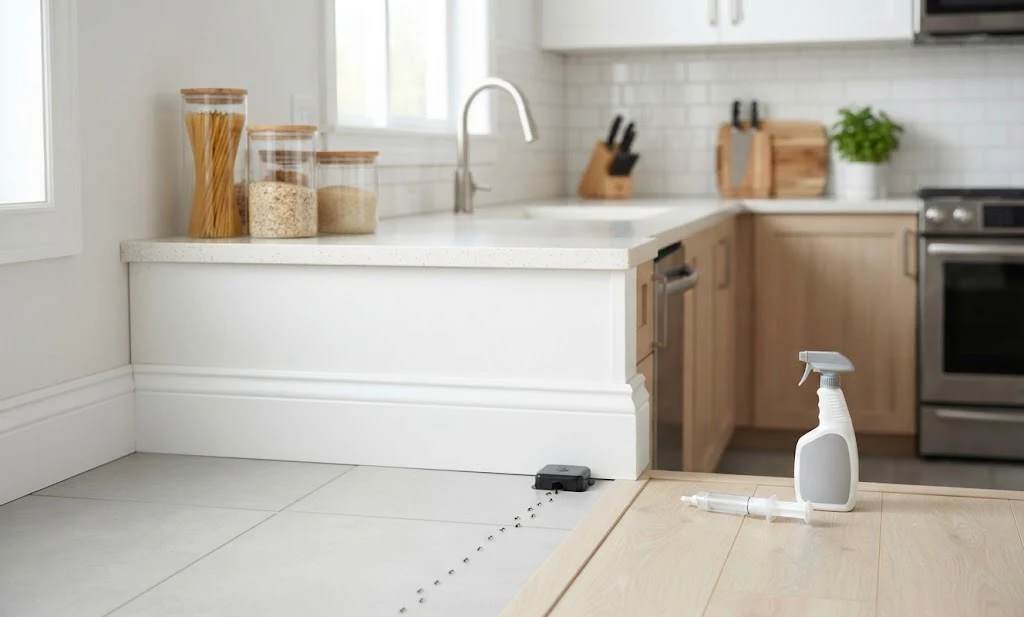
The best indoor ant killer for most homes is a liquid bait station like TERRO T300B. Bait stations let worker ants carry poison back to the colony, killing the queen and wiping out the nest within one to two weeks. For instant results, pair a bait with a contact spray for visible trails.
Why a Single Spray Won’t Solve Your Ant Problem
You spot a few ants near the sink. You spray them. They disappear. Then, two days later, twice as many show up.
This happens because a spray only kills the ants you can see. It does nothing to the colony hiding behind your walls or under your foundation. A mature ant colony can hold thousands of workers and one or more queens, and those workers keep sending out new scouts as long as the queen stays alive.
To stop ants for good, you need to reach the queen. That means understanding how each type of product works before you decide what to buy.
How Ant Baits Kill the Whole Colony
Bait products are slow by design, and that’s exactly why they work. The bait mixes a food-based attractant with a slow-acting poison. Worker ants eat it, carry it back to the nest, and share it with the rest of the colony through a process called trophallaxis.
Within a few days, the poison spreads through the whole nest, including the queen. Once she’s gone, the colony can’t reproduce and eventually dies off. Most bait stations need one to two weeks to fully clear an infestation, though larger colonies can take longer.
TERRO Liquid Ant Baits are one of the most widely used products in this category. The stations come pre-filled, so you place them along baseboards, under sinks, or near any spot where you’ve seen ant activity. You leave them alone and let the ants do the work. Complete control usually takes two to four weeks depending on how large the colony is.
The biggest mistake people make with bait stations is killing the ants they see near the bait. Those ants are the delivery system. If you spray them, you’re cutting off the poison before it ever reaches the nest.
Gel Baits for Precise Kitchen and Bathroom Placement
Gel baits work on the same principle as liquid stations, but they give you more control over placement. You apply small dots of gel directly into cracks, along cabinet edges, or behind appliances where ants travel.
This makes gel baits a good fit for kitchens and bathrooms, where you don’t want a bulky station sitting in plain sight. Advion and similar gel products are popular for this reason, since a small syringe applicator lets you target tight gaps that liquid stations can’t reach.
Gel baits also tend to attract a wider range of ant species, since manufacturers blend both sugar-based and protein-based attractants into the formula. That matters because different ant species prefer different food sources, and a bait that only appeals to sugar-loving ants won’t work on a colony that prefers grease or protein.
Contact Sprays for Fast, Visible Results
Sometimes you just need ants gone right now. A trail crossing your kitchen counter during dinner prep isn’t something you want to wait out for two weeks.
This is where contact sprays earn their place. Products containing ingredients like cypermethrin or imiprothrin kill ants within seconds of contact and can leave a residue that keeps working on treated surfaces for several weeks. Raid Ant & Roach Killer is a common choice for this kind of spot treatment.
The catch is that sprays only kill the ants they touch. They don’t reach the nest, so relying on spray alone often means fighting the same battle every few days. Use spray to handle what you see right now, and use a bait to handle what you don’t see.
Natural and Plant-Based Ant Killer Options
If you’d rather avoid synthetic pesticides indoors, especially around kids or pets, plant-based sprays have become a solid alternative. These products typically use peppermint, clove, or spearmint oil as the active ingredients, which kill ants on contact while also disrupting the scent trails ants use to navigate.
Brands like EcoRaider and Mighty Mint combine these oils into ready-to-use sprays that need no mixing. You spray directly on ants, along entry points, and around baseboards, doors, and windows. Many of these products double as outdoor perimeter treatments too, so one bottle covers both jobs.
The trade-off is similar to synthetic sprays. Natural options kill on contact but don’t reach the colony, so they work best as a supplement to a bait station rather than a full replacement for one.
How to Pick the Right Product for Your Home
The right choice depends on three things: where the ants are, how bad the infestation looks, and how fast you need a result.
For a small number of ants appearing occasionally near one entry point, a gel bait placed at that spot is often enough. For ants showing up in multiple rooms, or a steady trail that keeps returning no matter what you spray, a full bait station setup gives you a better shot at reaching the source. If you have young kids or pets who might disturb bait stations, gel baits tucked into cracks or a natural spray used consistently along entry points can be a safer middle ground.
Severe infestations, especially ones involving carpenter ants that can damage wood structures, usually call for combining a strong bait with professional inspection. Carpenter ants build nests inside damp or damaged wood, and a store-bought product alone may not clear a large colony hiding inside your walls.
Using Ant Killer Safely Around Kids and Pets
Most bait stations are enclosed, which keeps the liquid or gel away from curious hands and paws. Still, place them in spots that are hard for toddlers or pets to reach, such as behind appliances or under cabinets rather than out in the open on the floor.
Read the label before using any spray indoors, and keep the area ventilated while it dries. Plant-based sprays are generally considered safer around kids and pets, but “natural” doesn’t always mean risk-free, especially for households with birds or fish, which can be sensitive to essential oils.
Never mix bait and spray in the exact same spot. Spraying near a bait station can repel ants before they ever touch the bait, which defeats the purpose of using one in the first place.
Stopping Ants From Coming Back
Killing the current colony is only half the job. Ants keep coming back when your home still offers easy food, water, and entry points.
Wipe down counters after cooking, store food in sealed containers, and fix any small leaks under sinks, since standing water attracts ants just as much as crumbs do. Seal cracks around windows, doors, and baseboards with caulk, since these gaps are the highways ants use to get inside in the first place.
Keeping a bait station or two in place even after the ants disappear gives you an early warning system. If a new scout finds your kitchen again, the bait catches the problem before it turns into a full infestation.
The Bottom Line
Ants indoors are annoying, but they’re beatable once you understand how baits, gels, and sprays each play a different role. Use a bait station or gel to reach the colony, a spray for the ants you see right now, and a few sealed entry points to keep new colonies from moving in. Combine those three, and most indoor ant problems clear up within two to three weeks.

Comments are closed.