
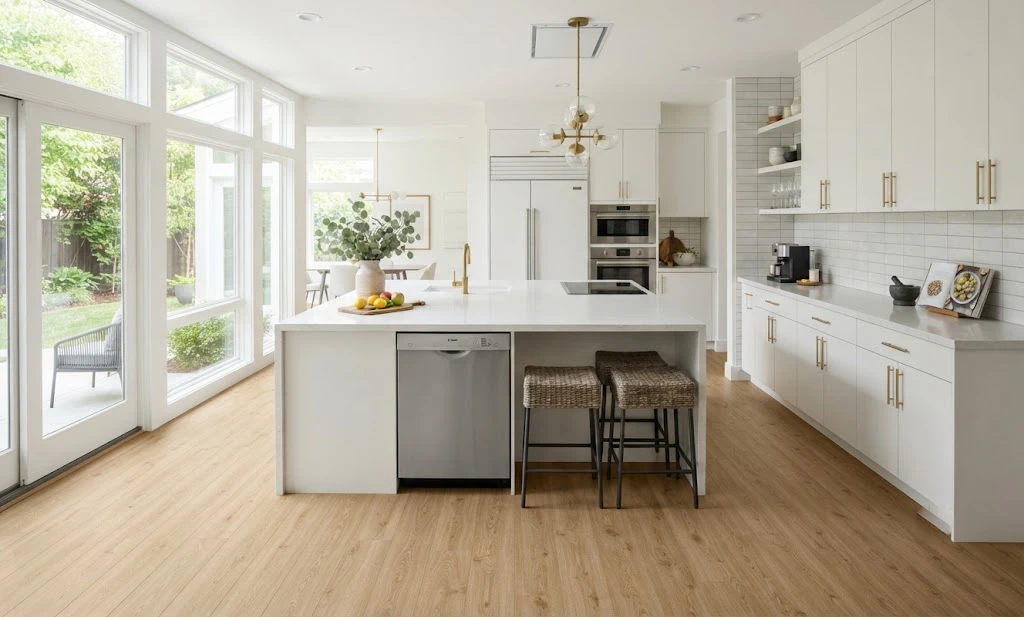
Sheet vinyl flooring is a waterproof, budget-friendly floor covering sold in large rolls, usually 6 or 12 feet wide. It costs $2 to $7 per square foot installed, resists moisture better than tile or wood, and works best in kitchens, bathrooms, and basements. Most homeowners get 10 to 20 years of use from it.
Picking new flooring can feel overwhelming. You’ve got wood, tile, laminate, and about five different types of vinyl to sort through. If you’ve landed on sheet vinyl flooring, you’re looking at one of the most practical options on the market today.
This guide walks you through what sheet vinyl actually is, what it costs, where it works best, and what to watch out for. By the end, you’ll know if it’s the right call for your home.
What Is Sheet Vinyl Flooring?

Sheet vinyl comes in large rolls instead of individual tiles or planks. A roll is typically 6 or 12 feet wide, and it gets measured, cut, and laid down in your room as one or two large pieces instead of being assembled from many smaller ones.
That single-piece design is the whole point. Sheet vinyl is built from several layers, including a wear layer on top for durability, a printed design layer underneath, and a backing layer that gives it stability. The printed layer is where the magic happens. Manufacturers can print almost any pattern onto it, from wood grain to stone to plain color.
Sheet vinyl isn’t new. It’s been around for decades and used to have a reputation for looking cheap and dated. That reputation doesn’t hold up anymore. Today’s sheet vinyl uses better printing technology and textured surfaces that mimic the real thing closely enough to fool a quick glance.
How Sheet Vinyl Compares to Other Vinyl Types
Walk into any flooring showroom and you’ll see three vinyl products sitting next to each other: sheet vinyl, luxury vinyl plank (LVP), and luxury vinyl tile (LVT). All three share many of the same core benefits, but they differ in format, installation method, and price.
LVP and LVT come as individual planks or tiles that click together or glue down piece by piece. Sheet vinyl skips that entirely. It rolls out in one continuous piece, which changes everything about how it performs.
Fewer pieces mean fewer seams. And fewer seams mean fewer places for water to get underneath your floor and cause damage. This is the single biggest reason people choose sheet vinyl over its plank and tile cousins.
Why Sheet Vinyl Handles Water So Well
Water damage ruins more floors than anything else. Wood swells and warps. Laminate bubbles. Even some tile installations let moisture seep through the grout lines over time. Sheet vinyl sidesteps most of this.
Because sheet vinyl goes down as one large piece, there are very few seams for water to seep through, which makes it an ideal choice for areas prone to moisture like bathrooms, kitchens, mudrooms, and laundry rooms. If you’ve got a flooded basement history or a bathroom that never quite dries out after a shower, sheet vinyl handles that stress without complaint.
The material itself is water resistant because it’s made with waterproof materials like PVC, which makes it a strong fit for any water-prone area of the home. This is also why sheet vinyl works so well in homes with pets. Accidents happen, and you won’t be scrubbing stains out of grout lines or refinishing water-damaged boards.
What Sheet Vinyl Flooring Costs
Money is usually the deciding factor, so let’s talk numbers. Hiring a flooring company to install vinyl typically runs $2 to $7 per square foot, and your total depends on the specific product you pick, along with room size, layout complexity, and any subfloor prep needed.
Sheet vinyl tends to land on the lower end of that range compared to plank and tile versions. Vinyl sheet flooring actually costs less than tile or plank vinyl even when they share similar colors and patterns. If your budget is tight, this is one of the few flooring types that lets you cover a large area without draining your savings.
A few things push the price up or down. Room size matters, obviously, but so does the shape of the room. A simple rectangular space costs less to fit than a room full of odd angles, closets, and doorways. Subfloor condition matters too. If your existing floor needs repair or leveling before installation, that adds to your total.
Sales tax, permit fees, and general contractor markup can also factor in. If a general contractor is supervising the project, expect to add 13 to 22 percent to the total cost for their overhead and markup. Hiring a flooring-specific company instead of a general contractor often saves you money since they specialize in this one trade.
Where to Use Sheet Vinyl in Your Home
Sheet vinyl isn’t picky. It works in nearly any room, but it truly shines in specific spots. It’s an ideal choice for areas prone to moisture, such as bathrooms, kitchens, mudrooms, and laundry rooms.
Kitchens see a lot of spills, dropped dishes, and foot traffic. Sheet vinyl handles all three without flinching. Bathrooms deal with constant humidity and the occasional puddle around the tub. Mudrooms and laundry rooms take a beating from wet shoes, dripping coats, and washing machine leaks.
Basements deserve a special mention here. Basements are notorious for moisture problems, whether from humidity, minor leaks, or the occasional flood. Sheet vinyl’s water resistance and seamless design make it one of the safer flooring bets for a below-grade space.
That said, sheet vinyl also works fine in living rooms, bedrooms, and hallways if you like the look and want consistency throughout your home.
Installation: DIY or Call a Pro?
Here’s where sheet vinyl gets a little tricky. Vinyl sheet flooring is easy to install in theory, which makes it a decent DIY material, but it does require the ability to take accurate measurements and make precise cuts to fit the space perfectly.
Small rooms with simple layouts are manageable for a confident DIYer. But most experts recommend playing it safe. If you consider yourself more of a DIY amateur, professional installation is worth the extra cost to get the floor installed correctly. One bad cut on a large sheet, and you’re either living with a gap or buying a whole new roll.
Sheet vinyl that has to be rolled out and installed in a single piece, along with more expensive products like LVT, is generally best left to a professional flooring contractor. The larger the room, the more this holds true. Wrestling a 12-foot-wide roll of vinyl into a tight bathroom by yourself is a good way to ruin your afternoon and your new floor.
One bit of good news either way: vinyl flooring generally doesn’t come with heavy installation requirements, and in many cases, if your existing subfloor is intact and level, vinyl can go down without any modifications or improvements. You can even install vinyl flooring directly over existing linoleum if that old floor is still in decent shape. That alone can save you a demolition step and some real money.
How to Take Care of Sheet Vinyl Flooring
Once it’s down, sheet vinyl asks very little of you. Sweep it regularly, damp mop when needed, and use a commercial product to bring back its shine if you want. That’s about the whole routine.
Vinyl flooring is considered one of the lowest-maintenance flooring materials commonly installed in homes. You don’t need special cleaners or a strict schedule. Just don’t let it sit dirty for weeks at a time and you’ll be fine.
There are a couple of common-sense rules worth following. Avoid dropping heavy or sharp objects on the floor, and clean up corrosive or staining spills right away. These aren’t unique to vinyl. Every floor type has similar warnings. Sheet vinyl just asks for less babying than most.
The Downsides of Sheet Vinyl Flooring
No flooring is perfect, and sheet vinyl has its trade-offs. The biggest one is the installation challenge we already covered. Cutting a large sheet to fit a room precisely takes skill, and mistakes are costly since you can’t easily patch a botched cut.
Sheet vinyl can also be harder to repair than plank or tile versions. If you damage one plank in an LVP floor, you can often replace just that piece. Damage a section of sheet vinyl, and you may need to replace a much larger area, since it’s one continuous piece rather than individual sections.
Some homeowners also find that sheet vinyl feels less premium underfoot compared to LVP or LVT, which often come with thicker, more cushioned construction. If a soft, high-end feel matters more to you than water resistance and price, it’s worth comparing samples of each type side by side before deciding.
Is Sheet Vinyl Flooring Right for You?
If water resistance, low cost, and a fast installation timeline top your list, sheet vinyl is hard to beat. It’s one of the most practical, budget-friendly, and water-resistant flooring options on the market, and it deserves a serious look if you’re weighing options for a kitchen, bathroom, basement, or rental property.
If you’re outfitting a rental property, sheet vinyl makes even more sense. It holds up to heavy foot traffic between tenants, resists water damage from careless renters, and costs little enough that replacing it between leases won’t hurt your bottom line.
Before you commit, get a few installation quotes from local flooring companies. Prices and product selection vary a lot by region, and a quick comparison can save you real money without any extra hassle on your part.


Comments are closed.