
To patch a hole in the wall, clean the area, apply the right repair method based on hole size, and finish with joint compound. Small holes need spackle. Medium holes need a mesh patch kit. Large holes need a drywall patch with wood backing. Sand smooth, prime, and paint for a clean result.
Holes in walls happen. A doorknob swings too hard, a picture hook pulls out, or a shelf bracket tears away. Whatever the cause, you are now staring at damage that was not there yesterday. The good news? You do not need to call a professional for this. With the right supplies and a little patience, you can make that hole disappear completely.
This guide walks you through every repair method, based on the size of the hole. Follow along, and your wall will look like nothing ever happened.
What You Need Before You Start
Before you touch the wall, gather your supplies. The tools and materials depend on how big the hole is, but here is a solid general list to have on hand.

For small holes (under ½ inch), you need spackling compound or an all-in-one repair tool, a putty knife, fine-grit sandpaper (120–150 grit), and matching paint. For medium holes (½ inch to 6 inches), add a self-adhesive mesh patch kit and lightweight joint compound to that list. For large holes over 6 inches, you also need a piece of drywall, wood furring strips, drywall screws, a drywall saw, paper or mesh tape, and a wider putty knife (6 to 12 inches).
Pick up a premade patch kit from any hardware store if you want to keep things simple. Kits from brands like 3M or DAP include almost everything for small to medium repairs, and they cost between $5 and $15.
How To Fix Small Nail and Screw Holes
Nail holes are the easiest repair you will ever do. If the hole is smaller than ⅛ inch, this takes about five minutes from start to finish.
First, remove the nail or screw from the wall. Pull it out with your fingers or use the claw end of a hammer. If the screw does not budge, use a screwdriver to push it deeper into the wall cavity and then patch over it — that is faster than wrestling with it.
Next, clean up the edges. Use your putty knife to scrape away any loose paint or crumbling drywall around the hole. Wipe the area with a slightly damp cloth to remove dust.
Now apply the spackling compound. Squeeze or scoop a small amount directly into the hole and push it in with your putty knife. Do not use too much — just enough to fill the hole flush with the wall surface. Scrape away the excess immediately, or you will create a bump that shows under paint.
Let it dry for 30 to 60 minutes, or until it turns from pink to white if you are using a pre-colored spackle. Then sand lightly with 150-grit sandpaper until the surface feels smooth. Wipe off the dust and dab on matching paint with a paper towel or small brush.
How To Patch Medium Holes With a Mesh Kit
A medium hole — anything from about ½ inch up to 6 inches across — needs more support than spackle alone. This is where a self-adhesive mesh patch comes in.
Start by cleaning up the edges of the hole. Sand around the perimeter lightly to remove loose paint and rough drywall. Wipe the area clean with a damp cloth and let it dry fully. A dirty or dusty wall will not hold the mesh patch well.
Peel the backing off your adhesive mesh patch and press it firmly over the hole, keeping the hole as centered as possible. Press down on the edges with your fingers or the flat of your putty knife to make sure it sticks completely.
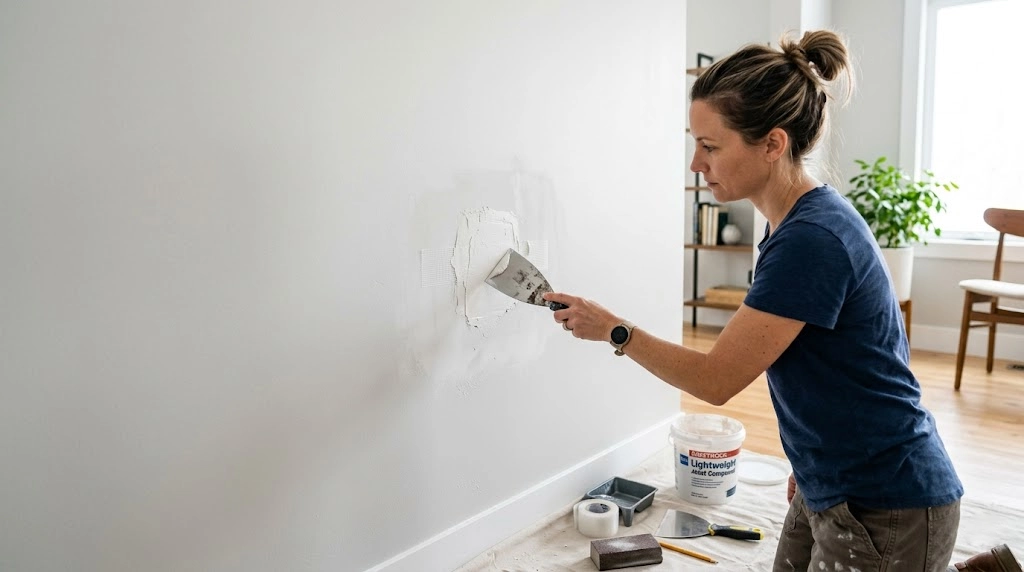
Now apply your first coat of joint compound using a 6-inch putty knife. Spread it over the mesh in a crisscross pattern so it fills the grid of the mesh and covers the entire patch. Feather the edges out a few inches past the patch by gradually reducing the pressure on your knife as you move outward. This blending step is what makes the repair invisible later.
Let that coat dry fully. Premixed joint compound typically takes 12 to 24 hours. Do not rush it. If you sand too early, the compound tears and pills instead of smoothing down.
Apply a second coat, this time feathering the compound 6 to 10 inches beyond the patch edges. Use a wider knife if you have one. The goal with each new coat is to blend the repair into the surrounding wall, not to build it up thicker. Let it dry again, then lightly sand with 150 to 180-grit sandpaper until the surface feels smooth and flat.
How To Repair Large Holes Over 6 Inches
Large holes require a sturdier approach. Without solid backing behind the drywall, a patch will flex, crack, and eventually show through the paint.
Start by squaring off the hole. Use a drywall saw or utility knife to cut the irregular hole into a clean rectangle or square shape. This gives you straight, even edges to work with. Before you cut, check for any electrical wires or pipes behind the wall. Shine a flashlight into the opening and look carefully.
Next, cut two furring strips — thin pieces of scrap wood or actual furring strips from the hardware store — about 4 inches longer than the height of your hole. Slide them behind the drywall opening, one on each side of the hole. Screw them through the existing drywall so they are held firmly in place and bridge the gap. These strips are what your patch will screw into.
Cut a piece of new drywall to match the exact size of the opening. It should fit snugly without forcing. Set the patch in place and screw it into the furring strips with drywall screws, spacing the screws about 6 inches apart. Drive the screw heads slightly below the surface of the drywall — this is called dimpling — so the compound sits flat over them.
Apply mesh or paper tape over all four seams where the new patch meets the old wall. Press it flat and smooth with your putty knife. Then apply joint compound over the tape, feathering the edges outward. This repair takes three full coats of compound, with each coat drying completely and each coat spread wider than the last. The final coat should extend at least 12 inches beyond the edge of the patch.
How To Sand for a Smooth Finish
Sanding is where the magic happens — or where things go wrong if you skip steps.
After your final coat of compound has dried completely, start with 150-grit sandpaper to knock down any ridges. Then switch to 180 to 220-grit for a final pass. Use light, even pressure and sand in circular motions. Do not press hard — you are smoothing, not digging.
Here is a useful trick: hold a flashlight at a low angle across the wall while you sand. Any bumps, ridges, or low spots will cast a shadow and show up immediately. Fix them now, because paint will make every imperfection more visible, not less.
Wipe down the entire area with a dry or slightly damp cloth to remove all sanding dust before you paint.
Priming and Painting for a Seamless Look
Priming is not optional if you want the repair to disappear. Joint compound is porous and absorbs paint differently than the surrounding drywall. Without primer, the patched area shows through as a dull or flat spot even after painting.
Apply a thin coat of primer directly over the patched area and let it dry fully — usually one to two hours. Once dry, paint with the exact same color and finish as your existing wall. Use a small roller for the best texture match. If you are painting a larger area, feather the paint outward from the patch so the edges blend naturally into the rest of the wall.
If you only have a small amount of paint left over from the original job, bring a chip or small cutting to a hardware store. Most stores can match your color for under $5 for a sample size.
Common Mistakes That Ruin a Good Patch
Most repairs fail at one of three points: rushing the dry time, not feathering the edges wide enough, or skipping primer.
Sanding too early tears the compound and creates a rough, textured surface that catches paint unevenly. Using too much compound in one coat causes shrinking and cracking as it dries. Painting without primer makes the patch show up like a spotlight on the wall — sometimes even weeks later.
Take your time between coats. Apply thin layers. Feather wide. Prime before you paint. These four habits are the difference between a repair that blends in and one that announces itself every time the light hits the wall at an angle.
Patching a wall is one of those home repairs that looks harder than it actually is. Once you do it once, you realize it mostly comes down to patience and the right materials. Match the method to the hole size, let each step dry fully, and finish with primer and paint. The result is a wall that looks like the damage never happened.


Comments are closed.